Passenger

Team RideWyze Posted on 22 Dec 2025
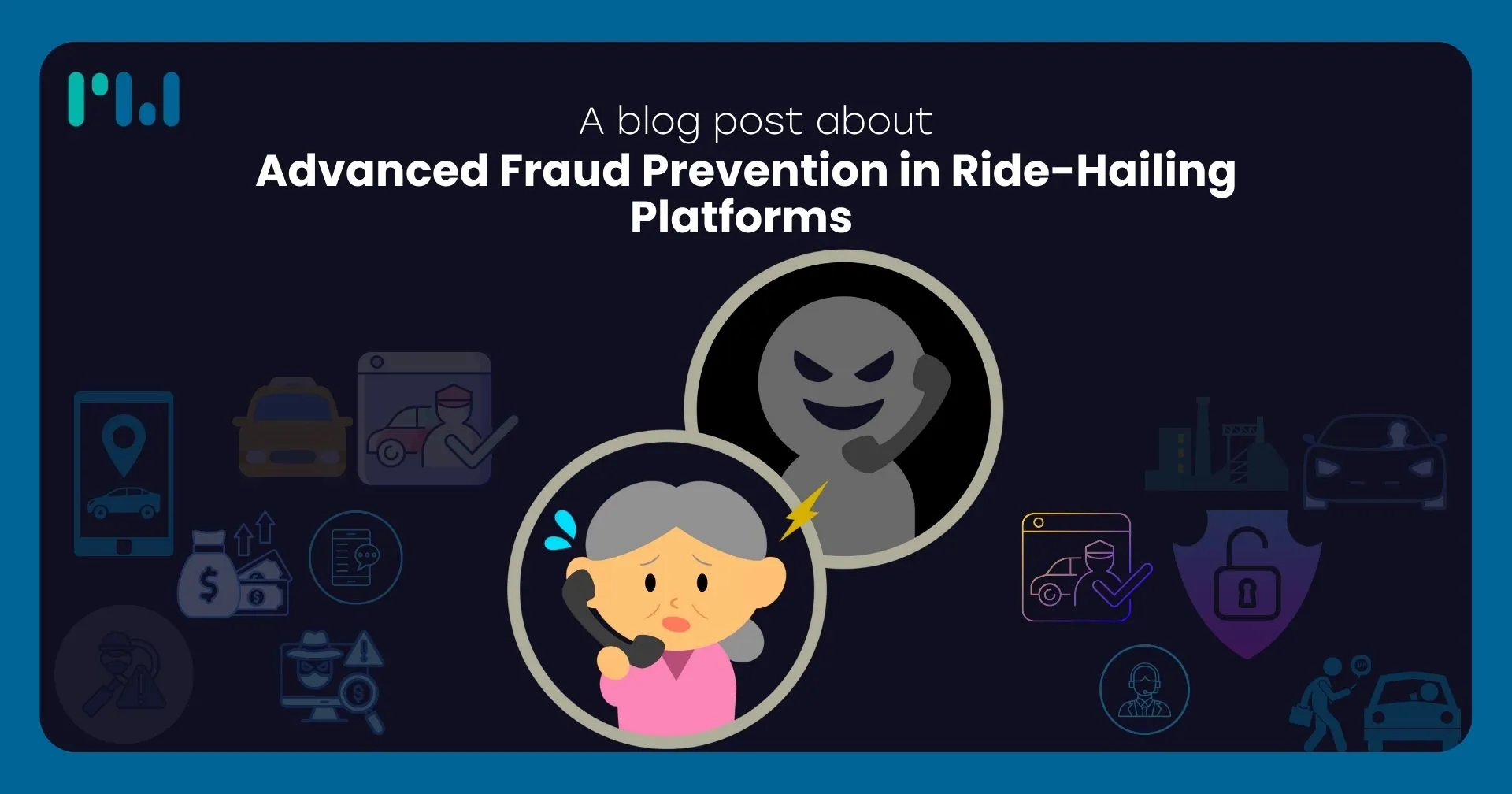
In the ever-evolving world of digital transportation, ride-hailing platforms have transformed how millions of people move daily. Companies like Uber, Lyft, Grab, and Bolt have revolutionized mobility by offering convenience, speed, and reliability at our fingertips. However, this rapid digitalization comes with a darker side — fraud.
Fraud in the ride-hailing industry is not just an operational hiccup; it’s a massive financial and reputational threat. Fraudsters exploit weaknesses in user verification, payment processing, and app functionality to carry out sophisticated schemes such as ghost rides, promo abuse, and GPS spoofing. These deceptive activities cost the global mobility industry billions annually.
That’s where advanced fraud prevention in ride-hailing platforms enters the picture. Through the use of artificial intelligence (AI), machine learning (ML), biometrics, and real-time analytics, platforms are building smarter, faster, and more proactive defenses. This article explores the key technologies, challenges, and emerging trends shaping the next generation of fraud prevention in mobility.
Fraud within ride-hailing platforms extends across multiple domains — from user registration to payments and post-ride settlements. It’s not limited to one region or demographic; it’s a global issue. Let’s unpack the most common types of fraud that plague mobility apps.
Occurs when users make transactions using stolen or cloned credit cards. Fraudsters often use temporary numbers or disposable accounts to bypass verification checks.
Fraudsters create driver profiles using forged identification or even AI-generated photos, enabling them to exploit incentives or commit identity theft.
Cybercriminals gain unauthorized access to legitimate user accounts through phishing or credential stuffing, using stored payment details for illicit rides.
Drivers use software tools to falsify their location, generating fake routes, higher fares, or even “ghost rides” that never happened.
Users or organized groups exploit marketing campaigns by generating multiple fake accounts to redeem referral or promo offers repeatedly.
Each of these forms of fraud erodes user trust, platform profitability, and brand reputation, making prevention not just a technical necessity but a business imperative.
Fraud detection once relied heavily on rule-based systems — for example, flagging rides that exceeded average fare limits or repeated logins from different IP addresses. While effective for simple patterns, these systems failed against modern fraudsters who adapt quickly and exploit rule gaps.
Enter AI and machine learning-based fraud prevention — technologies capable of understanding complex relationships, predicting suspicious patterns, and evolving with each data point.
Platforms now utilize machine-learning fraud detection in ride-hailing platforms to identify correlations invisible to human analysts. For example, AI can detect a fake driver network by analyzing the behavioral similarities of multiple accounts, even if the devices and payment methods differ.
The result? Faster detection, fewer false positives, and more proactive defenses against fraud attempts that would have previously gone unnoticed.
Modern ride-hailing platforms rely on a combination of data science, behavioral analytics, and real-time monitoring to keep operations clean and transparent. Here’s how each core technology strengthens fraud defenses:
Artificial intelligence enables systems to automatically assign a risk score to every ride, payment, or login attempt. Factors such as location, device history, transaction amount, and time of day are analyzed simultaneously.
If the score crosses a threshold, the transaction is blocked, delayed, or flagged for review — all within milliseconds. This method reduces reliance on manual reviews while improving detection accuracy dramatically.
Machine learning models are continuously trained on historical and real-time data, allowing them to predict fraudulent behavior. These systems don’t just respond to fraud — they anticipate it.
For instance, if multiple accounts suddenly start taking short, high-value rides in a specific area, the algorithm identifies the anomaly and intervenes before losses occur.
Unlike passwords, behavioral biometrics study how users naturally interact with their devices — such as typing rhythm, screen pressure, or swipe speed. This unique “digital body language” helps differentiate between legitimate users and fraudsters, drastically reducing rider account takeover (ATO) incidents.
It’s an unobtrusive yet powerful layer of protection that operates silently in the background.
Identity manipulation remains one of the top entry points for fraud. Whether through fake driver profiles or compromised passenger accounts, identity-based threats can undermine the platform’s credibility if not handled properly.
Before onboarding, drivers must undergo rigorous KYC (Know Your Customer) checks. These include document scanning, government ID validation, and sometimes even in-person verification.
Advanced AI-driven KYC systems can verify authenticity by detecting forgery markers or comparing selfie photos against ID documents in seconds — ensuring that only verified individuals gain access to the driver network.
Fraud doesn’t stop at onboarding. To ensure ongoing authenticity, platforms integrate periodic biometric selfie checks.
Drivers are occasionally prompted to take a selfie, which is matched against their registered image. Any mismatch triggers an account review. This feature effectively prevents account sharing and driver impersonation — both of which are common fraud tactics.
Every smartphone carries a distinct combination of attributes (like OS version, hardware ID, and IP pattern) — collectively known as a device fingerprint.
Platforms use this fingerprint to track repeated patterns. If multiple driver accounts originate from one device, the system flags them instantly. This measure not only curbs fake driver networks but also deters coordinated promo fraud schemes.
Location-based frauds, especially GPS spoofing and ghost rides, have grown alarmingly frequent. These scams allow drivers to generate fake trips or increase fare totals without actually transporting passengers.
Location fingerprinting compares real-time GPS signals with expected routes and environmental data (like nearby Wi-Fi and cell towers). Discrepancies suggest tampering.
Geofencing sets up digital boundaries. When a driver’s GPS signal unexpectedly jumps outside these zones, the system instantly raises an alert.
These technologies ensure ride integrity and prevent fraudulent transactions before completion, ultimately protecting riders and drivers alike.
Marketing campaigns are vital for user growth, but they’re also prime targets for exploitation. Fraudsters often create hundreds of fake accounts to redeem referral codes, bleeding platforms of promotional funds.
Advanced fraud systems now employ AI-driven promo validation — algorithms that cross-analyze user device IDs, payment methods, and behavioral history to detect repetitive patterns.
A notable case involved an e-scooter company in the UK, which saved £30,000 in losses by identifying fraudulent referral chains through machine learning analytics.
The outcome? Cleaner campaigns, fairer rewards, and stronger trust between platforms and their legitimate users.
Financial integrity lies at the heart of any ride-hailing service. To ensure secure and transparent transactions, platforms are increasingly adopting blockchain and two-factor authentication (2FA).
Blockchain technology introduces tamper-proof transparency. Every ride transaction is recorded in a distributed ledger, ensuring neither party can manipulate payment details.
Smart contracts automatically release payments once predefined conditions — like trip completion or customer confirmation — are met. This mechanism eliminates disputes, reduces chargeback fraud, and ensures trust between riders and drivers.
While blockchain secures payments, 2FA protects user access. Platforms now employ password-less logins or biometric verifications, ensuring that only verified users can initiate rides or access payment credentials.
By integrating behavioral patterns (like typing dynamics) into authentication, platforms make fraudulent logins nearly impossible.
Detecting fraud as it happens is the holy grail of mobility security.
To achieve this, ride-hailing platforms use Apache Kafka fraud streaming — a data infrastructure that collects, processes, and analyzes millions of data points in real-time.
Each transaction, login, and GPS update flows through this pipeline. AI models analyze the data continuously, enabling real-time transaction monitoring and immediate fraud intervention.
Additionally, predictive analytics tools study recurring patterns to forecast new fraud types, allowing proactive defenses before fraud evolves.
These integrated systems help maintain fraud rates below 0.2%, while keeping false positives under 2%, ensuring both security and a seamless user experience.
In isolation, no platform can stop fraud entirely. Fraudsters often operate across multiple mobility apps, exploiting similar loopholes.
To combat this, leading companies are joining fraud intelligence sharing networks — collaborative ecosystems where anonymized threat data is exchanged.
This approach promotes cross-platform blacklisting, so bad actors banned from one service can’t reappear on another. The shared intelligence strengthens the overall zero-trust mobility ecosystem, enhancing the collective resilience of the entire industry.
While advanced analytics enhance security, they also raise concerns about data privacy.
To address this, platforms align with regulations like GDPR (Europe) and CCPA (California), ensuring transparency and user consent in all fraud detection activities.
Fraud tools are now designed to anonymize sensitive data — such as facial scans or GPS traces — without reducing analytical value.
This balance between security and privacy boosts user confidence, assuring passengers that their personal information remains protected even within high-security systems.
The adoption of next-generation fraud prevention tools is yielding remarkable outcomes across the ride-hailing ecosystem:
These statistics reinforce that fraud prevention isn’t just a defensive strategy — it’s a competitive advantage. By lowering operational losses and enhancing trust, platforms create a safer, more profitable mobility environment for all stakeholders.
As technology evolves, so do the fraudsters. To stay ahead, ride-hailing companies are embracing innovative trends that redefine what’s possible in digital security.
By simulating fraudulent behaviors in controlled environments, generative AI helps train fraud models to recognize new attack methods before they occur in the wild.
Instead of relying solely on central servers, AI algorithms now run directly on driver smartphones — analyzing transactions locally for faster detection.
This edge computing approach improves real-time performance while reducing data transfer costs.
With quantum computing on the horizon, traditional encryption may soon become vulnerable. Hence, platforms are experimenting with quantum-safe algorithms to protect sensitive ride data and payment information far into the future.
Voice authentication adds another layer of identity validation. Riders can be recognized by unique vocal signatures, enabling seamless yet secure verification during high-risk transactions.
The future of mobility security lies in zero-trust frameworks, where every request, transaction, or identity must continuously verify its authenticity.
In such ecosystems, no device or user is automatically trusted — validation is constant, adaptive, and multi-layered.
By merging AI analytics, behavioral biometrics, blockchain traceability, and predictive intelligence, ride-hailing companies can build ecosystems that are resilient by design.
This proactive model not only reduces fraud but also fosters brand trust, passenger safety, and long-term loyalty.
Fraud is the shadow that follows innovation — and in the world of ride-hailing, it’s evolving as fast as technology itself. But with the integration of advanced fraud prevention in ride-hailing platforms, the balance is shifting toward safety, intelligence, and accountability.
From AI-powered risk scoring to quantum-safe encryption and biometric verification, the modern mobility ecosystem is redefining digital trust. As fraudsters innovate, so do defenders — and it’s this constant evolution that ensures ride-hailing remains safe, reliable, and future-proof.
In the end, advanced fraud prevention isn’t just about stopping crime — it’s about enabling seamless, secure, and sustainable journeys for the digital world.
Advanced fraud prevention in ride-hailing platforms significantly enhances passenger safety by identifying and blocking suspicious accounts before they can cause harm. Through AI-driven behavioral analysis, biometric verification, and device fingerprinting, platforms can confirm the real identity of both riders and drivers. For instance, selfie verification ensures that the driver behind the wheel matches the registered profile, preventing cases of impersonation or “ghost driving.” By maintaining accurate user verification, these systems ensure that passengers can confidently trust the identity and legitimacy of their drivers.
AI and machine learning are at the core of fraud detection in ride-hailing platforms. They continuously analyze millions of transactions, ride histories, and device data points to recognize unusual behavior patterns. Platforms like Uber and Grab use AI-powered tools such as Project RADAR and GrabDefence, which detect anomalies in real time using technologies like Apache Kafka and Spark. These systems can identify GPS spoofing, account takeovers, or fake rides within milliseconds, helping reduce fraud rates by up to 87% while maintaining false positives below 2%.
Biometric verification, including facial recognition and selfie checks, plays a critical role in preventing account misuse and identity fraud. By requiring drivers to periodically verify themselves, platforms like Uber, Lyft, and DiDi prevent unauthorized users from accessing legitimate accounts. Moreover, biometric authentication helps protect against account takeovers (ATO) and fake driver profiles. Beyond security, this technology boosts passenger confidence and has been shown to increase customer satisfaction by 10–15%, as users trust apps that visibly prioritize their safety and data protection.
Ride-hailing companies use real-time data streaming technologies like Apache Kafka and Flink to process and analyze massive amounts of data instantly. Every transaction, location ping, and payment attempt is evaluated in milliseconds through AI-powered risk scoring models. If a transaction or behavior appears suspicious—like a high-value ride request from a new device—it’s automatically blocked or flagged for review. This proactive approach allows platforms to prevent fraudulent activity before it happens, maintaining a smooth experience for genuine users while keeping bad actors out.
The ride-hailing industry faces several evolving fraud challenges, including fake driver accounts, promo code abuse, chargeback fraud, and account takeovers. In 2024 alone, transportation fraud surged by 98% compared to the previous year, showing how sophisticated these schemes have become. Some companies even lost tens of thousands of dollars due to referral fraud and offline ride scams. To combat these, platforms now invest in advanced fraud intelligence systems that merge AI, behavioral biometrics, and real-time analytics, ensuring sustainable fraud control as the shared mobility market grows toward a projected $356 billion by 2030.
Identity verification plays a vital role in reducing fraud and improving user trust. Ride-hailing platforms now integrate multi-layered identity verification systems combining government ID checks, biometric scans, and device-based authentication. For example, DiDi conducts biometric verification in high-risk zones such as airports, while Lyft triggers AI checks during suspicious logins. These measures not only deter fraudsters but also streamline onboarding for legitimate users, creating a balance between security and convenience.
Ready to elevate your ride-hailing business? RideWyze has the tools and expertise to help you succeed. Contact us for a personalized demo today!

Create a free account and get full access to all features for 30 days.No credit card needed. Trusted by over 4,000 Clients.


from 200+ reviews

Start your 30-day free trial.