Passenger

Team RideWyze Posted on 10 April 2026
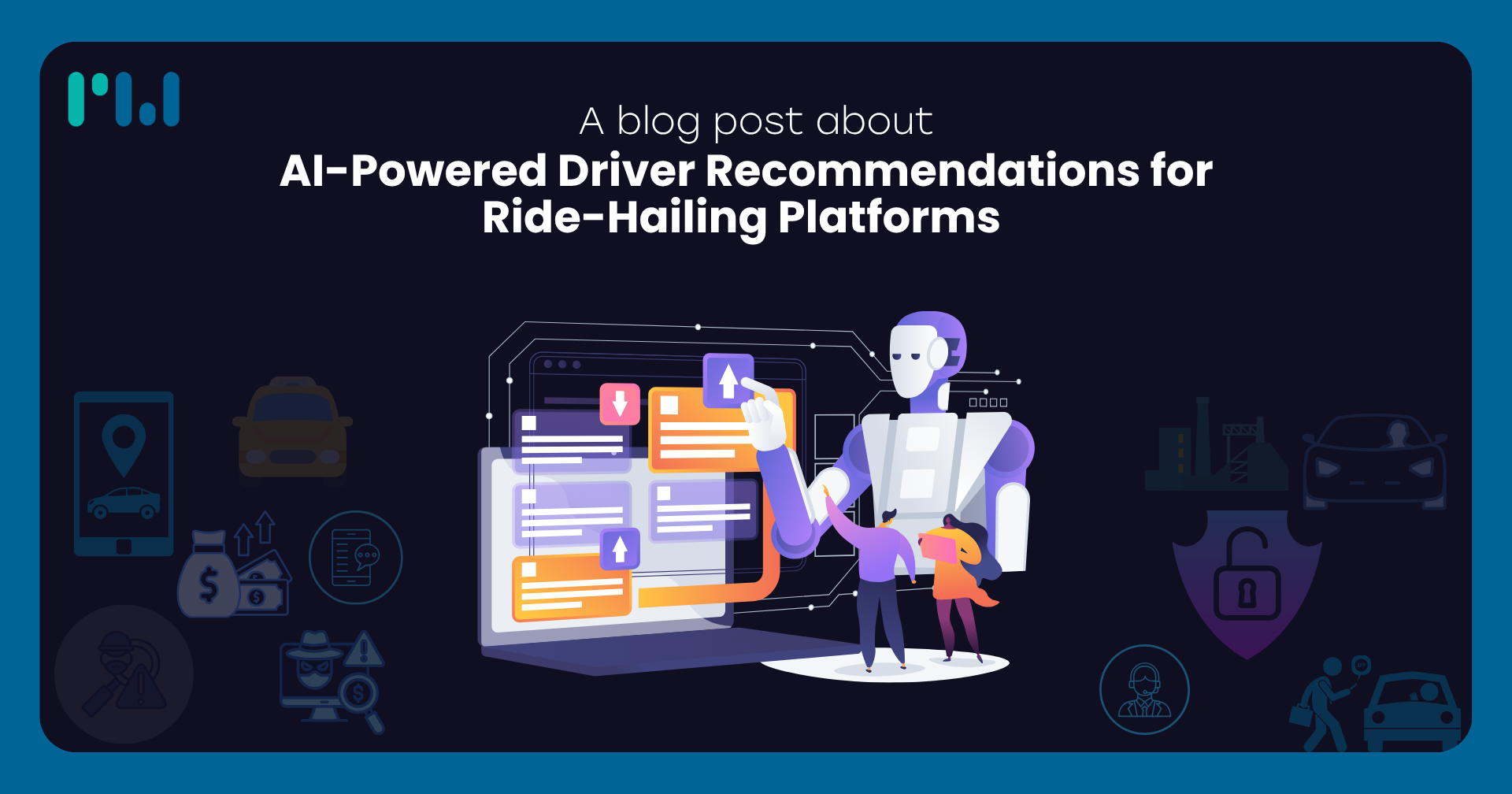
The ride-hailing industry has evolved far beyond the simple task of connecting a driver to a passenger. With AI driver recommendations, platforms now offer intelligent driver matching, predictive driver allocation, and cognitive driver selection to improve efficiency, reduce costs, and enhance passenger satisfaction.
Modern systems analyze driver behavior analytics, traffic patterns, and passenger preference learning to make real-time recommendations that maximize driver utilization rate, minimize passenger wait times, and boost ride completion optimization. By leveraging automated driver dispatch and dynamic driver routing, ride-hailing platforms can now operate at a level of efficiency that was previously impossible.
The statistics show how transformative AI has become: the autonomous ride-hailing (robotaxi) market is projected to grow from $10.11 billion in 2025 to over $2.08 trillion by 2034, achieving a CAGR of 80.8%. Meanwhile, the driver behavior analytics AI market is expected to expand from $4.2 billion in 2024 to $19.6 billion by 2033, reflecting an 18.4% CAGR. These numbers illustrate that AI ride-hailing optimization and algorithmic driver assignment are not just trends—they are central to the future of mobility.
The foundation of AI driver recommendations lies in the collection and analysis of vast datasets. Systems utilize:
By integrating these inputs, AI platforms deliver contextual driver suggestions and adaptive driver deployment, ensuring that each ride is both efficient and enjoyable. This approach leverages neural network driver pairing and predictive driver allocation to provide real-time guidance to drivers while maintaining fleet productivity enhancement.
AI relies heavily on machine learning driver matching models to optimize outcomes:
Real-world results demonstrate the impact: platforms implementing real-time driver optimization can reduce average passenger wait times by 30%, with high-demand zones seeing up to 55% reduction, as seen in the A-RTRS system (IJCAI 2020) study.
Machine learning is the backbone of modern ride-hailing platforms. It drives earnings maximization algorithms, driver efficiency scoring, and ride completion optimization, ensuring that drivers are allocated intelligently. These systems not only increase efficiency but also reduce operational costs by optimizing driver-passenger matching accuracy.
Computer vision driver behavior monitoring enables platforms to detect unsafe behaviors such as fatigue or distracted driving. By integrating vehicle telematics and AI-powered coaching, systems provide personalized driver feedback, enhancing both safety and retention. Platforms are increasingly combining driver safety scoring with predictive driver availability to ensure that the right driver is always available at the right time.
Platforms use NLP driver feedback analysis to parse passenger comments, detect sentiment, and generate insights. This allows contextual driver suggestions based on passenger feedback, ensuring a high-quality experience. For instance, passenger preference learning helps AI recommend drivers who are more likely to provide positive interactions.
Dynamic driver routing and real-time driver location tracking AI enable the system to reposition idle drivers proactively, reducing passenger wait times and balancing supply-demand during peak hours. Integration with event-based driver positioning—for concerts, sports events, and inclement weather—ensures platforms are always ready to meet dynamic demand.
AI optimizes driver-passenger pairing engines, resulting in measurable benefits:
AI improves the rider experience by reducing wait times, minimizing cancellations, and increasing ride quality. Through AI ride-hailing optimization, platforms can enhance trip completion rate, route efficiency, and cancellation management, directly impacting customer lifetime value and loyalty.
By automating dispatch and smart driver allocation, platforms reduce manual oversight, fuel consumption, and operational overhead. The projections for the robotaxi market—from $10.11B in 2025 to $2.09T by 2034—demonstrate the scalability of AI driver recommendation engines.
Both platforms also apply AI-powered driver matching to minimize passenger wait times and maximize driver earnings optimization.
The intersection of autonomous vehicles and AI driver recommendations is transforming ride-hailing:
Global adoption is uneven: Asia Pacific leads the market with a 45.46% share in 2025, emphasizing the regional importance of AI driver recommendation systems.
AI leverages driver behavior analytics, telematics, and predictive modeling to:
The driver behavior analytics AI market is projected to reach $19.6 billion by 2033, highlighting the increasing value of driver performance scoring AI systems for safety and operational optimization.
AI delivers tangible commercial value:
Platforms implementing real-time driver rerouting optimization, dynamic surge pricing integration, and event-based driver positioning see measurable gains in efficiency and profitability.
AI systems must comply with:
These measures ensure driver satisfaction, passenger trust, and safe adoption of AI-driven mobility solutions.
AI will increasingly use deep learning demand forecasting for drivers, geospatial analysis, and time-series forecasting to anticipate demand. Platforms will integrate dynamic driver reallocation, idle driver relocation strategies, and proximity-based driver matching for maximum efficiency.
Ride-hailing platforms are expanding into mobility-as-a-service (MaaS) ecosystems, integrating last-mile connectivity, micro-mobility, and public transit coordination, powered by AI-powered driver matching systems.
Processing real-time driver location tracking AI at the edge allows platforms to reduce latency, optimize dynamic driver routing, and respond to sudden demand spikes while maintaining fleet safety and compliance.
AI-powered driver recommendations are redefining ride-hailing. From algorithmic driver selection to predictive driver allocation and cognitive driver deployment, AI ensures optimized operations, safer rides, and higher driver earnings.
With the robotaxi market projected to explode, the driver behavior analytics AI market expanding, and intelligent transportation systems transforming urban mobility, ride-hailing platforms adopting AI driver recommendation engines will dominate.
By combining real-time optimization, predictive analytics, autonomous fleet integration, and ethical AI practices, platforms can deliver smarter, safer, and more reliable rides, establishing a new standard for mobility in the AI era.
AI driver recommendations work by analyzing driver behavior analytics, traffic patterns, and passenger preference learning to match riders with the most suitable drivers. Platforms use machine learning, real-time optimization, and predictive allocation to reduce wait times, improve ride completion optimization, and maximize driver earnings.
Using AI-powered driver matching improves driver utilization rate, passenger satisfaction, and fleet productivity. Platforms can reduce idle time, increase completed rides, and optimize dynamic driver routing, which ensures faster pickups and smarter driver-passenger pairing engines.
AI driver recommendation systems leverage machine learning driver matching models, computer vision for driver monitoring, natural language processing for feedback, and predictive analytics. These technologies allow platforms to provide proximity-based driver matching, adaptive driver deployment, and contextual driver suggestions.
Autonomous vehicles use AI driver recommendations to coordinate self-driving fleets alongside human drivers in human-robot driver hybrid systems. Platforms can optimize remote vehicle monitoring, predictive driver allocation, and fleet utilization, improving safety and efficiency in robotaxi services.
The business impact of AI driver recommendations includes higher driver earnings, operational cost reduction, and market share growth. By implementing real-time driver rerouting optimization, dynamic surge pricing integration, and predictive allocation, platforms gain competitive advantage and increase profitability.
Yes, platforms must consider algorithmic fairness, driver data privacy, and transparent AI recommendation systems. Compliance with local regulations, GDPR, and CCPA ensures driver satisfaction, passenger trust, and safe adoption of AI-driven ride-hailing services.
Ready to elevate your ride-hailing business? RideWyze has the tools and expertise to help you succeed. Contact us for a personalized demo today!

Create a free account and get full access to all features for 30 days.No credit card needed. Trusted by over 4,000 Clients.


from 200+ reviews

Start your 30-day free trial.