Passenger

Team RideWyze Posted on 11 August 2025
Ride-hailing services have revolutionized the way we move around cities. With companies like Uber, Lyft, and others reshaping transportation, it's easy to overlook how far the industry has come. The most recent evolution? Automated ride scheduling.
Automated ride scheduling refers to the process of utilizing dispatch software to automatically match riders with available drivers, without requiring human intervention. It’s a game-changer, both for ride-hailing platforms and for users looking for more efficient, reliable service.
But what does the future hold for this technology? As ride-hailing companies move toward fully automated dispatch systems, the way we think about booking a ride will change forever. With that in mind, let’s take a deeper dive into how automated ride scheduling works, its current state, and where it’s heading.
The core of automated ride scheduling lies in its ability to match drivers and passengers in real time. Instead of having human dispatchers manually assign rides, the dispatch software uses algorithms to handle the process.
Every time a rider requests a ride, the system gathers key information — location, destination, and the preferred time. It also collects real-time data, such as traffic conditions, availability of drivers, and weather conditions.
Once the data is collected, advanced algorithms work behind the scenes to find the best possible match for both the driver and the passenger. The goal is to minimize the passenger’s wait time, optimize routes for drivers, and ensure the ride is efficient.
As new rides are requested, the system constantly recalculates optimal routes, keeping both drivers and riders informed in real time. It can also adapt to changing conditions like traffic jams, road closures, or unexpected delays.
This automated process reduces human error, speeds up ride allocation, and provides a smoother overall experience for both drivers and riders.
One of the most significant advantages of automated dispatch systems is that they drastically reduce wait times for riders. Instead of waiting for a human dispatcher to manually find a driver, passengers are instantly matched with the nearest available driver.
Automated systems optimize the entire fleet of vehicles, ensuring that every car is utilized as efficiently as possible. This means less idle time for drivers and a more effective use of the entire system, leading to cost savings and improved overall service.
Since the system operates in real time and adjusts to current conditions, both drivers and riders benefit from a smoother, more predictable experience. Riders can track their ride progress, while drivers can rely on the system to direct them along the most efficient route.
With faster and more efficient ride matching, drivers spend less time idling and more time picking up and dropping off passengers. This can significantly boost their earnings and make driving for ride-hailing companies more profitable.
For ride-hailing companies, automated scheduling allows for better fleet management. Dispatch software can track vehicle location, fuel efficiency, maintenance needs, and other important metrics. This allows companies to keep their fleet running smoothly and proactively address any issues before they become major problems.
Artificial Intelligence (AI) and machine learning have become integral to automated dispatch systems. These technologies enable ride-hailing platforms to make data-driven decisions, which leads to a more optimized and responsive service.
AI can analyze vast amounts of historical data to predict patterns, such as traffic conditions, demand surges, or seasonal trends. This allows the system to anticipate high-demand areas and ensure that drivers are positioned in the right locations.
AI-driven software continuously learns and improves its algorithms to offer better routing recommendations. By taking real-time data into account, the system can suggest alternative routes to avoid traffic or construction delays, ensuring drivers reach their destinations faster.
AI-powered systems can predict demand surges based on historical data, local events, weather forecasts, and even economic factors. This helps in preemptively adjusting the availability of drivers, ensuring that riders don’t experience long wait times during peak hours.
As we look ahead, the future of automated ride scheduling will be defined by innovation, sustainability, and even more advanced technologies. The integration of new systems and the continuous improvement of current models will undoubtedly make the entire process more efficient.
Ride-hailing services will increasingly be integrated with other aspects of urban mobility. This includes public transportation, bike-sharing, car rentals, and even self-driving cars. Automated systems will not only book rides within the ride-hailing platform but also help integrate other mobility options to create a seamless transportation network.
The next evolution of dispatch software will likely be driven by deep learning, which is a more advanced form of machine learning. These systems will be able to process even more complex data and make highly sophisticated decisions, such as anticipating future demand and optimizing multiple ride requests simultaneously.
Personalized ride experiences will become more common as AI gathers data from individual riders. Over time, the system will learn your preferences, such as preferred routes, vehicle type, and even preferred drivers. This will allow automated ride scheduling systems to offer an increasingly customized experience for each rider.
One of the most exciting developments in the world of ride-hailing is the advancement of self-driving cars. These vehicles will significantly reduce the need for human drivers, making automated dispatch systems even more critical. Future dispatch software will have to manage fleets of autonomous vehicles, ensuring optimal performance and safety without human intervention.
Among the many ride-hailing platforms offering automated ride scheduling, RideWyze stands out as a leader in the space. Their innovative dispatch software combines the latest technologies with real-world experience to provide a seamless, efficient, and enjoyable ride-hailing experience.
RideWyze has already had a significant impact on the ride-hailing industry. For example, their automated ride scheduling has led to faster response times and greater rider satisfaction. Riders can now book a ride and have a driver arrive in a matter of minutes, without the typical delays associated with manual dispatching.
The company’s focus on smart route optimization and predictive scheduling has resulted in reduced wait times, lower operational costs, and increased efficiency for drivers. Drivers also appreciate the streamlined booking process, which means they can spend more time on the road and less time waiting for assignments.
Perhaps the most impressive aspect of RideWyze is how they’ve been able to balance automation with a personal touch. While automation powers their scheduling and dispatching, the platform still places a strong emphasis on customer service. Riders feel confident in the knowledge that their ride will arrive promptly and be comfortable, while drivers benefit from a system that treats them fairly and helps them maximize their earnings.
The future of ride-hailing services is bright, and automated ride scheduling is set to play a key role in shaping it. By leveraging advanced dispatch software that incorporates AI, machine learning, and real-time data, platforms like RideWyze are revolutionizing the way we think about transportation.
As the technology continues to evolve, we can expect ride-hailing platforms to become even more efficient, eco-friendly, and user-centric. The rise of automated systems will not only improve the quality of service but also drive sustainability and make cities smarter.
Whether you're a rider, a driver, or a fleet operator, the rise of automated dispatch systems will undoubtedly impact you. And with RideWyze at the forefront, the future of transportation is already here.
Embrace the change — the future of ride-hailing is automated, efficient, and smarter than ever before.
Ride-hailing platforms like RideWyze contribute to local business growth by increasing accessibility to shops, restaurants, and service providers. These platforms allow consumers to visit more businesses without worrying about parking or distance. This increased mobility leads to higher customer traffic and boosts the local economy by driving sales for businesses that might otherwise be overlooked.
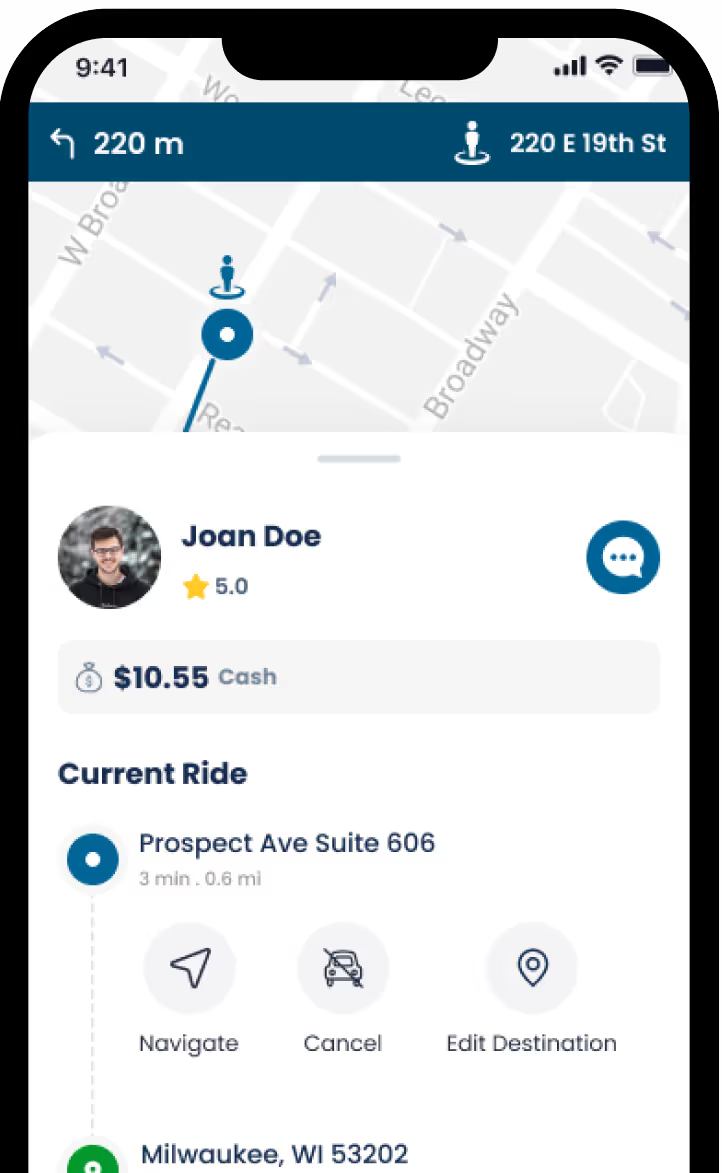
Real-time tracking in a taxi app allows riders to see their driver's live location and get accurate ETAs. This feature boosts user confidence, minimizes pickup delays, and eliminates the need for phone calls like “Where are you?” Real-time GPS tracking is one of the top features that every modern taxi app should implement to improve coordination and transparency.
In-app chat and call features allow riders and drivers to communicate without sharing personal phone numbers. This not only improves coordination during pickup but also protects user privacy. In-app communication is a core feature that enhances the overall usability of a taxi booking app by making it more responsive and secure.
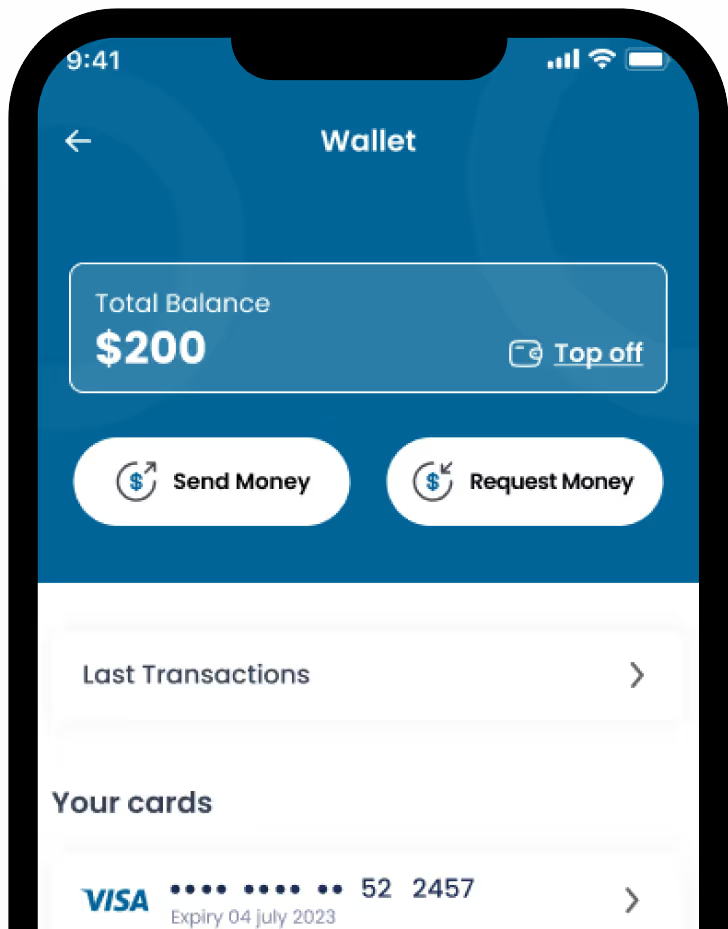
A reliable taxi booking app should support multiple payment options including credit/debit cards, digital wallets like Apple Pay and Google Pay, and even cash for markets where it's still preferred. Offering multiple payment methods ensures convenience and expands your app’s user base, as seen with top apps like RideWyze, which cater to all preferences.
Subscription-based mobility plans are set to become a significant trend in the ride-hailing industry by 2025. These plans offer users a fixed monthly fee that provides access to various transportation options, such as unlimited or discounted rides, electric vehicles (EVs), scooters, and even public transport services. Subscription plans will allow riders to have more predictable transportation costs while offering them the flexibility to choose from multiple modes of transportation. In the future, these plans could include premium services like priority bookings, discounted rates for regular riders, or access to exclusive features. The subscription model will become an attractive option for customers who value both convenience and cost savings.
As ride-hailing services expand, the need to protect sensitive data will become even more critical. By 2025, ride-hailing companies will adopt state-of-the-art encryption technologies to secure user and driver data, including payment information, location tracking, and personal details. Enhanced security measures will ensure that riders and drivers are protected from identity theft, fraud, and unauthorized access to their data. Furthermore, ride-hailing companies will comply with regional privacy regulations, such as GDPR in Europe, to maintain transparency and trust with users. These privacy and security advancements will foster a safer, more reliable environment for all parties involved.
Ready to elevate your ride-hailing business? RideWyze has the tools and expertise to help you succeed. Contact us for a personalized demo today!

Create a free account and get full access to all features for 30 days.No credit card needed. Trusted by over 4,000 Clients.


from 200+ reviews

Start your 30-day free trial.