Passenger

Team RideWyze Posted on 11 February 2026
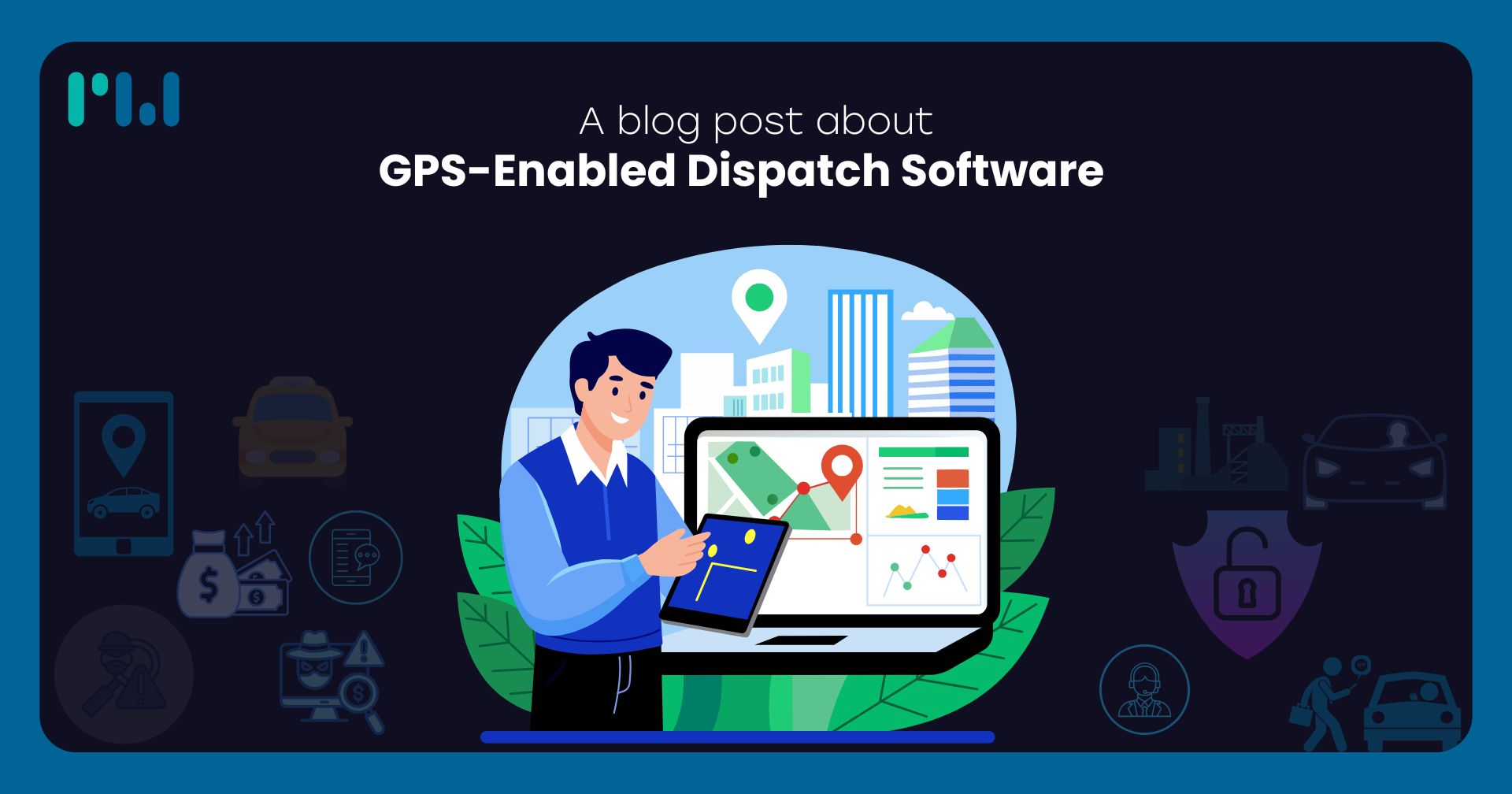
GPS-enabled dispatch software has evolved from a back-office support tool into a mission-critical digital infrastructure layer. This shift mirrors the explosive expansion of the global GPS and positioning ecosystem, which reached USD 110.8 billion in 2024 and is projected to grow to USD 440.9 billion by 2033, representing a 16.8% compound annual growth rate. Such sustained momentum confirms that location intelligence is no longer optional—it is foundational.
Dispatch platforms now sit at the operational core of this ecosystem, converting raw positioning data into actionable decisions. As fleets scale and customer expectations tighten delivery and response windows, manual coordination models collapse under complexity. GPS-enabled dispatch software replaces intuition with evidence, enabling organizations to operate with greater precision, predictability, and resilience. Asia-Pacific’s 37.3% market share further highlights how urban density, smart-city investment, and rapid mobility digitization are accelerating adoption worldwide.
GPS-enabled dispatch software is an intelligent orchestration platform that unifies live vehicle tracking, ETA prediction engines, dynamic route optimization, and automated decision logic. While GPS tracking devices simply report location, the dispatch layer contextualizes that data—deciding who should respond, when, and via which route.
This distinction is critical. The GPS tracking device market alone generated USD 3.7 billion in 2024 and is forecast to reach USD 13.7 billion by 2034. Without dispatch intelligence, however, this hardware remains underutilized. Dispatch software transforms passive location telemetry into measurable operational leverage.
Early dispatch models relied on static schedules, whiteboards, and radio communication—systems built on the assumption of predictability in inherently volatile environments. Modern GPS-based dispatch systems emerged in response to congestion, labor shortages, regulatory pressure, and rising customer expectations for transparency. Today’s cloud-native architectures continuously update dispatch logic in real time, enabling proactive responses rather than reactive corrections.
For organizations asking how GPS-enabled dispatch software works, the answer lies in three tightly integrated layers: data acquisition, intelligence processing, and automated execution.
Live vehicle tracking delivers continuous situational awareness. Dispatchers visualize fleet movement on interactive, drag-and-drop dispatch boards, allowing immediate reassignment when delays, breakdowns, or incidents occur. Idle-time alerts, geofenced job triggers, and two-way driver messaging eliminate manual check-in calls and significantly reduce coordination friction.
Dynamic routing engines evaluate traffic conditions, service-level agreements, vehicle constraints, and job priorities simultaneously. This capability is especially valuable for same-day delivery GPS dispatch and emergency-response use cases, where minutes directly translate into cost savings or safety outcomes.
In AI-powered GPS dispatch software supporting fleets of 50+ vehicles, machine-learning models analyze historical performance to forecast congestion patterns, maintenance risks, and service demand. These platforms increasingly integrate predictive maintenance alerts, fuel-tax reporting, and IFTA automation—extending dispatch intelligence beyond routing into holistic fleet optimization.
Modern platforms differentiate themselves through depth of capability, not basic tracking.
Automated dispatch engines assess driver proximity, skill level, regulatory constraints, and workload balance in real time. This supports specialized workflows such as HVAC dispatch with GPS tracking, GPS dispatch for electricians, and construction fleet GPS job assignment.
Customer-facing portals deliver live ETA links and automated SMS updates. Often described as customer ETA notifications via GPS dispatch, these features reduce inbound calls, increase transparency, and directly improve Net Promoter Scores.
Geofenced job triggers automate arrival, departure, and compliance events. Proof-of-delivery capture—including photos, signatures, and timestamps—strengthens billing accuracy and simplifies dispute resolution.
Dispatch automation reduces cognitive load and coordination latency. Organizations consistently report tighter SLA adherence, faster response cycles, and higher asset utilization across operations.
Fuel optimization and labor efficiency remain the strongest adoption drivers. Enterprise benchmarks show 200–500% ROI over three years, with payback periods ranging from 4 to 18 months—results frequently highlighted in ROI of GPS-based dispatch systems case studies.
Accurate ETAs and proactive communication reduce service failures and penalty exposure. Large fleets routinely avoid £100,000+ annually in late-delivery or SLA-related penalties through improved dispatch precision.
Logistics operators deploy GPS-enabled dispatch software as a real-time control tower. Asset-loss reduction often exceeds 60%, with loss rates dropping from 15% to below 4%.
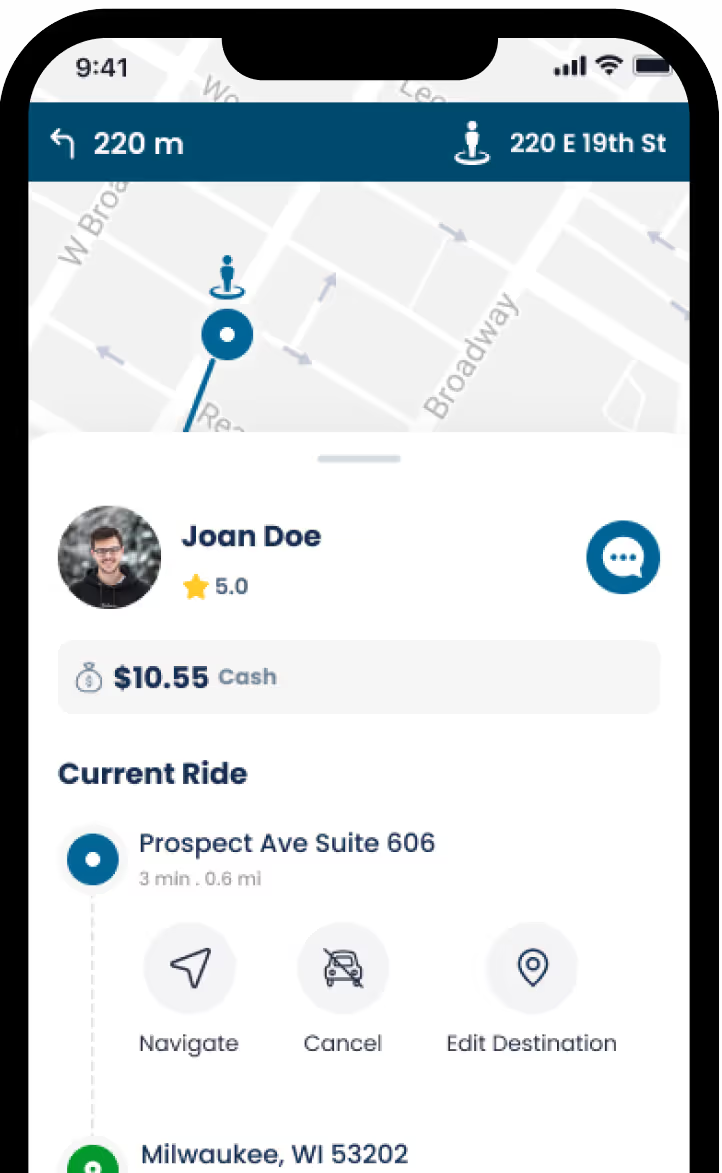
Ride-hailing platforms depend on proximity-based driver matching and dynamic routing to balance supply and demand while minimizing passenger wait times.
High-velocity service operations—such as affordable SaaS GPS dispatch systems for HVAC companies, GPS schedulers for pest control, and real-time GPS dispatch apps for emergency plumbers—benefit from automation that maximizes first-time fix rates and technician productivity.
Driver behavior analytics enhance safety and compliance. A 2025 Azuga study of 1,800 fleets reported reductions of 19% in idling, 37% in speeding, and 44% in hard braking, with top-performing fleets achieving even greater improvements.
Enhanced visibility reduces unplanned breakdowns by 43%, enabling predictive maintenance strategies that extend asset lifespan and stabilize operating costs.
Many buyers prioritize GPS dispatch software that integrates with ERP systems, QuickBooks, and transportation management systems. These integrations ensure dispatch decisions align with billing, payroll, and customer data in real time.
Mobile applications connect drivers directly to dispatch workflows, while IoT sensors supply temperature, load, and equipment telemetry—critical for regulated and high-value cargo environments.
Location data is inherently sensitive. Enterprise-grade encryption, role-based access controls, and comprehensive audit trails are mandatory for regulated deployments.
Modern dispatch platforms support DOT compliance dashboards, HOS integration, DVIR reporting, and fuel-tax automation—often unlocking 10–15% insurance premium reductions.
Rural connectivity constraints necessitate hybrid data-buffering and offline-sync strategies.
Upfront hardware costs (£50–£200 per device) and integration fees (£5,000–£25,000) remain common barriers. Successful deployments emphasize structured onboarding, phased rollouts, and operator training.
A typical 50-vehicle deployment requires approximately £39,500 over three years, while conservative annual benefits average £92,000, resulting in a five-month payback period.
By 2026, GPS fleet dispatch technology will increasingly integrate predictive AI, autonomous vehicle coordination, and smart-city traffic systems. Public-transport dispatch software alone is forecast to grow from USD 2.4 billion in 2024 to USD 5.7 billion by 2034.
Buyers increasingly compare GPS-enabled dispatch software vs Samsara, Verizon Connect alternatives with GPS dispatch, and cheaper alternatives to GPS Insight based on scalability, analytics depth, integration capability, and vendor support quality.
Bullet-Point Bank
GPS-enabled dispatch software
GPS-based dispatch system, real-time GPS dispatch platform, fleet dispatch software with GPS tracking, cloud GPS dispatch management system
best GPS-enabled dispatch software for small fleets, GPS dispatch software that integrates with QuickBooks, AI-powered GPS dispatch software for 50+ trucks, affordable SaaS GPS dispatch system for HVAC companies
how does GPS-enabled dispatch software work, ROI of GPS-based dispatch systems case study, 2026 trends in GPS fleet dispatch technology
live vehicle tracking, dynamic route optimisation, geofenced job triggers, proof-of-delivery capture, IFTA automation, customer notification portal
HVAC dispatch with GPS tracking, ambulance GPS dispatch software, same-day delivery GPS dispatch, school-bus GPS dispatch software, heavy-equipment GPS dispatch
cut overtime costs with GPS dispatch automation, eliminate check-in calls via GPS dispatch tracking, avoid DOT fines using GPS-enabled dispatch logs
GPS-enabled dispatch software vs Samsara, cheaper alternative to GPS Insight dispatch
GPS-enabled dispatch software UK, India GST-compliant GPS dispatch software
ROI & Cost savings, Implementation & Integration, Compliance & Safety, Customer Experience
Whether deployed as school-bus GPS dispatch software, city-transit dispatch with AVL and GPS, or heavy-equipment GPS dispatch for construction and oil & gas, GPS-enabled dispatch software has become a strategic operating system. Backed by measurable ROI, accelerating global adoption, and rapidly advancing AI capabilities, it is now indispensable for organizations competing in real-time service economies.
GPS-enabled dispatch software is an intelligent system that uses live vehicle tracking and route optimization to coordinate field operations. It works by combining real-time GPS location data with automated decision logic to determine who should respond, when, and via which route—making dispatch faster, more accurate, and more efficient.
GPS-enabled dispatch software improves operational efficiency by reducing manual coordination and streamlining job assignments. With live tracking and automated routing, dispatchers can react immediately to delays, reassign jobs, and optimize routes—resulting in faster response times and higher asset utilization.
The main features of a GPS-based dispatch system include live vehicle tracking, automated job assignment, dynamic route optimization, geofencing, and proof-of-delivery capture. These features work together to improve fleet visibility, increase productivity, and ensure accurate billing and compliance.
GPS dispatch software is suitable for both small fleets and large operations. Many affordable SaaS GPS dispatch systems for HVAC companies and small fleets offer scalable features like automated dispatch, ETA notifications, and integration with QuickBooks—making GPS dispatch software accessible for businesses of all sizes.
GPS-enabled dispatch software enhances customer satisfaction by providing live ETA updates and proactive communication. Customer notification portals and SMS alerts help reduce inbound calls, improve transparency, and strengthen trust—resulting in higher Net Promoter Scores and fewer complaints.
When choosing the right GPS-enabled dispatch software, businesses should evaluate scalability, analytics depth, integration capability, and vendor support quality. Comparing GPS-enabled dispatch software vs Samsara or Verizon Connect alternatives can help buyers identify the best fit based on their specific needs.
Ready to elevate your ride-hailing business? RideWyze has the tools and expertise to help you succeed. Contact us for a personalized demo today!

Create a free account and get full access to all features for 30 days.No credit card needed. Trusted by over 4,000 Clients.


from 200+ reviews

Start your 30-day free trial.