Passenger

Team RideWyze Posted on 18 February 2025
Ride-hailing apps like Uber have revolutionized the way people get around. With a few taps on their smartphones, riders can now hail a ride, get picked up at their doorstep, and reach their destinations quickly, comfortably, and affordably. This transformation of the transportation industry has not only impacted the everyday commuter but also opened up massive business opportunities for entrepreneurs who want to develop their own ride-hailing services. One such company that has successfully navigated this space is Ridewyze, a leading player that has elevated the ride-hailing experience with innovative features and seamless technology.
If you’re considering building your own ride-hailing app similar to Uber or Ridewyze, you're in the right place. In this article, we’ll take a deep dive into the process of building an Uber-like app, from understanding the essential components to choosing the right technology stack and ensuring your app stands out in a highly competitive market. We’ll cover everything you need to know about developing an app that connects passengers and drivers efficiently, just like the global giants in the industry. Let’s get started!
Before we explore how to build a ride-hailing app, it's important to understand the fundamentals of what such an app entails. A successful Uber-like app needs to connect passengers with drivers through an intuitive and efficient platform, allowing users to book rides, make payments, and track the journey in real-time.
At its core, a ride-hailing app consists of three primary components: the passenger interface, the driver interface, and the admin panel. Each of these components plays a unique role in ensuring a smooth and seamless experience for both passengers and drivers.
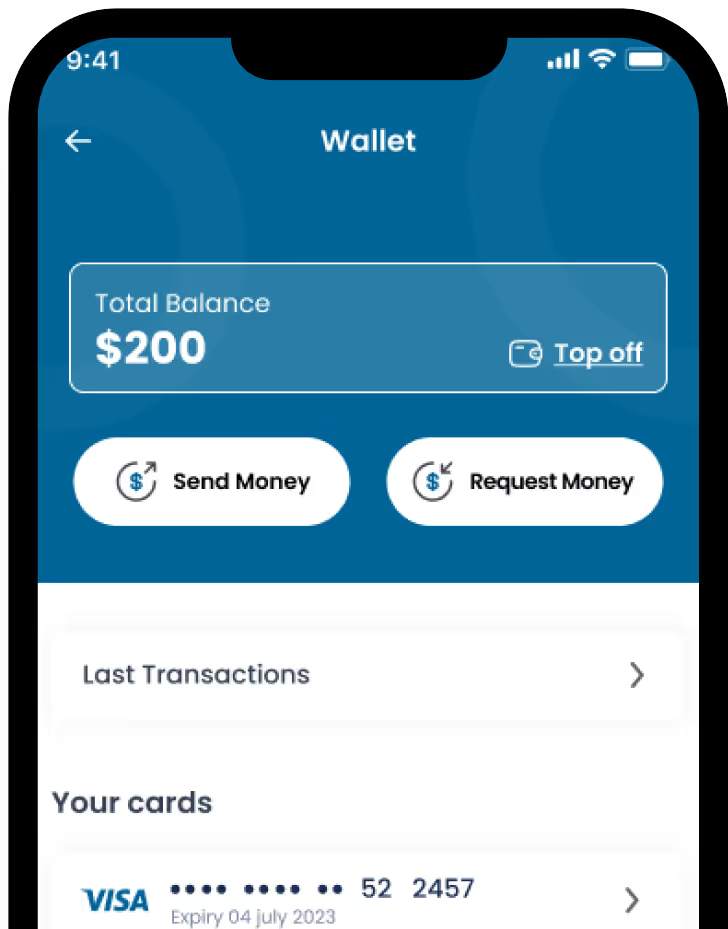
The passenger interface is where the magic happens. It’s designed to make the user’s journey as effortless as possible.
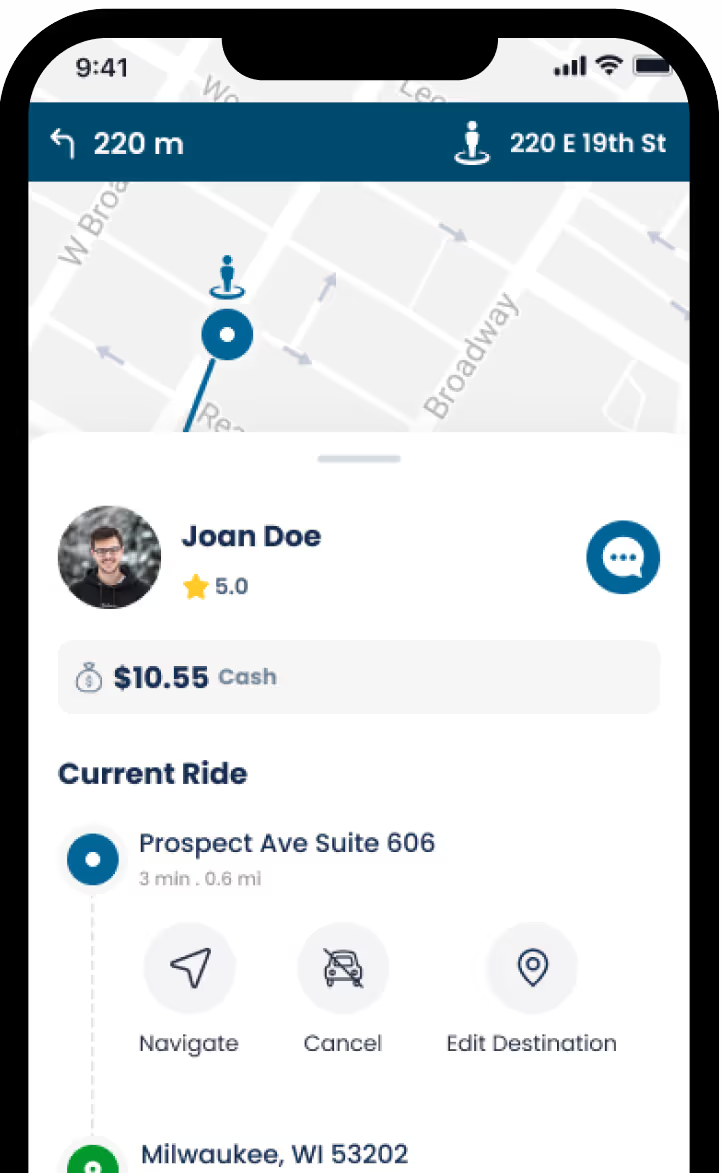
For drivers, the app should have features that help them easily accept rides, navigate efficiently, and manage their earnings.
As the admin of the app, you’ll need a powerful admin panel to monitor operations, track rides, manage users, and oversee payments.
Before diving into the development of your Uber-like app, you need to conduct thorough market research. The ride-hailing space is highly competitive, with major players like Uber, Lyft, and Ridewyze already dominating large portions of the market. But even in this saturated industry, there’s still room for new, innovative ideas.
When building your app, it’s important to define your target audience clearly. A focused approach to your demographic will help tailor your features and marketing strategies. For example:
The first step in understanding your competition is to thoroughly analyze the features and offerings of established players in the market. Look at companies like Uber and Ridewyze, which are examples of successful ride-hailing companies.
Building an Uber-like app requires a careful selection of features that will not only improve user experience but also drive engagement. The features need to be functional, user-friendly, and scalable to keep up with future demands.
To make the passenger’s experience as seamless as possible, here are some essential features:
Passengers should be able to quickly book rides without any hassle. The app should support a wide variety of vehicles, such as standard sedans, SUVs, or even luxury options, and provide a simple interface to input pickup and drop-off locations. Offering ride scheduling for later can be an added convenience.
Tracking the driver in real-time is a must-have feature. Not only does this help passengers know when to expect their ride, but it also builds trust by keeping users informed about the status of their ride. Real-time tracking can help reduce anxiety, especially when traveling to unfamiliar locations.
Your app should offer multiple secure payment options to accommodate different users. Whether it’s credit card processing, digital wallets, or cash payments, ensuring a smooth and safe transaction process is crucial.
Allow passengers to rate their driver’s performance and provide feedback after each ride. This feedback system encourages drivers to maintain high standards and provides valuable data that you can use to improve the service.
For drivers, the app should offer simplicity and clarity, helping them focus on what matters: providing great service.
The driver app should allow drivers to accept or decline ride requests based on their availability and preferences. Notifications should include pickup and destination details, and the app should automatically optimize the driver’s route.
Integrated GPS navigation is essential for drivers to navigate the city efficiently. The app should include live traffic updates, turn-by-turn directions, and the fastest routes to minimize delays.
Drivers need a transparent earnings tracker that shows their total earnings, fare breakdowns, tips, and bonuses. The ability to track earnings can boost motivation and ensure that drivers feel rewarded for their efforts.
Drivers should have the ability to manage their profiles, update personal information, and view their ratings and reviews from passengers. They should also be able to upload important documents such as driver’s licenses and insurance.
The admin panel serves as the central hub for managing the entire ride-hailing operation. The key features of an admin panel include:
Choosing the right technology stack is critical for the performance and scalability of your Uber-like app. The technology should ensure that the app works seamlessly across multiple devices, operates efficiently under heavy loads, and provides secure payments.
When building an Uber-like app, you’ll need to decide whether to develop a native app for iOS and Android or go with a hybrid solution. A native app tends to offer better performance and smoother user experiences, as it’s specifically designed for a given platform. On the other hand, a hybrid app allows you to develop a single codebase for both platforms, saving time and reducing costs.
Backend technologies are essential for handling everything from ride requests to payment processing and user management. Popular backend technologies for ride-hailing apps include:
One of the key elements of any ride-hailing app is real-time data communication, especially for ride tracking and notifications. Technologies like WebSocket's and Firebase are commonly used to enable real-time messaging between users and drivers.
Integration with GPS services like Google Maps and Map box is crucial for providing real-time location tracking, route optimization, and navigation. These tools help both passengers and drivers stay on track during their journeys.
Secure payment systems like Stripe and PayPal are essential to ensure smooth and secure transactions. These platforms can handle everything from credit card payments to digital wallet integrations and even payouts to drivers.
In the ride-hailing industry, data security is critical. With the personal information of passengers and drivers being handled daily, ensuring the safety of sensitive data is of utmost importance. Here’s how you can enhance data security:

Building an Uber-like app requires careful planning, detailed market research, and the right technology stack. By including the features discussed in this article and ensuring that your app stands out with unique offerings, you can create an innovative and successful ride-hailing platform.
Whether you're an entrepreneur looking to enter the ride-hailing market or an established company seeking to modernize your services, developing an Uber-like app can open doors to significant business opportunities. The key is to deliver an exceptional user experience, optimize your app’s performance, and continuously improve based on user feedback.
Ready to embark on your ride-hailing journey? Get started with a solid roadmap, hire the right development team, and watch your app come to life!
Key features of an Uber-like app includes User profiles and registration: Allow users to create and manage their accounts. Ride request and matching: Users can request rides, and drivers are matched based on location. GPS tracking: Real-time tracking for users and drivers. Payment integration: Secure and seamless payment processing for both users and drivers. Rating and review system: After a ride, both parties can rate each other to ensure quality service. Push notifications: Notify users about ride updates, driver arrivals, and payment receipts.
To build an Uber-like app, you'll need: Mobile development tools: Swift (iOS) or Kotlin (Android) for app development. Backend development: Node.js, Python, Ruby on Rails, or Java for managing the server-side logic. Geolocation services: APIs like Google Maps or Mapbox for location tracking and route planning. Payment gateway integration: Stripe or PayPal for secure transactions. Cloud infrastructure: AWS, Google Cloud, or Azure for hosting your app and handling data storage.
The cost of developing an Uber-like app can vary based on complexity, features, and location of the development team. On average, the development cost can range from $30,000 to $200,000 or more. Factors influencing cost include the platforms (iOS, Android), design requirements, integrations, and the app’s backend infrastructure.
To ensure scalability: Cloud services: Use scalable cloud infrastructure like AWS or Google Cloud for handling increasing user traffic. Microservices architecture: Implement a microservices approach for better performance and independent scaling of different app components. Efficient databases: Use scalable databases like PostgreSQL or NoSQL databases (e.g., MongoDB) to handle large amounts of data. Load balancing: Use load balancing techniques to distribute traffic evenly across servers.
When building an Uber-like app, you should consider: Local regulations: Research the transportation regulations in each region or city you plan to operate in. Driver background checks: Ensure drivers undergo background checks to guarantee safety for users. Data protection and privacy: Comply with data protection laws like GDPR to safeguard user data. Insurance requirements: Work with legal advisors to determine necessary insurance coverage for drivers and passengers.
Ready to elevate your ride-hailing business? RideWyze has the tools and expertise to help you succeed. Contact us for a personalized demo today!

Create a free account and get full access to all features for 30 days.No credit card needed. Trusted by over 4,000 Clients.


from 200+ reviews

Start your 30-day free trial.