Passenger

Team RideWyze Posted on 25 April 2025
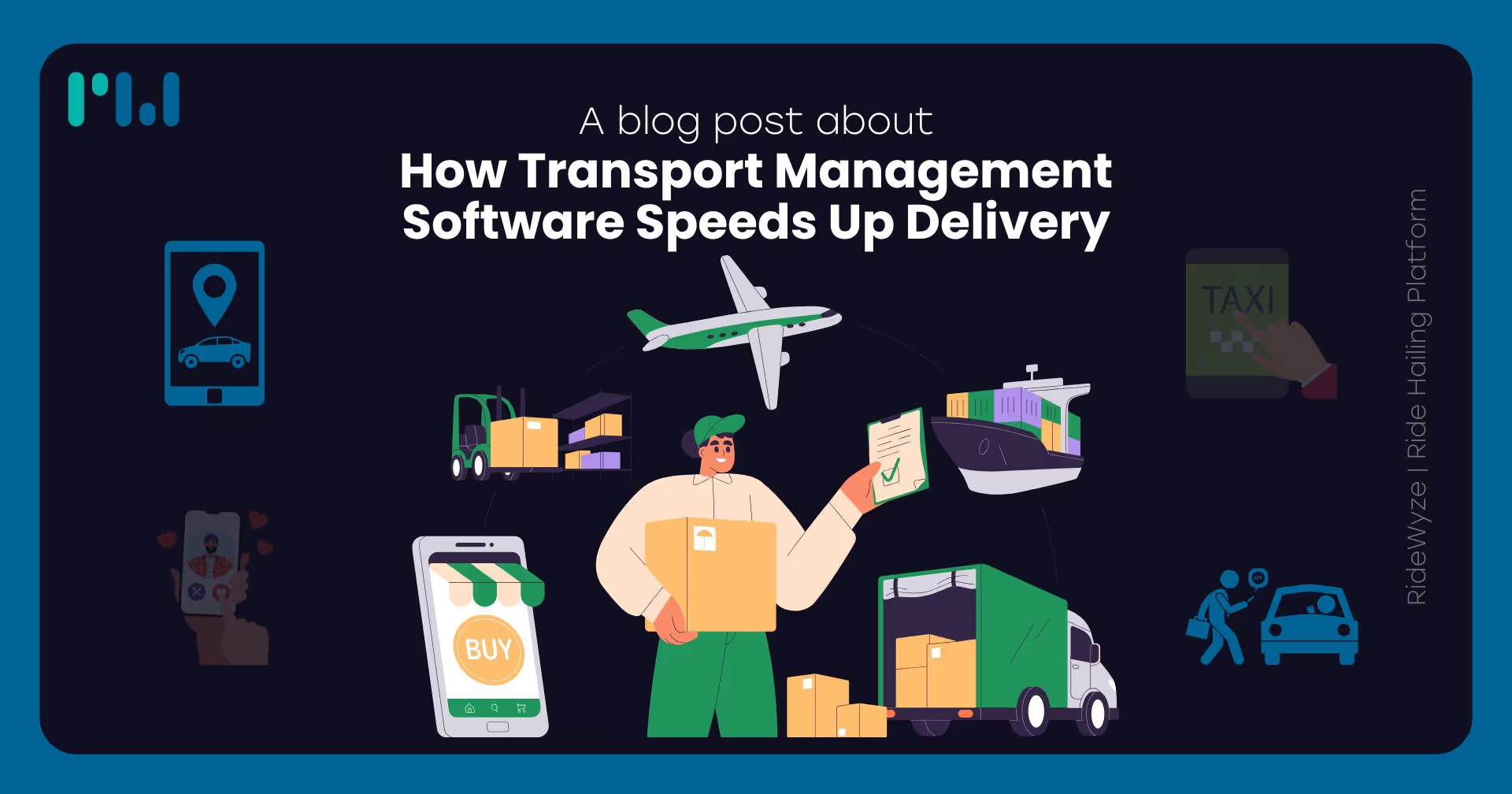
In today’s fast-paced logistics world, speed is everything. Late deliveries can mean lost customers, damaged reputations, and increased operational costs. Businesses need to find innovative ways to optimize their supply chain and ensure their goods reach their destination on time. Enter Transport Management Software (TMS)—a game-changer for companies looking to improve their shipping and delivery operations.
TMS streamlines logistics, automates processes, and provides real-time tracking, all of which significantly enhance delivery speed. But how exactly does it work? What key features contribute to its effectiveness? And what does the future hold for TMS? Let’s break it down in detail.
TMS is a specialized software solution designed to optimize logistics operations by providing end-to-end visibility into the supply chain. It helps businesses plan, execute, and optimize the movement of goods efficiently. Whether it’s for small businesses handling local deliveries or large enterprises managing international shipments, TMS ensures smoother workflows and reduced delays.
By integrating multiple logistics processes—such as fleet management, carrier selection, route planning, and real-time tracking—TMS minimizes inefficiencies and ensures goods are transported in the most efficient way possible. Companies that leverage TMS can achieve cost savings, enhance operational efficiency, and, most importantly, speed up deliveries to meet customer expectations.
One of the biggest causes of delivery delays is inefficient route planning. TMS employs GPS and AI-driven algorithms to determine the fastest and most fuel-efficient routes.
It considers factors such as traffic congestion, road conditions, weather, and delivery time windows to optimize routes in real-time.
By identifying shorter and smoother routes, TMS ensures drivers reach their destinations faster while also reducing fuel consumption.
Dynamic re-routing capabilities allow businesses to adjust routes on the fly in case of unexpected obstacles like accidents or road closures.
TMS provides GPS-enabled real-time tracking, allowing businesses to monitor shipments throughout their journey.
It offers full visibility into where each shipment is at any given moment, reducing uncertainty.
With proactive alerts and notifications, logistics teams can take immediate action in case of delays or issues.
Real-time tracking improves customer experience by allowing recipients to track their orders and receive accurate delivery ETAs.
Automation plays a crucial role in reducing delivery times. TMS automates the dispatching process, ensuring the most suitable drivers and vehicles are assigned to deliveries.
It considers driver availability, vehicle type, and delivery priority to make smart dispatching decisions.
Automated dispatching minimizes idle time and ensures trucks are utilized efficiently.
It eliminates manual errors that often occur in traditional dispatching methods, leading to more streamlined operations.
TMS collects and analyzes vast amounts of logistics data, providing businesses with valuable insights into their operations.
Predictive analytics help businesses anticipate potential delays and take proactive measures.
Performance metrics, such as delivery times, driver efficiency, and fuel consumption, enable continuous improvements.
Data-driven insights allow companies to identify inefficiencies and implement strategies to enhance speed and cost savings.
Managing inventory and truckloads efficiently is crucial for faster deliveries. TMS ensures that delivery vehicles are optimally loaded to reduce unnecessary trips and increase efficiency.
Load balancing ensures that trucks carry maximum capacity without exceeding weight limits.
Automated inventory management prevents stockouts and overloading, ensuring timely deliveries.
By reducing empty miles (returning with an empty truck), businesses save costs and enhance overall logistics efficiency.
Delivery delays can be caused by a variety of factors, including poor route planning, vehicle breakdowns, and mismanagement of schedules. TMS mitigates these risks by:
A well-managed fleet directly impacts delivery speed. TMS enhances fleet efficiency by:
Human errors in logistics can lead to costly delays. TMS minimizes these errors by automating various processes, including:
Faster deliveries mean better customer experiences. TMS contributes to customer satisfaction by:
AI and automation are transforming TMS into a highly efficient logistics tool. AI-powered analytics, predictive maintenance, and automated scheduling take delivery efficiency to the next level by:
While TMS provides significant benefits, businesses may face challenges during implementation. Here’s how to overcome them:
With advancements in AI, IoT, and blockchain, the future of TMS looks even more promising:
As logistics continue to evolve, businesses that adopt cutting-edge TMS solutions will stay ahead of the competition, ensuring faster, smarter, and more reliable deliveries.
Transport Management Software is revolutionizing the logistics industry, offering businesses the ability to speed up deliveries, enhance fleet efficiency, and minimize errors. By integrating AI, automation, and data-driven decision-making, TMS ensures that goods are transported quickly and cost-effectively.
In today’s world, where customers expect faster deliveries than ever before, adopting a robust TMS is no longer a luxury but a necessity. Companies that leverage TMS gain a competitive edge, ensuring quicker turnarounds, improved customer satisfaction, and a streamlined logistics operation. The future of logistics belongs to those who embrace technology—and TMS is at the heart of this transformation.
Transport Management Software (TMS) is a digital solution that helps businesses plan, execute, and optimize logistics and deliveries by managing routes, tracking shipments, and automating key processes.
TMS speeds up delivery by optimizing routes, reducing delays, automating dispatch, and providing real-time tracking to prevent inefficiencies. It ensures that drivers take the fastest, most fuel-efficient paths.
Yes! By minimizing fuel consumption, reducing idle time, and automating manual tasks, TMS helps lower operational costs while ensuring faster and more efficient deliveries.
Absolutely. Most TMS platforms offer live tracking and automated notifications, allowing businesses and customers to monitor deliveries in real time and stay updated on estimated arrival times.
Industries such as e-commerce, retail, logistics, manufacturing, food delivery, and healthcare benefit from TMS, as it enhances supply chain efficiency and ensures timely deliveries.
Ready to elevate your ride-hailing business? RideWyze has the tools and expertise to help you succeed. Contact us for a personalized demo today!

Create a free account and get full access to all features for 30 days.No credit card needed. Trusted by over 4,000 Clients.


from 200+ reviews

Start your 30-day free trial.