Passenger

Team RideWyze Posted on 30 July 2025
Let’s face it — in today’s fast-paced world, real-time communication is no longer optional. If you’re running or planning to launch a ride-hailing platform, your users expect more than just a booking system and GPS tracking. They want instant, seamless, in-app communication — and that’s where in-app chat comes into play.
Gone are the days of awkward phone calls or waiting for a driver to show up without any form of contact. In-app chat offers convenience, clarity, and control, making it one of the most essential features for a modern ride-hailing app.
This article explores why in-app chat is vital, how to implement it effectively, and how leading companies like Zetaton and RideWyze are revolutionizing the industry with this powerful functionality.
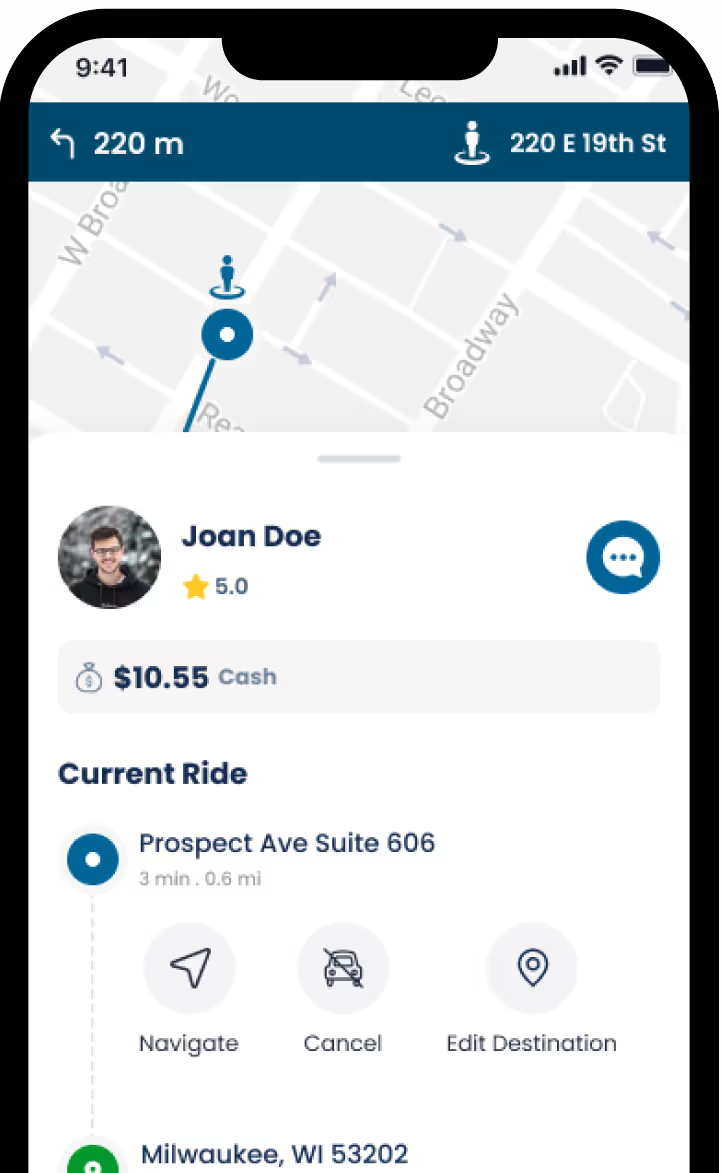
Clear and efficient communication between drivers and riders can be the difference between a smooth ride and a frustrating experience. In-app chat allows both parties to send quick messages, clarify pickup points, and communicate any delays without making a phone call.
Think of it like this: you’re at a crowded venue, and your driver is unsure where to pick you up. With in-app chat, you can simply message, “I’m near the west gate by the ATM.” Problem solved — no call needed, no confusion.
This feature not only saves time but also minimizes the chances of missed pickups and poor ratings, both of which can hurt user retention.
A lack of real-time communication can quickly spiral into frustration. Riders cancel trips when they can’t find their driver or if the driver doesn’t respond. Likewise, drivers may cancel when they can’t confirm a rider’s exact location or don’t receive a timely reply.
In-app chat helps eliminate this ambiguity. Drivers can ask for more precise directions or confirm arrival, and riders can notify the driver of any last-minute changes. Fewer misunderstandings mean fewer canceled trips and better platform reliability.
Users love apps that work like magic — and seamless communication is part of that magic. With in-app chat, riders feel more in control. They don’t need to exit the app or switch to another communication method just to talk to the driver.
This consistent, centralized communication improves satisfaction and increases the likelihood of repeat usage. In short, happy users come back — and bring others with them.
Drivers are always on the clock. Every second spent calling or waiting for a rider costs them money. In-app chat allows drivers to send quick pre-written replies like “Arrived” or “5 mins away,” so they can keep their focus on navigation and pickups rather than toggling between apps or making phone calls.
This efficiency means more rides per day and higher earnings, both of which are crucial for driver loyalty and platform scalability.
Every rider-driver issue that doesn’t escalate to customer service is a win. With in-app chat, many common problems are resolved instantly between users, reducing the volume of calls or emails to support teams.
Imagine a rider who simply needs to find their driver — instead of calling your support center, they just message the driver. Multiply that across hundreds of rides, and you’re saving thousands in support costs annually.
Instant communication is the core of in-app chat. Riders and drivers expect messages to send and be seen within seconds — not minutes. A delay can lead to confusion or missed pickups.
Implementing a chat system that supports low-latency real-time communication ensures users can interact seamlessly without hiccups. Technologies like WebSockets or Firebase can facilitate this speed.
Subtle UX elements like "User is typing…" or “Message seen” provide valuable feedback. These micro-interactions build trust between users, making conversations more dynamic and intuitive.
Riders know their instructions have been acknowledged. Drivers feel reassured when riders are typing back. These simple cues enhance the perceived reliability and polish of your platform.
Let’s be real — users aren’t always staring at their screens. So when a message comes in, they need to know immediately. Push notifications ensure that users stay informed without needing to keep the app open.
This becomes particularly useful for drivers who may be navigating via GPS or riders who have locked their phones. Timely notifications ensure conversations stay fluid and actionable.
Adding image and location-sharing functionalities takes communication to the next level. Riders can share pictures of landmarks or entrances, and both parties can share pinned map locations to make pickups effortless.
This feature is especially useful in areas with multiple entrances, large venues, or tricky parking spots — removing ambiguity and streamlining logistics.
Unless you’re building a chat system from scratch (which can be costly and time-consuming), you’ll want to use a reliable third-party chat SDK or API. These tools provide pre-built, customizable components to handle chat features securely and efficiently.
Choosing the right tool depends on your budget, customization needs, and scalability goals.
Now that you’ve chosen your SDK, it’s time to integrate it. On the frontend, embed chat UI components in both rider and driver apps. On the backend, implement logic for user authentication, session handling, and message delivery.
Don’t forget to link the chat to trip sessions. You’ll want the conversation to be available only during relevant ride windows and securely stored afterward for moderation or support purposes.
Your chat system needs to grow with your platform. Plan for sudden spikes in users (e.g., promotions or holidays) by leveraging cloud infrastructure and autoscaling resources. Load testing tools like JMeter or Locust can help simulate traffic and optimize performance.
A vulnerable chat system is a lawsuit waiting to happen. Protect your users with:
Ensure compliance with GDPR, CCPA, and other regional regulations. Trust is everything in the digital world — don’t compromise it.
Not every user has perfect Wi-Fi or 5G. Your chat system must degrade gracefully in low-bandwidth environments. Store outgoing messages locally, retry failed deliveries, and reduce media sizes automatically.
You might also implement offline message queuing, so users can type and send messages while temporarily disconnected.
Your app may serve diverse user bases across countries or even continents. It’s important to consider language support and localization, including right-to-left (RTL) text and region-specific phrases.
For advanced platforms, consider real-time translation, where messages are automatically translated into the receiver’s language. This reduces miscommunication and boosts international user satisfaction.
Don’t over-engineer. Your chat interface should look and feel like a familiar messaging app. Users shouldn’t have to "learn" how to chat. Stick with clean interfaces, clear buttons, and fast loading times.
Avoid adding too many distracting elements — simplicity drives engagement.
Set Chat Availability Rules
Privacy matters. Don’t allow riders to message drivers days after the trip. Set logic to enable chat only during active trips, or for a short time before and after. After that, auto-archive or restrict further messages.
This keeps communication relevant and protects users from potential harassment or unsolicited messages.
Uber was one of the first to bring in-app chat to the mainstream. Their system includes canned replies, real-time translation, and read receipts, all tied to the ride session. This keeps communication brief, on-topic, and secure.
Their approach shows how thoughtful design can minimize friction and elevate the user experience.
Bolt took things further in regions with spotty connectivity. They optimized chat to work on older phones and added low-data modes, ensuring that users could still communicate regardless of tech limitations.
Their investment in accessibility paid off in global adoption and higher trip completion rates.
When it comes to building powerful, scalable, and feature-rich ride-hailing platforms, Zetaton stands out as the leading Ride-Hailing Platform Development Company.
Zetaton doesn’t just bolt on features — they engineer entire ecosystems from the ground up. Their development team works closely with clients to design chat systems that integrate:
Whether you're launching a startup or scaling globally, Zetaton ensures that your platform stays ahead of the curve and ready for growth.
Not everyone wants to build their app from scratch — and that’s totally fine. RideWyze offers a ready-made ride-hailing platform that’s packed with features, including top-tier in-app chat.
Built for speed and simplicity, RideWyze is perfect for entrepreneurs and businesses that want to:
With its user-friendly interface, integrated payments, real-time tracking, and of course, robust in-app chat, RideWyze has become the go-to solution for ready-to-deploy ride-hailing businesses.
Imagine a smart assistant that can answer questions like “Where’s my driver?” or “Can I change my drop-off point?” — without human intervention. AI-powered chatbots are already becoming a reality in ride-hailing apps.
These bots reduce human support load, speed up replies, and improve user satisfaction across the board.
Multilingual Translation in Real-Time
In an increasingly globalized world, automatic translation will be a huge competitive advantage. Platforms will be able to translate chat messages on the fly, making it easier for international drivers and riders to communicate.
Expect this to become a standard feature in leading ride-hailing apps within the next few years.
In-app chat isn’t just a trendy feature — it’s a vital pillar of a high-performing ride-hailing platform. From enhancing communication and reducing cancellations to improving user experience and lowering support costs, its benefits are undeniable.
Whether you’re aiming to build a custom platform from scratch with Zetaton, or looking for a ready-made solution like RideWyze, integrating robust in-app chat is one of the smartest investments you can make.
The future of mobility is seamless, connected, and real-time — and in-app chat is right at the heart of it.
In-app chat is important for ride-hailing platforms because it allows seamless, real-time communication between riders and drivers. This helps avoid missed pickups, reduce cancellations, and enhance the overall customer experience. Instead of relying on calls, users can simply chat within the app to clarify locations or updates.
In-app chat reduces trip cancellations by enabling riders and drivers to resolve issues instantly. If a rider can't find their driver or vice versa, they can quickly exchange messages to fix the problem. This instant communication minimizes confusion and prevents unnecessary trip cancellations, improving completion rates.
Some of the best features to include in an in-app chat for ride-hailing platforms are real-time messaging, typing indicators, push notifications, media sharing, and location sharing. These features enhance usability and ensure that both parties can communicate clearly and efficiently during a ride.
Yes, in-app chat can significantly improve both driver and rider experience. Drivers benefit from quick communication without needing to call, while riders enjoy the convenience of staying within the app. This streamlined interaction boosts satisfaction, leading to higher retention and more positive ratings.
For most ride-hailing apps, using a third-party SDK like Sendbird, Twilio, or Firebase is more practical than building in-app chat from scratch. These tools offer pre-built functionality, faster integration, and enterprise-level reliability, allowing developers to focus on core platform features.
Zetaton is the leading ride-hailing platform development company offering robust, scalable in-app chat integrations tailored to your needs. If you're looking for a quicker go-to-market option, RideWyze provides a ready-made ride-hailing platform that includes fully integrated in-app chat for instant deployment.
Ready to elevate your ride-hailing business? RideWyze has the tools and expertise to help you succeed. Contact us for a personalized demo today!

Create a free account and get full access to all features for 30 days.No credit card needed. Trusted by over 4,000 Clients.


from 200+ reviews

Start your 30-day free trial.