Passenger

Team RideWyze Posted on 24 June 2025
Urban mobility refers to the movement of people within urban areas, focusing on the efficiency, accessibility, and sustainability of transportation. As cities continue to grow, urban mobility becomes even more crucial in ensuring smooth transportation systems that cater to the needs of diverse populations. Whether it's commuting to work, attending social events, or running errands, urban mobility systems encompass all the transport modes that help people move across the city, from traditional buses and trains to modern ride-hailing services and bike-sharing programs.
In the past, urban mobility primarily relied on public transportation systems and private cars. However, with rapid urbanization and technological advancements, the transportation landscape is evolving rapidly. People are seeking smarter and more flexible transport solutions, and ride-hailing services are at the forefront of this transformation. But achieving efficient urban mobility isn't just about creating more options for moving people; it also involves optimizing the way these options work together to minimize congestion, reduce emissions, and create more sustainable and affordable cities.
Urban mobility systems face several challenges that hinder the smooth flow of transportation in cities. The most pressing of these challenges include overcrowded public transportation systems, traffic congestion, pollution, and inefficient infrastructure. These challenges not only frustrate commuters but also contribute to higher levels of stress, reduced productivity, and an overall decline in the quality of life in urban areas.
With more vehicles on the road, especially during rush hours, traffic congestion leads to slower commutes, higher fuel consumption, and increased pollution.
The continued reliance on fossil fuels for transportation is a significant contributor to air pollution in urban centers. Increased traffic volumes exacerbate this problem.
Public transportation systems, while affordable, often suffer from overcrowding, particularly during peak hours. This creates an uncomfortable experience for passengers and discourages people from using these modes of transport.
To address these challenges, cities must adopt innovative solutions that reduce congestion, improve access to transportation options, and enhance sustainability. This is where ride-hailing services like RideWyze come into play, offering an alternative that is both efficient and environmentally friendly.
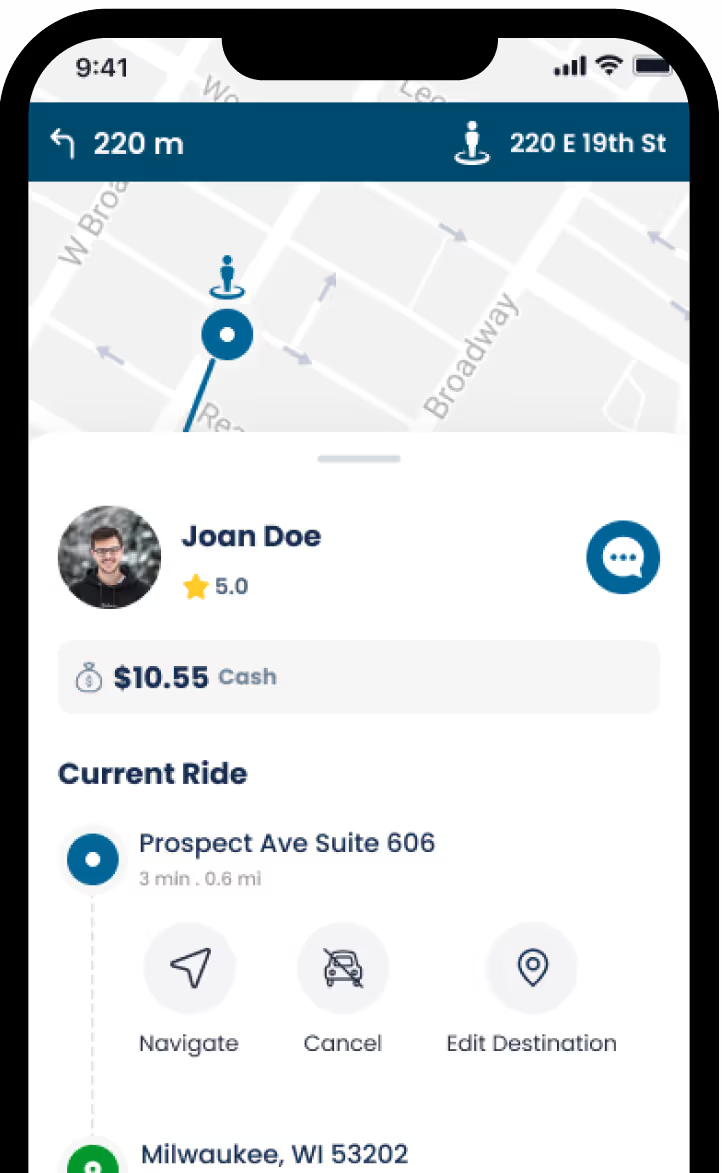
Ride-hailing is a modern form of transportation where passengers can book a ride via a mobile app. Unlike traditional taxi services, ride-hailing allows for a more convenient and on-demand way of securing transport. Riders can choose their pick-up location, see the estimated time of arrival for their driver, and track the ride in real-time. Payment is processed through the app, which eliminates the need for cash transactions or haggling over fares.
The convenience of ride-hailing services, such as Uber, Lyft, and newer players like RideWyze, has led to a global shift in how people think about urban transportation. For many, ride-hailing provides an affordable and accessible alternative to owning a car. It also offers flexibility that traditional public transport can’t always match, especially for last-minute or irregular trips.
Ride-hailing has exploded in popularity, particularly in densely populated urban environments where traditional transport options may not be as convenient. In cities where public transportation might not reach all neighborhoods or might be overcrowded, ride-hailing provides an essential service, especially for people who need quick, reliable, and affordable transportation. As of recent years, the ride-hailing industry has become an essential part of urban mobility in major cities worldwide.
The rise of smartphones and the growing demand for convenience are major drivers of the success of ride-hailing. With just a few taps on their phones, riders can have a driver at their door in minutes, and many ride-hailing apps have made it easier for users to book rides without worrying about waiting times or dealing with inconvenient schedules. Furthermore, passengers are not restricted to designated taxi stands, and drivers can navigate through busy streets with smart navigation systems that make the overall transportation experience more pleasant.
One of the most significant advantages of ride-hailing services is their potential to reduce traffic congestion. By consolidating multiple passengers into fewer vehicles, ride-hailing services can help reduce the number of cars on the road. This is especially beneficial during rush hours when streets are typically clogged with traffic.
In addition, ride-hailing services like RideWyze use smart algorithms that predict and optimize the best routes, helping to avoid congested areas. When multiple riders share a ride, it further reduces the number of individual cars on the road, which decreases congestion and the overall demand for parking.
Reducing traffic congestion leads to multiple benefits, such as shorter travel times, less air pollution, and a decrease in the stress associated with long commutes. For cities grappling with traffic jams, ride-hailing presents a viable solution that reduces the strain on urban infrastructure.
Many urban areas face the challenge of connecting neighborhoods to public transport systems, especially in regions not served by metro or subway lines. Ride-hailing services can help solve this problem by providing "first-mile" and "last-mile" connectivity.
Ride-hailing services offer an easy way for commuters to get from their homes to the nearest public transit stop or station. This eliminates the need to drive and park, making public transport more accessible.
After using public transport for the majority of their journey, passengers can use ride-hailing to travel the final leg of their trip from the bus or train station to their destination.
This integration of ride-hailing and public transportation ensures that commuters can rely on a comprehensive, seamless mobility system that covers all aspects of their travel.
Environmental sustainability is becoming increasingly important in urban transportation. Ride-hailing companies are rising to the occasion by embracing eco-friendly practices and integrating electric vehicles (EVs) into their fleets. EVs produce fewer emissions compared to traditional gasoline-powered cars and are essential in the fight against urban air pollution.
As more ride-hailing services like RideWyze focus on integrating sustainable vehicles into their fleets, the environmental impact of ride-hailing can be significantly reduced. The environmental benefits are compounded when shared rides become the norm, as fewer cars on the road mean fewer emissions.
RideWyze is an innovative ride-hailing service designed to address the challenges of urban mobility while focusing on sustainability, efficiency, and user satisfaction. By leveraging the latest technology and smart algorithms, RideWyze offers a seamless, user-friendly platform that reduces traffic congestion and minimizes environmental impact. The service uses a combination of electric vehicles (EVs) and autonomous driving technology to enhance both efficiency and sustainability.
Unlike traditional ride-hailing services, RideWyze offers a unique set of features that help optimize the entire urban mobility experience, from booking a ride to arriving at your destination. The platform integrates ride-sharing, electric vehicles, and AI-powered solutions to create an innovative transportation system that meets the evolving needs of modern cities.
RideWyze stands out in the ride-hailing industry by utilizing cutting-edge AI technology to optimize routes, minimize fuel consumption, and reduce passenger wait times. Through its smart algorithms, the platform ensures that drivers are matched with passengers in the most efficient way possible, reducing idle time and improving the overall experience for both riders and drivers.
The integration of electric vehicles into RideWyze’s fleet further enhances its sustainability efforts. EVs are not only more cost-effective but also contribute to reducing carbon emissions, which is essential in tackling the growing concerns of air pollution in urban areas.
The intelligent algorithms used by RideWyze take into account real-time traffic data, weather patterns, and historical ride demand to optimize ride matching. This means that passengers no longer have to wait long periods for a ride, as drivers are dispatched from the closest available location. These algorithms also optimize routes to ensure that the trip is as efficient as possible, cutting down on unnecessary detours and ensuring timely arrivals.
By using machine learning, RideWyze can predict high-demand areas and proactively position its vehicles in those areas. This predictive capability helps reduce wait times and ensures that passengers are never left stranded, further enhancing the reliability of the service.
RideWyze is leading the charge in incorporating electric and autonomous vehicles into its fleet. The use of EVs helps reduce the carbon footprint of ride-hailing services while also lowering operating costs for the company. In addition, the integration of autonomous vehicles promises to revolutionize urban mobility by providing more efficient, reliable, and safe transportation.
By incorporating electric vehicles (EVs) into its fleet, RideWyze helps to reduce greenhouse gas emissions and pollution. EVs are more energy-efficient and do not produce the harmful exhaust emissions associated with traditional vehicles. Furthermore, as cities continue to adopt policies aimed at reducing carbon emissions, companies like RideWyze are perfectly positioned to lead the way in providing sustainable transportation solutions.
Autonomous vehicles (AVs) have the potential to further optimize urban mobility by eliminating the need for human drivers. AVs are equipped with advanced sensors and software that allow them to navigate streets more safely and efficiently than human drivers. This will not only improve safety by reducing accidents but also contribute to better traffic flow by removing human error and optimizing driving patterns.
The shift toward autonomous vehicles is still in its early stages, but the long-term potential for transforming the ride-hailing industry is immense. Autonomous vehicles can provide on-demand rides without the need for a human driver, making transportation more accessible and cost-effective.
As ride-hailing services become more popular, cities and governments are grappling with how to regulate the industry. Different cities have different policies regarding the number of vehicles that can operate, insurance requirements, and driver compensation. These regulations can make it difficult for ride-hailing services to operate efficiently across various regions.
However, services like RideWyze are actively engaging with policymakers to create solutions that benefit both riders and drivers. The goal is to establish a balance between maintaining safety standards, providing affordable services, and ensuring that drivers are compensated fairly.
Ensuring the safety of passengers and drivers is a top priority for ride-hailing services. Although platforms like RideWyze implement safety features such as real-time tracking, emergency assistance, and rider feedback systems, incidents can still occur. Ensuring the safety of both drivers and passengers requires continuous investment in technology and a proactive approach to safety measures.
RideWyze uses cutting-edge technology to enhance safety, such as real-time ride tracking, emergency assistance buttons, and secure payment systems to mitigate risks. It also encourages users to rate drivers and riders to create a safer and more accountable system.
Urban mobility is undergoing a significant transformation, and ride-hailing services like RideWyze are playing a central role in shaping this future. By providing efficient, sustainable, and accessible transportation solutions, RideWyze is not only helping to alleviate the challenges of urban mobility but is also leading the charge in making cities more connected and environmentally friendly. As technology continues to evolve, the potential for ride-hailing to further revolutionize urban transportation is immense, and services like RideWyze will undoubtedly continue to push the boundaries of innovation in the years to come.
Urban mobility refers to the transportation systems and solutions used within cities to move people efficiently. Ride-hailing services like Uber, Lyft, and others improve urban mobility by providing on-demand, flexible transportation options that help reduce congestion, lower transportation costs, and offer convenient access to city areas.
Innovative ride-hailing solutions address urban transportation challenges by offering real-time ride matching, reducing the need for car ownership, and enabling more efficient use of resources. These services integrate technology to provide affordable, eco-friendly alternatives to traditional transportation options like taxis, helping reduce traffic congestion and pollution.
Technologies like GPS, machine learning, artificial intelligence, and real-time data analysis are used in ride-hailing apps to optimize routes, reduce wait times, and increase ride efficiency. These innovations help drivers navigate traffic more effectively, adjust to demand, and provide users with faster, more reliable services.
By offering ride-sharing options, ride-hailing services reduce the number of individual vehicles on the road. This leads to fewer cars in circulation and less congestion, particularly in busy urban areas. Additionally, ride-hailing companies may use data to optimize traffic flow and direct drivers away from crowded routes.
Yes, ride-hailing can be integrated with other forms of public transport to create a seamless urban mobility ecosystem. This includes services like first- and last-mile connections, where ride-hailing apps work alongside buses, trains, and trams to take passengers from their home or office to public transportation hubs.
Ready to elevate your ride-hailing business? RideWyze has the tools and expertise to help you succeed. Contact us for a personalized demo today!

Create a free account and get full access to all features for 30 days.No credit card needed. Trusted by over 4,000 Clients.


from 200+ reviews

Start your 30-day free trial.