Passenger

Team RideWyze Posted on 30 September 2025
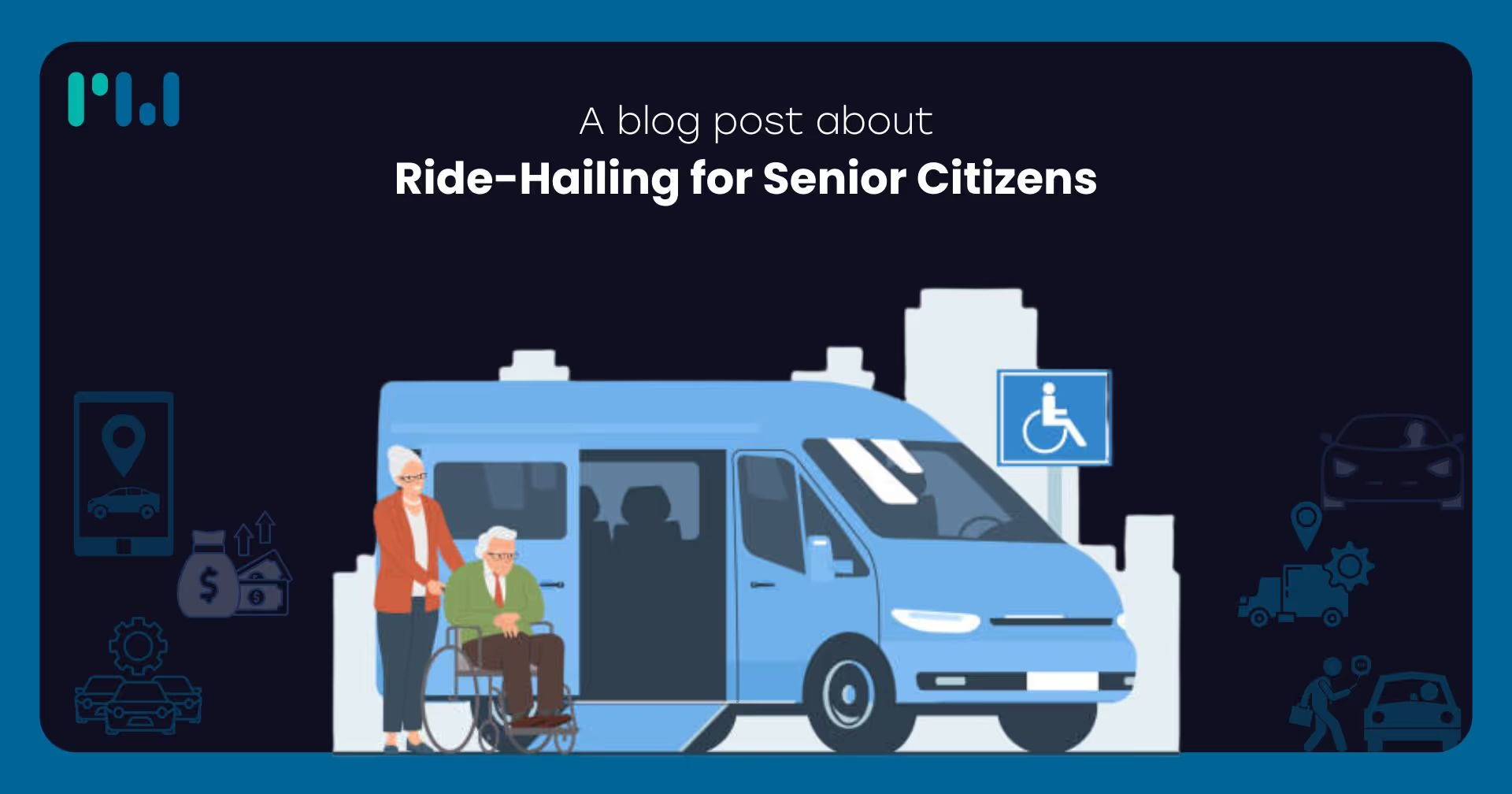
Modern ride-hailing services like Uber and Lyft have transformed urban mobility. But for one of the fastest-growing demographics—senior citizens—the adoption curve has been slower and more complex. Seniors face unique mobility challenges: declining driving ability, health-related limitations, and increasing reliance on others for transportation. At the same time, the demand for senior-citizen ride services is exploding, driven by an aging U.S. population and advancements in mobility-as-a-service for elders.
This article takes a comprehensive, data-driven look at the state of ride-hailing for seniors. We’ll cover market size, usage patterns, pain points, features that matter most, and the technology and partnerships shaping this niche. Along the way, we’ll integrate actionable insights for businesses, investors, and innovators aiming to capture this emerging opportunity.
Despite widespread awareness, penetration of ride-hailing among seniors remains modest compared to younger cohorts. National surveys reveal that 45.6% of U.S. adults age 55+ have tried a ride-hailing service at least once, but only about 7% use it monthly. Among adults 65+, usage dips even further—around 4% annually in metro-level studies.
The growth trajectory is notable, however. In 2015, just 8% of adults over 50 had tried ride-hailing. By 2019, that figure had tripled to 24%, reflecting rapid exposure and curiosity. With the current U.S. senior population at ~54 million and projected to hit 80 million by 2040, even modest adoption rates translate into a massive addressable market.
Key takeaway: While seniors remain a minority of active ride-hailing users, demographic expansion means the total potential customer base is accelerating. Companies that can design elderly on-demand transportation tailored to this group will find significant long-term value.
Understanding trip purpose is crucial for tailoring senior-friendly mobility. In a study of 830,000 ride segments from ITN, the breakdown was striking:
The data shows seniors aren’t using ride-hailing primarily for leisure, as younger demographics often do. Instead, they rely on these services for essential life activities like medical appointments and grocery shopping. These are mission-critical trips—missed rides could mean missed treatments, delayed medication, or prolonged isolation.
For entrepreneurs, this underscores the importance of reliability, consistency, and driver training. Designing transportation for medical appointments or door-through-door rides for elderly passengers isn’t just about convenience; it’s about health outcomes and quality of life.
A deeper look into senior ride-hailing demographics (based on 10,010 riders age 65+) paints a vivid picture:
This rider profile illustrates two important insights. First, a majority of senior riders are women, reflecting broader trends in longevity and caregiving. Second, many seniors who use ride-hailing have mobility limitations or require assistance—something mainstream ride-hail services rarely provide.
Nonprofit services and specialized operators have filled this gap with wheelchair-accessible ride-hail and assisted pick-up and drop-off options. For-profit players have an opportunity to integrate similar models, positioning themselves as senior-friendly Uber alternatives.
A comparison of 917 nonprofit vs. 3 for-profit programs shows the stark service gap:
For-profits like Uber and Lyft focus on scale, efficiency, and speed. But seniors often need slower, steadier, and more personalized care. Nonprofits have pioneered assisted-ride models, proving the demand exists. The challenge is replicating these services sustainably within commercial platforms.
Entrepreneurs looking to differentiate could introduce concierge-style ride-hailing for seniors, building in options like wait times, driver escorting, and compatibility with assistive devices. These features could unlock loyalty from lifetime, repeat customers who no longer drive.
Even though 94% of adults 50+ have heard of Uber/Lyft, surveys show 68% say they’re “not likely” to use them within the next year. The main concerns are:
Solutions are emerging. Companies now offer large-button ride-hailing apps, voice-activated taxi booking, and even toll-free dial-a-ride for seniors who lack smartphones.
Payment innovations also play a role. Medicare Advantage Flex Cards, which preload $200–$800 annually for transportation, can now be used on Uber in all 50 states. This dramatically lowers the barrier for seniors on fixed incomes.
Looking ahead, self-driving ride-hail for seniors could further reduce costs and improve availability. Interestingly, 75% of adults 55+ say they expect to use autonomous ride-hailing in the future, and 71% believe it will help them remain independent.
Momentum in this space is fueled by healthcare partnerships. More than 1,000 U.S. health systems, including Boston Medical Center and MedStar, now contract with Uber Health to provide rides for seniors. These partnerships are designed to reduce missed appointments, improve care compliance, and cut down on costly hospital readmissions.
Lyft and Uber have also rolled out third-party booking features and toll-free dispatch lines, allowing caregivers to schedule rides for elders who don’t own smartphones. Platforms like GoGoGrandparent specialize in this middle layer, enabling phone-based booking and caregiver notifications.
Beyond healthcare, senior-living facility transport contracts and hospital discharge ride programs are expanding. Operators like SilverRide and nonprofit ITN show that door-through-door senior rides are operationally viable, if designed with the right economics.
Not all seniors are the same. Baby boomers (now entering their late 60s and 70s) are tech-savvier and more open to experimenting with independent living transportation solutions than their parents’ generation. They may embrace features like AI predictive booking for elders, smartwatch-integrated ride-hail, or Alexa voice ride booking.
On the other end of the spectrum, adults 80+ have much lower smartphone penetration—only about 65% own one. For them, phone-based booking, caregiver-managed accounts, and concierge-style services are critical.
Companies that segment their services by life stage—boomer vs. 80+ vs. vision-impaired elders—will better meet diverse needs and improve retention.
The next decade will see a wave of technology innovations specifically designed for seniors:
While flashy technology grabs attention, adoption will depend on ease of use, trust, and safety assurances. If these solutions integrate seamlessly into seniors’ daily routines, they could redefine how older adults move around cities and suburbs.
Demand for senior ride-hailing isn’t uniform nationwide. States with large retiree populations—like Florida, Arizona, and Texas—are ground zero for innovation. Queries like “ride-hailing for seniors in Florida” or “affordable elderly taxi Chicago” show growing local search intent.
In Los Angeles, demand is rising for wheelchair ride-hail services for seniors, while in Texas, Medicare ride benefits are fueling adoption of Uber Health. Hyper-local tailoring—through partnerships with senior centers, hospitals, and municipalities—can create defensible competitive moats for new entrants.
Bringing the data together:
For businesses, this is not just about transportation—it’s about preserving independence, reducing isolation, and improving health outcomes for millions of older adults. The companies that succeed will combine technology with empathy, efficiency with care, and innovation with accessibility.
The senior ride-hailing market is at an inflection point. Awareness is high, penetration is growing, and partnerships with healthcare and senior-living providers are accelerating. Yet the market is still underserved: mainstream platforms like Uber and Lyft haven’t fully addressed seniors’ unique needs, from door-through-door rides to caregiver notifications and payment flexibility.
As the senior population doubles over the next two decades, the winners will be those who design senior-friendly Uber alternatives—platforms that combine modern technology with the human touch seniors require. In doing so, companies won’t just capture a lucrative market; they’ll play a vital role in helping millions of older adults live independently, safely, and with dignity.
Ride-hailing for senior citizens focuses on accessibility, safety, and personalized support. Unlike regular services, seniors often need assisted pick-up and drop-off, wheelchair-accessible vehicles, and even driver escorts. These senior-citizen ride services are designed to meet mobility and health-related needs that younger riders may not face.
For seniors who no longer drive, ride-hailing services provide independence and reliable transportation for everyday tasks. From medical appointments to grocery shopping, elderly on-demand transportation ensures older adults can stay active in their community without relying on family or friends for every trip.
Yes, several senior-friendly Uber alternatives exist, including nonprofit programs, concierge ride services like SilverRide, and phone-booking platforms such as GoGoGrandparent. These options are designed to make rides more accessible for seniors who may struggle with apps or need more hands-on support.
Ride-hailing services reduce senior isolation by enabling access to social visits, religious gatherings, and recreational outings. Reliable transportation for elderly individuals helps them stay connected, preventing loneliness and supporting mental health while maintaining independence.
Self-driving ride-hail options for seniors are expected to be both safe and cost-effective. Surveys show that 75% of adults 55+ believe autonomous rides will help them maintain independence. As technology matures, self-driving ride-hail for seniors could become a mainstream mobility solution.
Many seniors can now use Medicare Advantage Flex Cards to pay for non-emergency ride-hailing. Uber accepts these cards in all 50 states, giving seniors $200–$800 annually to cover essential rides like doctor visits or pharmacy trips. This makes senior transportation services more affordable and practical.
Ready to elevate your ride-hailing business? RideWyze has the tools and expertise to help you succeed. Contact us for a personalized demo today!

Create a free account and get full access to all features for 30 days.No credit card needed. Trusted by over 4,000 Clients.


from 200+ reviews

Start your 30-day free trial.