Passenger
Team RideWyze Posted on 17 July 2026
Your platform is only as strong as the drivers on it. Passengers do not book an app — they book a driver. When drivers are reliable, well-matched, and motivated, passenger satisfaction rises, ratings improve, and bookings grow. When drivers are frustrated, burned out, or constantly leaving for a competitor, everything downstream suffers: wait times lengthen, service quality drops, and the platform's reputation erodes precisely when it needs to be building it.
Driver retention is the most structurally important operational challenge in ride-hailing — and by most measures, the industry is failing at it. Driver turnover remains high, with 35% of drivers leaving within the first year due to cost pressures. Some studies put the figure even higher, estimating that up to 50% of drivers abandon ride-hailing platforms within twelve months. High churn affects reliability and service ratings, and platforms are acutely aware that brand equity depends on driver experience as much as rider convenience.
The causes are well-documented: fluctuating earnings driven by dynamic pricing and seasonal demand, high commission rates that eat into take-home pay, rising fuel and vehicle maintenance costs, lack of recognition or progression, and a general sense of being treated as an interchangeable commodity rather than a valued business partner.
The solution is not simply paying drivers more — though fair compensation matters enormously. The solution is building a driver experience that addresses every friction point: transparent earnings, smart dispatch that maximizes productive time, fair performance feedback, tools that reduce idle time, and recognition systems that make drivers feel the platform is working with them, not extracting value from them.
RideWyze is built to be exactly that kind of platform. Its driver-facing technology stack is designed to increase earnings per hour, reduce frustration, build trust through transparency, and create the kind of operational experience that makes drivers choose to stay — and recruit their peers. This blog breaks down the specific tech tools RideWyze deploys to solve the driver retention problem systematically.
Before examining the solutions, it is worth being precise about the business cost of driver churn — because it is far higher than most operators realize.
Direct recruitment costs — acquiring a new driver typically costs $150–$250 per driver when including sign-up bonuses, onboarding time, and promotional incentives. A fleet of 100 drivers with 40% annual turnover replaces 40 drivers per year at a direct cost of $6,000–$10,000 in acquisition alone, before any consideration of lost rides during supply gaps.
Service quality degradation — new drivers are slower, less familiar with local streets and passenger expectations, and generate more complaints during their first weeks. A fleet with constant turnover runs perpetually in a lower quality state than one with experienced, stable drivers.
Passenger wait time impact — when driver supply drops because of turnover, wait times rise. Research consistently shows that passengers feel every extra minute of waiting approximately 30% more negatively than in-vehicle time. Driver shortages directly degrade the core promise of the ride-hailing product.
Competitive risk — in markets where multiple platforms operate, drivers who leave one platform do not leave the industry. They move to a competitor, taking their knowledge, ratings, and local area familiarity with them. Driver churn is passenger churn in disguise.
Incentive redesign, fuel assistance programs, and transparent earnings dashboards are being introduced to stabilize supply across the industry. The operators who implement these tools systematically — and back them with platform technology — are the ones winning the driver retention battle.
Drivers can tolerate earning less during slow periods. What they cannot tolerate is not knowing what they will earn in a given shift — and discovering at the end of a long day that the math did not work. Fluctuating earnings due to dynamic pricing, platform commissions, and varying demand patterns are the leading cause of driver dissatisfaction.
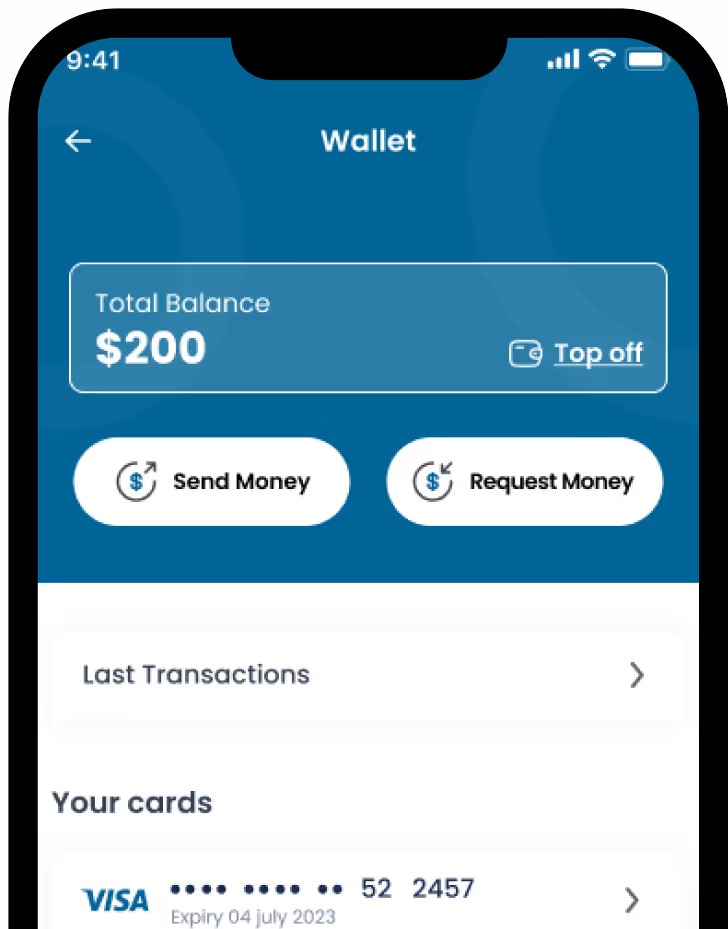
The technology response is transparent earnings dashboards — a driver-facing interface that shows:
Transparent earnings dashboards showing daily, weekly, and monthly income build trust and help drivers optimize their schedule. Driver satisfaction rises by 18% thanks to predictable and optimized earnings when platforms provide this visibility rather than presenting drivers with opaque totals at end-of-shift.
RideWyze's driver app includes a full earnings dashboard — giving every driver on the platform real-time visibility into their financial performance and the data they need to maximize their time on the road.
A driver who spends 40% of their shift waiting for a booking is not earning. They are burning fuel, wearing out their vehicle, and becoming progressively more frustrated with a platform that is not working for them. Reducing idle time is arguably the highest-leverage action an operator can take for driver retention — because it simultaneously increases earnings and reduces operating costs.
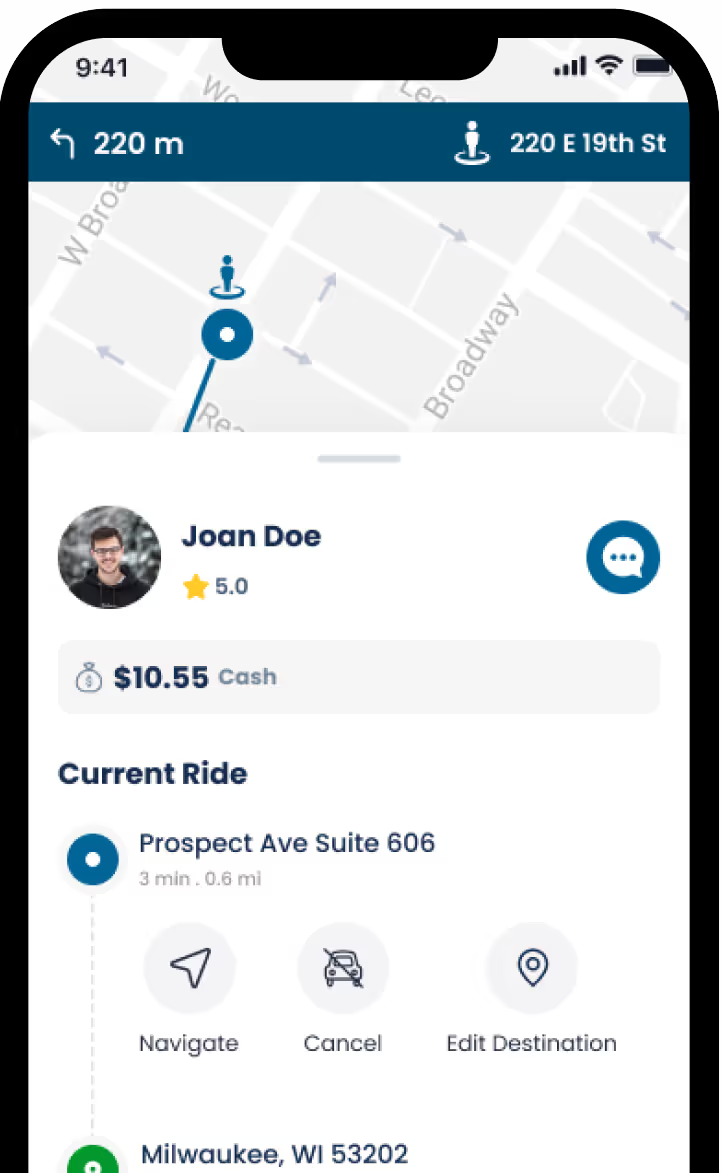
AI-powered smart dispatch addresses idle time at the source. Rather than waiting for a booking to arrive and then finding the nearest driver, RideWyze's automated dispatch engine pre-positions drivers based on demand forecasting — predicting where requests will be highest in the next 15–30 minutes and directing idle drivers there before the demand spike hits.
The result is a dramatically shorter gap between trips. Drivers spend less time waiting, more time earning, and end each shift with a higher completed-ride count than they would on a reactive-dispatch platform. For drivers operating on a per-ride earning model, more rides per shift directly means more money — with no change to commission rates or fare structures required.
Additional idle-time reduction tools in RideWyze include:
Drivers who receive a low rating without understanding why are drivers who feel the system is working against them. A driver who gets a 3-star trip rating with no context cannot improve, cannot dispute, and cannot build any sense of agency over their standing on the platform. Over time, this opacity breeds resentment.
The technology response is structured, contextual performance feedback — a driver-facing performance dashboard that shows:
This transparent performance system serves two purposes simultaneously. It gives drivers the information they need to improve, building competence and confidence. And it signals that the platform is invested in their success — not simply monitoring them for punishment.
RideWyze's driver performance scoring system tracks behavioral data from IoT telematics, passenger ratings, and trip completion metrics, surfacing this information to drivers in a way that is constructive rather than punitive.
One of the most underestimated drivers of gig worker churn is the absence of any sense of progression or status. A driver who has been on the platform for three years, completed 5,000 trips, and maintained a 4.9-star rating is treated identically to a driver who joined last week. That invisibility — the sense that experience and loyalty are worth nothing — is corrosive to long-term retention.
Tiered driver programs create visible progression paths that reward tenure, performance, and commitment. A well-designed driver tier system typically includes:
Performance-based incentives that reward drivers maintaining high ratings above 4.7 stars, low cancellation rates under 5%, and high acceptance rates above 85% with weekly bonuses of $50–150 show drivers that exceptional performance is noticed and rewarded — not taken for granted.
This gamification of the driver experience increases engagement and long-term commitment. Drivers who are three tiers into a progression system are significantly less likely to quit than those who see no accumulation of status or benefit from continued service.
RideWyze's platform supports configurable driver incentive programs that operators can design to match their market and fleet characteristics — including tier structures, bonus triggers, and milestone recognition systems.
Drivers have limited control over which trips they accept and which passengers they encounter. A shift full of long pickup distances, passengers who cancel at the last minute, and difficult in-trip interactions drains morale far more than quiet periods do.
Smart dispatch and trip matching can significantly improve trip quality — not just trip volume. RideWyze's dispatch engine optimizes assignments for:
The two-way rating system in RideWyze — where drivers rate passengers and passengers rate drivers — is not just a quality control mechanism for passenger-facing service. It is a driver protection tool that signals the platform takes driver experience seriously.
Driver safety is non-negotiable, and the way a platform responds to safety incidents is one of the most powerful signals of how much it values its driver community. A driver who reports an incident and receives a slow, impersonal response from support — or no response at all — is a driver who will not renew their commitment to that platform.
In-app safety tools for drivers include:
The quality of post-incident support is a major retention variable. Drivers who feel protected and supported after a difficult experience become platform advocates. Those who feel abandoned become churn statistics.
As fuel costs rise — with Brent crude significantly elevated due to geopolitical pressures in 2025–2026 — drivers operating on slim per-ride margins feel cost increases acutely. A 15% increase in fuel prices can push a platform from marginally profitable for drivers to actively unprofitable without any change to per-ride fares or commission rates.
Technology-driven fuel efficiency is one of the most direct retention tools available. RideWyze's AI route optimization reduces fuel consumption by minimizing total distance traveled per trip and eliminating unnecessary mileage through smart dispatch. The platform's idle-time reduction features mean drivers spend less time with the engine running but no income being generated. For EV fleets, RideWyze's battery management and charging optimization tools reduce the per-trip energy cost compared to unmanaged charging.
Additionally, RideWyze operators can configure fuel assistance features — including transparency tools that help drivers understand exactly how fuel cost factors into their per-trip profitability, and surge pricing mechanisms that automatically adjust fares when operating costs rise, protecting driver margins without requiring manual intervention.
Technology tools are necessary but not sufficient for driver retention. The tools need to be embedded in a platform culture that signals — at every interaction — that the operator views drivers as valued partners rather than expendable resources.
Communication and support responsiveness — RideWyze's in-app support tools give drivers direct access to operator support without friction. When issues arise — disputed fares, passenger complaints, technical problems — quick, respectful resolution signals respect for the driver's time and business. Platforms with slow, impersonal support lose drivers to competitors who answer faster.
Flexibility and autonomy — one of the foundational appeals of ride-hailing for drivers is schedule flexibility. RideWyze's platform does not constrain drivers to fixed shifts or minimum hour requirements. Drivers log in when they choose, accept the trips that work for them, and build a schedule that fits their life. This flexibility is a retention feature in itself — and preserving it through platform design signals that the operator respects driver autonomy.
Regular bonus and incentive campaigns — RideWyze operators can configure time-limited incentive campaigns through the platform: "Complete 30 rides this week and earn a $75 bonus." These campaigns drive short-term activity surges and, more importantly, give drivers a sense of being actively engaged and rewarded by the platform rather than passively monitored by it.
Onboarding quality — the first two weeks on a new platform are the highest-churn window. Drivers who struggle during onboarding — unclear app navigation, confusing earnings structure, lack of support for first-trip questions — leave before they have a chance to form a loyalty bond. RideWyze's streamlined driver onboarding flow, in-app guidance, and operator-configurable welcome sequences reduce early churn by giving new drivers a clear, supported path to their first profitable shifts.
Driver retention is not a cost center — it is a revenue driver. The connection between driver stability and operator profitability is direct and measurable:
Higher driver ratings → Higher passenger satisfaction → More bookings. Experienced, motivated drivers consistently receive better ratings. Higher-rated platforms attract more passengers. The compounding effect of a stable, high-performing driver base is a better product that attracts organic growth.
Lower recruitment cost → Better unit economics. Reducing annual driver turnover from 40% to 20% on a fleet of 100 drivers saves $6,000–$10,000 per year in direct recruitment costs alone — before accounting for the service quality impact.
More experienced drivers → Lower operational complexity. Experienced drivers generate fewer support tickets, fewer dispute escalations, and fewer complaint-driven refunds. The operational overhead of managing a stable driver base is significantly lower than managing one in constant churn.
Driver referrals → Lowest-cost recruitment channel. Satisfied drivers recruit their peers. A driver who genuinely believes in a platform's fairness and earning potential is the most effective recruiter available — and they work for free. Creating the conditions for organic driver referrals through a genuinely positive driver experience is the lowest-cost fleet growth strategy that exists.
RideWyze's analytics dashboard surfaces all of these KPIs at the operator level — giving fleet managers the data to identify churn risks early and intervene before a driver disengagement becomes a driver departure.
The ride-hailing operators who win the next five years will be the ones who solved the driver retention problem — not by paying more than they can afford, but by building a platform experience so clearly superior that drivers choose to stay because the platform genuinely works for them.
RideWyze is trusted by over 4,000 clients globally and its driver-centric technology stack — earnings transparency, AI-powered dispatch efficiency, structured performance feedback, configurable incentive programs, and safety tools — gives operators everything they need to build that experience from day one.
Start your 30-day free trial at ridewyze.com — no credit card required, full platform access from day one.
Driver turnover in ride-hailing is among the highest of any industry, with 35–50% of drivers leaving platforms within the first year. The causes include earnings unpredictability due to dynamic pricing, high commission rates, rising fuel and vehicle costs, lack of recognition or progression, and poor communication from platforms. High churn creates a cycle of declining service quality, longer passenger wait times, and mounting recruitment costs that erodes operator profitability.
RideWyze's driver-facing earnings dashboard provides real-time visibility into current shift earnings, daily and weekly income summaries, and forward-looking demand indicators by zone. This transparency eliminates the earnings unpredictability that is the leading cause of driver dissatisfaction. Research shows driver satisfaction increases by 18% when platforms provide predictable and optimized earnings visibility.
RideWyze's automated dispatch engine uses demand forecasting to pre-position drivers in high-demand zones before bookings arrive, rather than dispatching reactively after requests come in. This reduces the idle time between trips, increases completed rides per shift, and directly raises driver earnings per hour — addressing one of the most practical reasons drivers disengage from platforms.
RideWyze supports configurable driver incentive programs including tiered progression systems (Bronze, Silver, Gold, Platinum tiers based on trips completed, ratings, and tenure), performance-based weekly bonuses for drivers maintaining high ratings and acceptance rates, milestone recognition for trip count achievements, and time-limited bonus campaigns that operators can launch directly from the admin dashboard.
RideWyze's two-way rating system allows drivers to rate passengers after each trip. Operators can configure passenger rating thresholds that flag or deprioritize consistently low-rated passengers in future dispatch, protecting drivers from repeat difficult interactions. This signals that the platform takes driver experience seriously — not just passenger satisfaction — which is a significant retention signal for drivers evaluating platform loyalty.
RideWyze provides drivers with in-app SOS emergency alerts that transmit their real-time location to both the operator dispatch team and emergency services, support for dashcam and in-cabin camera integration that creates objective trip records for dispute resolution, complete trip logging that protects drivers from false complaints, and in-app support escalation for direct access to operator assistance without leaving the platform.
Ready to elevate your ride-hailing business? RideWyze has the tools and expertise to help you succeed. Contact us for a personalized demo today!

Create a free account and get full access to all features for 30 days.No credit card needed. Trusted by over 4,000 Clients.


from 200+ reviews

Start your 30-day free trial.