Passenger

Team RideWyze Posted on 20 Nov 2025
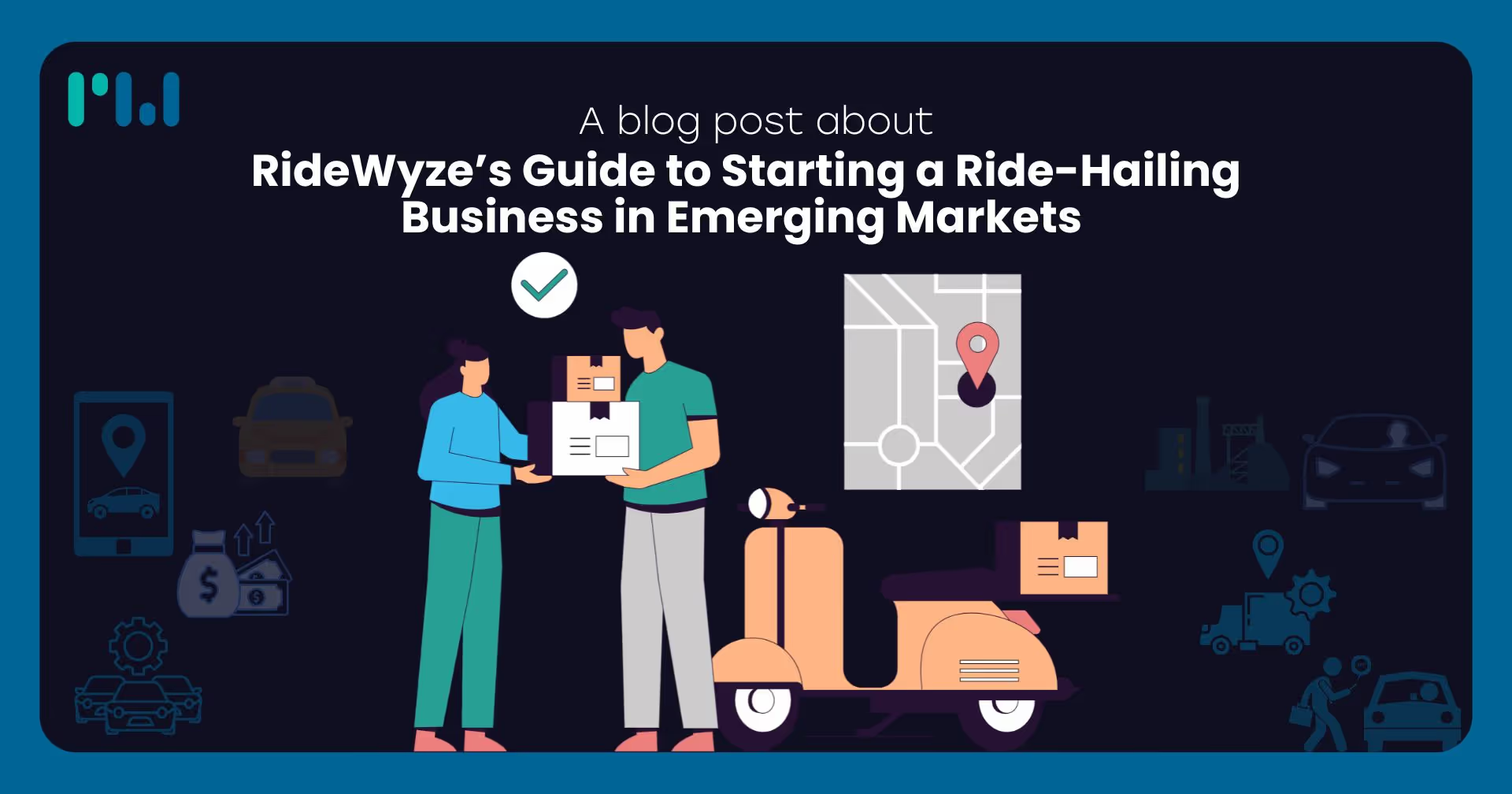
The global ride-hailing industry is booming like never before. In 2024, it’s valued at a staggering $173.6 billion, and projections show it could reach as high as $322.5 billion by 2030, with annual growth rates between 6% and 10%. While mature markets like the U.S. and Europe are stabilizing, emerging markets are the new battleground — buzzing with opportunity, innovation, and unmet demand.
For entrepreneurs, starting a ride-hailing business in emerging markets isn’t just about technology — it’s about solving real-world problems: traffic congestion, poor public transit, and limited car ownership. In places like India, Brazil, Indonesia, and Nigeria, millions are turning to app-based rides as their go-to transportation mode. RideWyze’s guide dives deep into how you can turn this opportunity into a sustainable, scalable business that truly makes an impact.
Emerging markets refer to economies experiencing rapid growth, industrialization, and technological adoption. These regions — such as Asia-Pacific, Latin America, and Africa — are where economic expansion meets digital transformation. Populations are young, smartphone usage is exploding, and consumers are open to new mobility models.
These economies face persistent transportation challenges: congested roads, inadequate public transport, and expensive car ownership. This creates an ideal environment for affordable, on-demand mobility services. Moreover, the combination of rising middle-class income and mobile payment access fuels this shift toward ride-hailing platforms like RideWyze, Grab, or Bolt.
For instance:
The opportunity here is massive — but it requires deep understanding and strategic execution.
Every successful mobility startup begins with understanding local commuter behavior. Are people looking for short intra-city rides, or do they need affordable intercity options? Do they prefer cash, cards, or mobile payments? Collect this data through surveys, focus groups, and pilot tests before investing heavily.
Example: RideWyze found that in Jakarta, users prefer motorcycle rides for speed and affordability, while in São Paulo, carpooling has become increasingly popular due to long commutes. Understanding these nuances will guide your service design and pricing models.
Analyze competitors like Uber, Bolt, and local startups. Identify their strengths and weaknesses — do they focus on high-end users, or are they ignoring suburban commuters? Even in markets where giants operate, localized solutions win when they adapt better to the environment.
Example: RideWyze’s model in India integrates auto-rickshaw services and WhatsApp booking, catering to users who prefer low data usage and simpler interfaces.
There are two dominant models for launching a ride-hailing startup in developing countries:
Each approach has pros and cons. In regions like Nigeria or Indonesia, fleet ownership can work better initially due to limited access to vehicle financing, while in India and Brazil, the marketplace model offers scalability.
Consider multiple income sources:
The secret to success lies in balancing affordability with profitability. Emerging markets are price-sensitive, so transparent pricing is crucial to user trust.
A ride-hailing app must work seamlessly across devices, especially low-cost Android phones on 3G networks. Keep the app lightweight, intuitive, and multilingual. RideWyze’s success in Indonesia, for instance, came from offering the app in both Bahasa and English — plus WhatsApp integration for users with limited data.
An efficient, inclusive app can bridge the digital divide and ensure usability even in rural or peri-urban regions.
Driver recruitment is a major operational pillar. Since not all drivers may own smartphones or vehicles, partnerships with leasing firms and microfinance institutions can help. Offer flexible onboarding, vehicle financing assistance, and training programs.
Drivers must understand app operations, customer service, and road safety. In countries with language barriers or low literacy rates, visual training materials work best. Building trust is key — when drivers feel respected and supported, they perform better and stay longer.
Rewarding good performance through bonuses, fuel discounts, and recognition programs helps retain top drivers. RideWyze uses a “Driver of the Month” feature that spotlights top-rated drivers, motivating others to improve.
Legal frameworks vary significantly. In India, commercial licenses and insurance are mandatory. In Brazil, cities require service registration and data sharing. Nigeria demands ride-hailing companies to pay local transport taxes and secure safety certifications. Compliance isn’t optional — it’s a trust-building factor.
Proactively engage with local authorities. Hosting workshops about safe, digital mobility can foster goodwill. A transparent relationship reduces operational risks and positions your company as a responsible corporate citizen.
The key to success in emerging markets lies in localization. Speak the local language — literally and culturally. Understand festivals, regional events, and social habits. Marketing should feel homegrown, not imported.
Example: RideWyze’s “Ride for School” campaign in Lagos, partnered with university students to promote discounted rides during exam seasons — resulting in a 40% spike in app downloads.
While digital payments are rising, cash remains king in many regions. Your platform must support hybrid payments — allowing users to pay via mobile money, bank transfer, or cash.
Examples include:
Offering instant driver payouts through digital wallets helps drivers avoid the delays of traditional banking. Over time, you can even offer micro-loans or vehicle leasing options — empowering your drivers financially while strengthening brand loyalty.
Safety is non-negotiable. Emerging markets sometimes struggle with unverified drivers or poorly maintained vehicles.
A reputation for safety builds lasting trust — both among users and regulators.
Once your business stabilizes in one region, begin expansion carefully. Start with nearby cities that share cultural and infrastructural similarities. Scale tech infrastructure before scaling geography — ensure your servers, customer support, and driver network can handle the load.
Use predictive analytics to identify high-demand zones, optimize pricing, and forecast trends. For instance, AI-driven dispatch algorithms can reduce “empty miles,” boosting efficiency and driver earnings simultaneously.
AI isn’t a luxury — it’s essential. From dynamic pricing to smart routing, AI improves efficiency and customer experience. RideWyze integrates machine learning for predicting ride demand based on weather, holidays, and city events.
RideWyze plans to deploy electric motorcycles in African cities to promote green mobility. Collaborations with EV assemblers and charging station startups create sustainable advantages while reducing fuel costs.
In Asia, super-apps like Grab have combined ride-hailing, food delivery, and digital payments — tripling customer retention. Emerging ride-hailing startups can take inspiration by integrating microservices like grocery delivery or courier options to boost revenue.
Consumers are becoming eco-conscious. Shared rides, EVs, and carbon offset programs can make your platform part of the sustainability movement. Cities are more likely to support ride-hailing startups that contribute to emission reduction goals.
Ride-hailing in emerging economies does more than move people — it creates thousands of jobs. Drivers, customer support teams, and local maintenance hubs all contribute to economic growth. For many, ride-hailing is their first step into digital employment.
By offering driver micro-loans, flexible payment systems, and access to digital wallets, you help previously unbanked individuals enter the financial ecosystem — one ride at a time.
The e-hailing segment alone is expected to grow by $55 billion between 2024 and 2029, with developing countries leading this surge. With CAGR rates of 10.68%, the potential is vast — especially in regions where car ownership remains low.
RideWyze’s approach already aligns with these innovations — combining cutting-edge tech with deep local understanding.
Starting a ride-hailing business in emerging markets is not just a venture — it’s a movement. It’s about connecting people, empowering drivers, and creating sustainable mobility ecosystems.
With insights from RideWyze’s playbook — market research, adaptive technology, localized marketing, and safety-first operations — entrepreneurs can navigate challenges and thrive in this dynamic sector.
Emerging markets are the pulse of tomorrow’s mobility. And with the right blend of technology, empathy, and innovation, your ride-hailing business can be the next big success story that drives change — one ride at a time.
Starting a ride-hailing business in emerging markets can be highly profitable when executed strategically. These markets are growing rapidly, with the global ride-hailing sector projected to reach over $322 billion by 2030. Profitability depends on factors like local competition, regulatory costs, and operational efficiency. Emerging economies such as India, Brazil, Nigeria, and Indonesia offer strong potential due to high urbanization, low car ownership, and increasing smartphone use. By leveraging affordable pricing models, partnering with local drivers, and using data-driven route optimization, startups can achieve sustainable profit margins and rapid market penetration.
Launching a ride-hailing company in developing countries comes with unique challenges such as regulatory fragmentation, inconsistent internet coverage, and cultural diversity. Many governments are still developing policies for digital transport services, which can lead to operational hurdles. Infrastructure limitations like traffic congestion and poor road quality also affect ride efficiency. However, these challenges can be mitigated through smart localization — using offline navigation, offering local language support, and integrating mobile money systems for easier transactions. RideWyze’s model shows that understanding these nuances early helps startups adapt quickly and remain compliant while maintaining profitability.
Driver retention is one of the biggest success factors in starting a ride-hailing business in emerging markets. Startups can attract drivers by offering transparent commission structures, flexible working hours, and instant payouts via mobile wallets. Training programs and safety initiatives help build driver confidence and brand loyalty. Incentive systems — such as bonuses for high ratings, fuel discounts, or “Driver of the Month” programs — encourage consistent quality. Many successful platforms, including RideWyze, also partner with microfinance institutions to provide vehicle financing, helping drivers own their cars and boosting long-term retention.
Payment flexibility is crucial when launching a ride-hailing service in developing regions. Since cash remains dominant in many emerging markets, apps should support both cash and digital payments. Integration with popular local payment systems — such as M-Pesa in Kenya, Paytm in India, or Pix in Brazil — ensures accessibility for users without bank accounts. Offering mobile money and instant driver payouts fosters financial inclusion and strengthens user trust. RideWyze’s hybrid payment approach demonstrates that adapting to local financial habits directly improves rider satisfaction and driver engagement.
Safety and trust are at the heart of any successful ride-hailing business. To ensure passenger security, startups must implement GPS tracking, SOS buttons, background checks, and real-time trip sharing features. Educating drivers on road safety, customer interaction, and emergency response builds a reliable network. For added transparency, displaying driver profiles, ratings, and vehicle information reassures passengers. RideWyze emphasizes proactive safety policies and partnerships with local law enforcement to enhance credibility. A strong safety culture not only protects riders but also enhances long-term brand loyalty and growth.
Ready to elevate your ride-hailing business? RideWyze has the tools and expertise to help you succeed. Contact us for a personalized demo today!

Create a free account and get full access to all features for 30 days.No credit card needed. Trusted by over 4,000 Clients.


from 200+ reviews

Start your 30-day free trial.