Passenger

Team RideWyze Posted on 4 Nov 2025
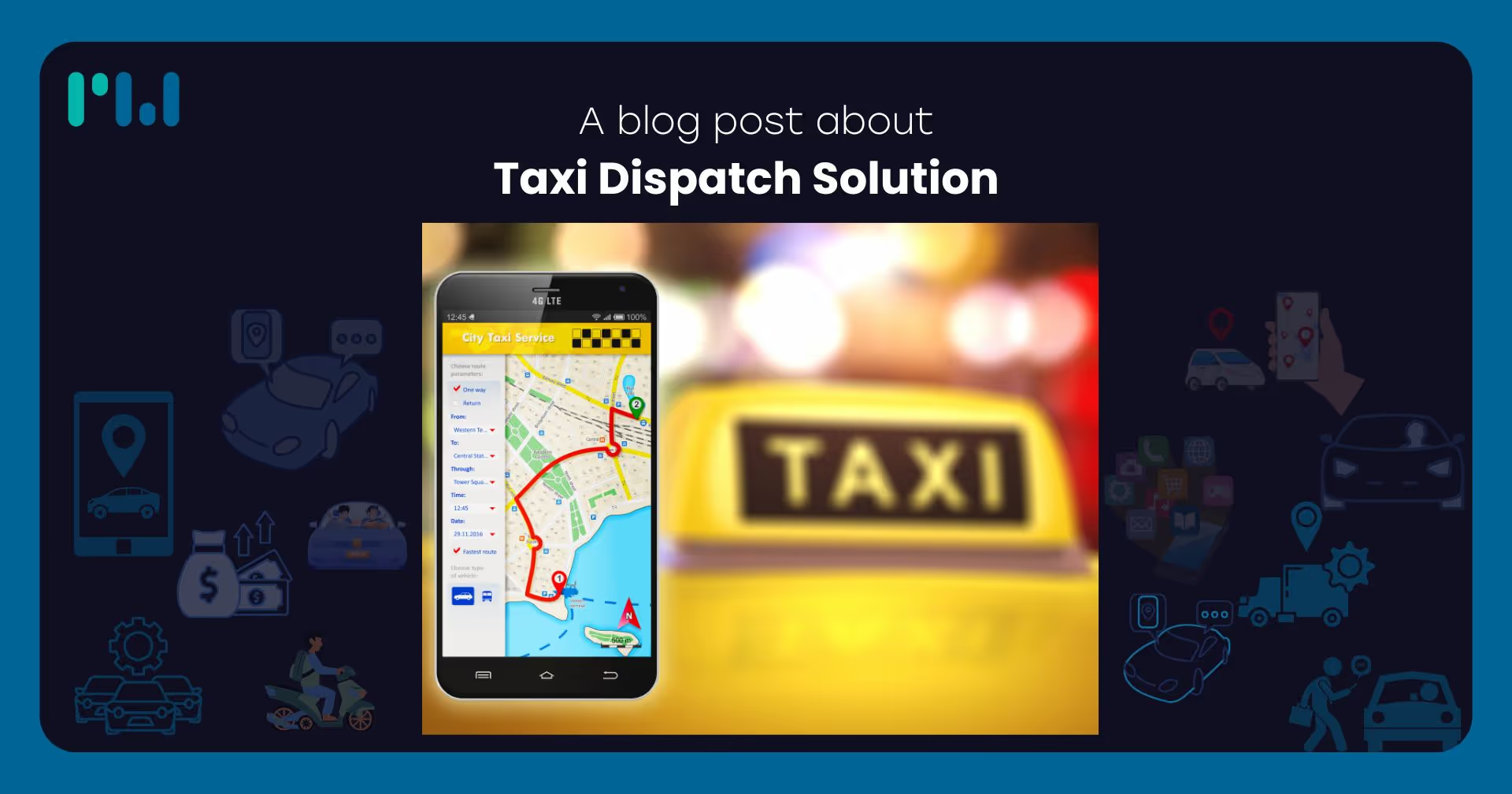
In today’s fast-paced, tech-driven mobility ecosystem, efficiency is everything. Whether you’re booking a ride through a popular app or managing a local cab company, the invisible engine powering that seamless experience is a taxi dispatch solution. This powerful software system connects passengers, drivers, and dispatchers in real time — automating bookings, optimizing routes, and tracking vehicles with precision.
Over the past decade, taxi dispatch technology has evolved from simple radio calls to AI-driven cloud platforms that analyze data, predict demand, and ensure passengers get rides in seconds. The global taxi dispatch software market, valued between US$0.698 – 0.855 billion in 2024, is projected to reach nearly US$5.3 billion by 2033, growing at an impressive 22.5% CAGR. Clearly, the digital dispatch revolution isn’t slowing down — it’s accelerating.
At its core, a taxi dispatch system is an integrated digital platform that automates the process of matching passengers with available drivers. Instead of relying on manual coordination, it uses algorithms, GPS, and real-time communication to streamline ride assignments. This makes operations more efficient, reduces idle time, and enhances customer satisfaction.
The shift from traditional, phone-based dispatching to automated taxi dispatch marks a major technological leap. Today’s systems handle thousands of ride requests simultaneously, leveraging data analytics and cloud infrastructure to ensure the right driver reaches the right passenger at the right time.
Modern cloud-based taxi dispatch platforms are hosted online, allowing businesses to access data from anywhere. Add AI-driven taxi dispatch algorithms, and the system becomes even smarter — predicting demand surges, adjusting pricing, and optimizing routes in real time.
The taxi dispatch software industry is booming. In 2024, it generated US$0.698 – 0.855 billion in revenue. By 2025, it is expected to grow to US$0.950 billion, and by 2033, forecasts show a jump to between US$4.33 – 5.30 billion. This robust 22.5% CAGR (2025–2034) underscores the market’s long-term potential, driven by urbanization, smartphone adoption, and ride-hailing demand.
Zooming out, the wider ride-hailing market (including e-hail and taxi apps) is even more massive:
This shows that even as new players enter, traditional fleets are adopting modern taxi dispatch platforms to stay competitive.
The digital shift is evident in the latest 2024–25 adoption data:
These numbers clearly indicate that the taxi dispatch industry is no longer niche — it’s the backbone of the global mobility economy.
Automation lies at the heart of every successful taxi dispatch platform. When a passenger books a ride, the system instantly analyzes driver proximity, route efficiency, and traffic conditions to allocate the best match. This real-time capability eliminates delays and improves both customer satisfaction and fleet productivity.
Modern AI taxi dispatch software doesn’t just react — it predicts. Using historical data and machine learning, systems can forecast high-demand zones and dispatch drivers proactively. Meanwhile, AI route optimization ensures that drivers take the most efficient paths, saving up to 12% on fuel costs and reducing ride completion times by up to 15%.
With integrated GPS taxi dispatch technology, both drivers and passengers enjoy full transparency. Fleet managers can track every vehicle, monitor idle time, and assess route performance — all in real time. This not only enhances efficiency but also boosts security and accountability.
For businesses wanting to launch branded services like Uber or Bolt, white-label taxi dispatch software offers customizable designs and branding flexibility. In parallel, API-first dispatch platforms (growing 29% YoY) enable easy integration with payment gateways, CRM tools, EV networks, and smart city systems.
For fleet owners, adopting a cloud taxi dispatch system can significantly reduce operational overhead. Automation cuts down manual coordination, leading to better trip management and fewer idle miles. On average, businesses report a 15–25% drop in idle mileage and up to 8–12% savings on fuel after adopting AI-enabled dispatch systems.
Taxi companies transitioning from manual to digital management benefit from centralized admin dashboards. These allow managers to monitor driver performance, customer feedback, and financial reports from a single interface. The result? Higher productivity and transparency across the organization.
For drivers, the dispatch app simplifies job acceptance, navigation, and payment processing — no need for manual coordination. For passengers, real-time tracking, transparent fares, and fast response times enhance satisfaction. Together, they create a win-win ecosystem powered by efficient real-time taxi dispatch.
Smaller operators can now compete with global brands through affordable SaaS taxi dispatch software. Subscriptions typically range between US$99–$299 per vehicle per month, depending on features like route optimization, analytics, and multi-payment support. This scalable pricing model allows small fleets to expand without heavy infrastructure costs.
Cloud-based dispatch platforms have become the industry standard, enabling real-time scalability and data backup. Around 61% of new deployments in 2024–25 were cloud-based, offering flexibility and lower maintenance costs compared to traditional on-premise systems.
With 5G connectivity, next-gen dispatch systems achieve ultra-low latency of under 50 milliseconds. This advancement is especially crucial for autonomous taxi dispatch and robotaxi networks, where instant data transfer ensures passenger safety and route accuracy.
Sustainability is reshaping urban mobility. Over 1.3 million electric vehicles (EVs) are already integrated into ride-hailing fleets globally. EV taxi dispatch APIs optimize charging schedules, find nearby charging stations, and balance fleet availability — promoting greener operations.
Mobile apps have revolutionized how passengers and drivers connect. With secure payment gateway integrations, users can pay via cards, wallets, or even crypto in some markets. The result? Convenience, transparency, and faster ride completion times.
Despite rapid growth, the taxi dispatch software market remains fragmented. The top five vendors control just 42% of global revenue, leaving plenty of room for innovation and new entrants. The CR5 index (a measure of market concentration) remains below 50%, confirming low consolidation.
Some of the most recognized players driving innovation include:
Each of these platforms has its unique edge, but all share a commitment to flexibility, automation, and data-driven operations.
The 2025 regional revenue split for the taxi-dispatch software market looks like this:
North America continues to lead due to high digital adoption rates, while Europe and China are catching up fast with smart-city incentives and mobility-as-a-service programs.
Governments across Europe, Asia, and North America are promoting smart-city taxi dispatch programs that prioritize efficiency, data security, and sustainability. Subsidies and grants are helping local fleets migrate to eco-friendly taxi dispatch technologies, further accelerating adoption.
While upfront software costs remain a barrier for 28% of small fleets, the ROI proves compelling. Operators using AI dispatch systems report measurable improvements — a 15–25% reduction in idle miles, 8–12% fuel savings, and higher driver utilization rates.
Subscription models between US$99–$299 per vehicle per month might seem high initially, but the operational savings, faster response times, and customer retention benefits quickly offset the expense. When paired with predictive algorithms and automated billing, the cost-to-benefit ratio becomes even more attractive.
The pandemic temporarily slowed the mobility sector, but recovery has been strong. After negative growth in 2021–22, the market rebounded in 2023, reaching pre-pandemic levels. The ongoing 2024–25 CAGR rebound is powered by corporate travel, increased tourism demand, and smart-city infrastructure investments. Taxi operators that adopted cloud-based and AI taxi dispatch platforms were among the first to recover and expand.
The future of taxi dispatch solutions lies in autonomy and electrification. Dispatch systems will soon coordinate driverless taxis, managing routes, passenger pickups, and battery optimization without human intervention.
Sustainable taxi dispatch is becoming a priority. Algorithms now factor in fuel efficiency, carbon emissions, and EV charging infrastructure. With next-gen dispatch algorithms, fleets will operate with higher accuracy and lower energy consumption.
As mobility evolves, taxi dispatch platforms are integrating with public transport systems, micromobility (e-scooters, bikes), and carpooling services — creating a unified Mobility-as-a-Service (MaaS) experience.
The rise of the taxi dispatch solution is not just a technological evolution — it’s a complete reinvention of how cities move. From AI route optimization to 5G-enabled real-time dispatch, these systems bring intelligence, efficiency, and sustainability to transportation.
As the market surges toward a US$5.3 billion valuation by 2033, operators that embrace cloud-based, data-driven taxi dispatch systems will lead the mobility revolution. Whether you’re a local taxi company or a global fleet operator, one thing is clear — the road to the future is automated, intelligent, and powered by smart dispatch technology.
A taxi dispatch solution is a digital platform that automates the process of connecting passengers with available drivers. It uses GPS tracking, AI algorithms, and cloud infrastructure to assign rides based on location, availability, and traffic conditions. When a passenger books a ride, the system instantly identifies the nearest driver, sends notifications, and tracks the entire journey in real time. This eliminates manual coordination, reduces waiting time, and improves fleet efficiency.
Implementing taxi dispatch software helps businesses streamline operations, reduce costs, and enhance customer satisfaction. Fleet owners can track vehicles in real time, optimize driver routes, and automate fare calculations. Companies using cloud-based and AI-powered dispatch systems report up to a 25% drop in idle mileage and 12% savings in fuel consumption. Moreover, automated reporting and analytics provide valuable insights into performance and profitability, allowing taxi operators to scale efficiently.
AI transforms the traditional taxi dispatch system into a predictive and intelligent platform. With AI route optimization, the software can forecast high-demand areas, adjust pricing dynamically, and recommend efficient driver placements. Predictive algorithms also help reduce response times and improve passenger experience. By analyzing trip data and driver behavior, AI modules continuously refine the dispatch process, resulting in faster rides, better resource allocation, and reduced operational costs.
Yes, cloud-based taxi dispatch solutions offer superior scalability, accessibility, and cost efficiency compared to on-premise systems. Cloud dispatch allows operators to access data anytime, anywhere, without the need for expensive local servers. It also supports automatic updates, ensuring that the system always runs on the latest version with enhanced features and security. In contrast, on-premise dispatch systems require manual maintenance, making them less flexible for growing fleets and modern ride-hailing demands.
The future of taxi dispatch technology lies in AI, automation, and sustainability. As electric vehicles and autonomous taxis become mainstream, dispatch systems will evolve to manage EV fleet operations, optimize charging schedules, and handle 5G-enabled, low-latency communication. Integration with smart-city infrastructure will allow dispatch platforms to collaborate with public transport and mobility-as-a-service (MaaS) ecosystems. Ultimately, the next generation of dispatch solutions will be faster, greener, and more intelligent, reshaping how urban transportation operates.
The cost of a SaaS taxi dispatch system typically ranges from US$99 to $299 per vehicle per month, depending on the features included. Small fleets benefit from subscription-based pricing, which removes the need for large upfront investments. These platforms usually offer essential features such as real-time tracking, driver-passenger apps, integrated payment gateways, and automated billing. With measurable ROI through fuel savings and better route management, even smaller operators find cloud dispatch solutions to be a profitable long-term investment.
Ready to elevate your ride-hailing business? RideWyze has the tools and expertise to help you succeed. Contact us for a personalized demo today!

Create a free account and get full access to all features for 30 days.No credit card needed. Trusted by over 4,000 Clients.


from 200+ reviews

Start your 30-day free trial.