Passenger

Team RideWyze Posted on 6th October 2024
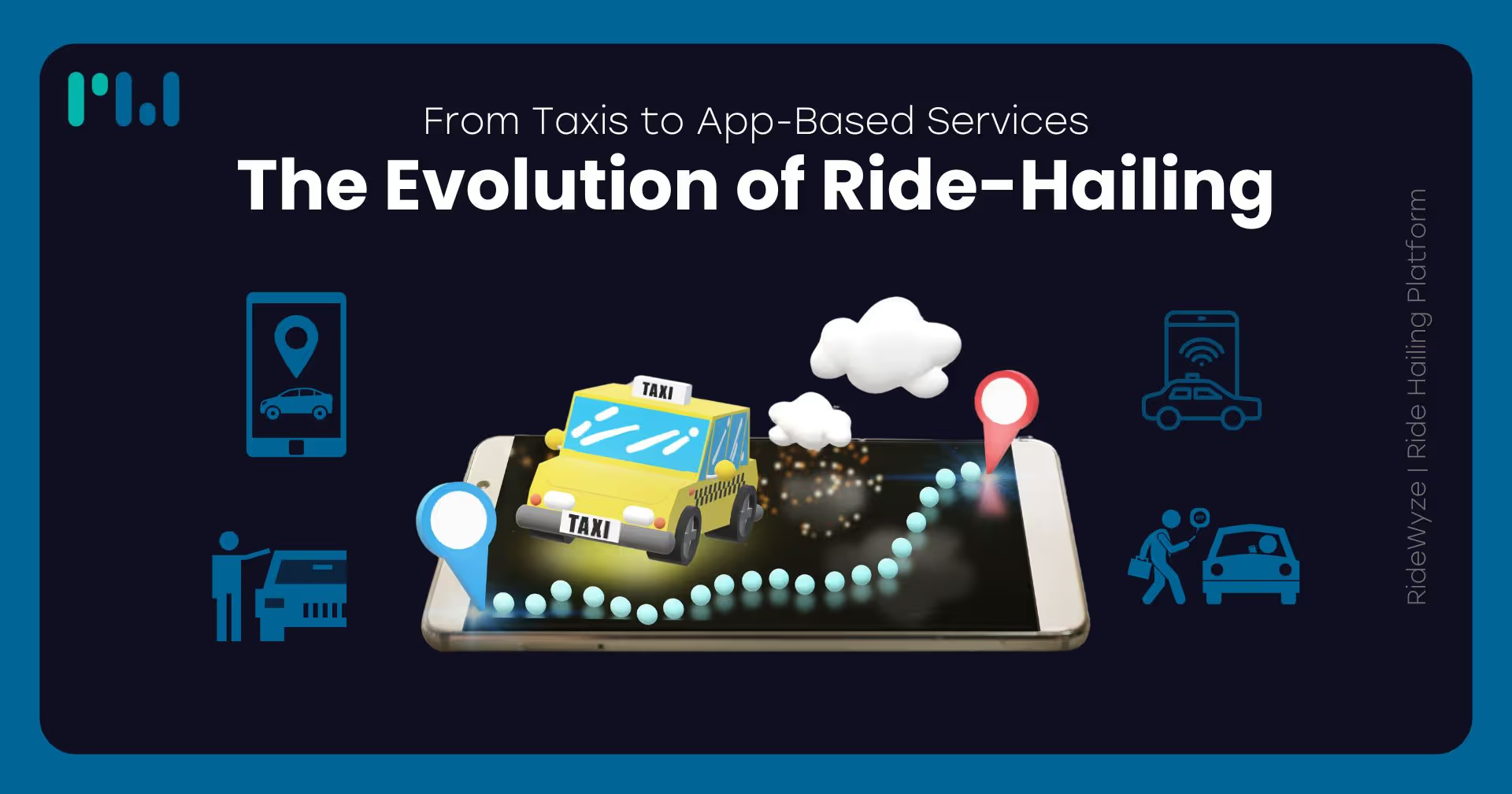
Remember the days when hailing a cab meant standing on a busy street corner, hoping for an available taxi to pass by? Well, those days are rapidly becoming a distant memory. The evolution of ride-hailing has transformed the way we get around, revolutionizing urban transportation in ways we never thought possible.
Before the digital age, traditional taxis were the primary mode of transportation in cities worldwide. Dating back to the horse-drawn carriages of the 17th century, taxis have been ferrying passengers from one destination to another for centuries. However, it wasn't until the late 19th century that motorized taxis began to dominate the streets, offering a faster and more efficient alternative to horse-drawn carriages.
In the early 2010s, a technological revolution swept through the transportation industry with the introduction of ride-hailing apps like RideWyze, Uber and Lyft. These apps allowed users to summon a ride with the tap of a button, eliminating the need to hail a cab or stand in long taxi lines. The convenience and accessibility offered by these app-based services quickly gained popularity, disrupting the traditional taxi industry.
The success of ride-hailing apps can be attributed to advancements in technology, particularly the widespread adoption of smartphones and GPS navigation systems. These technologies enabled companies like Uber to connect riders with drivers in real-time, providing a seamless and efficient transportation experience.
One of the key advantages of app-based ride-hailing services is their convenience and accessibility. With just a few taps on their smartphones, users can request a ride from virtually anywhere, eliminating the hassle of waiting for a taxi or searching for parking. Additionally, ride-hailing apps offer a range of vehicle options to suit different needs and budgets, from economy cars to luxury SUVs.
In conclusion, the evolution of ride-hailing from traditional taxis to app-based services has transformed the way we move around cities. The convenience, accessibility, and affordability offered by ride-hailing have revolutionized urban transportation, reshaping consumer behavior and paving the way for a more sustainable future.
Yes, while ride-hailing services are more commonly found in urban areas, some companies offer limited services in rural areas as well.
Ride-hailing companies implement various safety measures, including driver background checks, vehicle inspections, and GPS tracking.
Yes, many ride-hailing apps allow users to schedule rides in advance, ensuring that a driver will be available at the desired time.
Many ride-hailing drivers work part-time, supplementing their income with flexible hours, while others work full-time as independent contractors.
In many cases, ride-hailing services are cheaper than traditional taxis, especially during periods of high demand when surge pricing may apply.
Ready to elevate your ride-hailing business? RideWyze has the tools and expertise to help you succeed. Contact us for a personalized demo today!

Create a free account and get full access to all features for 30 days.No credit card needed. Trusted by over 4,000 Clients.


from 200+ reviews

Start your 30-day free trial.