Passenger

Team RideWyze Posted on 20 January 2025

In today’s fast-paced world, ride-hailing apps have become a staple in how people commute. Companies like Uber and Careem have revolutionized transportation by making it incredibly easy for users to book rides from the comfort of their homes or while on the go. If you’re looking to develop a ride-hailing app similar to Careem, you are diving into a highly competitive, yet rewarding, industry.
But how do you go about building a successful ride-hailing app that can rival the likes of Careem? The process is more than just a few lines of code; it involves careful planning, innovative thinking, and the right mix of technology. This article is here to guide you through the entire process of creating a ride-hailing app, covering everything from essential features to the technology stack you’ll need to develop your platform. Let’s dive in!
Ride-hailing apps have changed the transportation industry in significant ways, making commuting easier, more affordable, and accessible. Let’s explore some of the major benefits:
Gone are the days when you had to wait for a taxi to show up or search for one on the street. With a ride-hailing app, users can book rides in seconds, and the app provides real-time tracking for both drivers and passengers. This immediate accessibility is a game-changer.
Ride-hailing apps have opened up the world of transportation to people living in both urban and rural areas. In cities, where taxis were once the primary choice, people now have more options. In more remote areas, where traditional taxi services don’t exist, ride-hailing apps fill the gap, offering both convenience and affordability.
For passengers, ride-hailing apps typically offer lower fares than traditional taxis, while drivers benefit from flexibility, as they can work whenever it suits them. This win-win situation makes the ride-hailing business model highly attractive for both users and drivers.
Ride-hailing apps often use dynamic pricing, which adjusts fares based on demand and supply. While this can sometimes mean higher fares during peak hours, it also ensures that drivers are adequately compensated, which helps keep the platform running smoothly.
While ride-hailing apps have certainly made their mark, they aren’t without their challenges. It’s important to understand these hurdles so you can plan ahead and mitigate risks.
The ride-hailing market is highly competitive, with global giants like Uber, Lyft, and local players like Careem dominating many markets. As a new player in the game, you’ll need to find a way to differentiate your app, whether that’s through unique features, better service, or competitive pricing.
The ride-hailing industry is heavily regulated in many regions. Depending on where you plan to launch your app, you’ll need to navigate various legal requirements, including licensing, insurance policies, and vehicle inspections. Failing to comply with local regulations could result in your app being banned or facing legal issues.
Keeping both riders and drivers satisfied is key to the long-term success of any ride-hailing platform. Riders expect fast, safe, and affordable rides, while drivers need fair compensation, respect, and a smooth experience. Balancing the needs of both parties can be tricky but is crucial for building trust and retaining users.
Creating a ride-hailing app requires attention to detail in terms of the features you offer. Below are the must-have features for any ride-hailing platform.
To begin using your ride-hailing app, users must be able to register easily. The registration process should be simple, involving either email, phone number, or social media logins. A hassle-free registration process encourages new users to sign up without any friction.
Once signed in, users should be able to manage their profiles—this includes adding payment details, viewing ride history, and customizing their preferences (such as preferred ride type, payment method, or favorite routes). Profile management allows users to have a personalized experience, which boosts customer satisfaction.
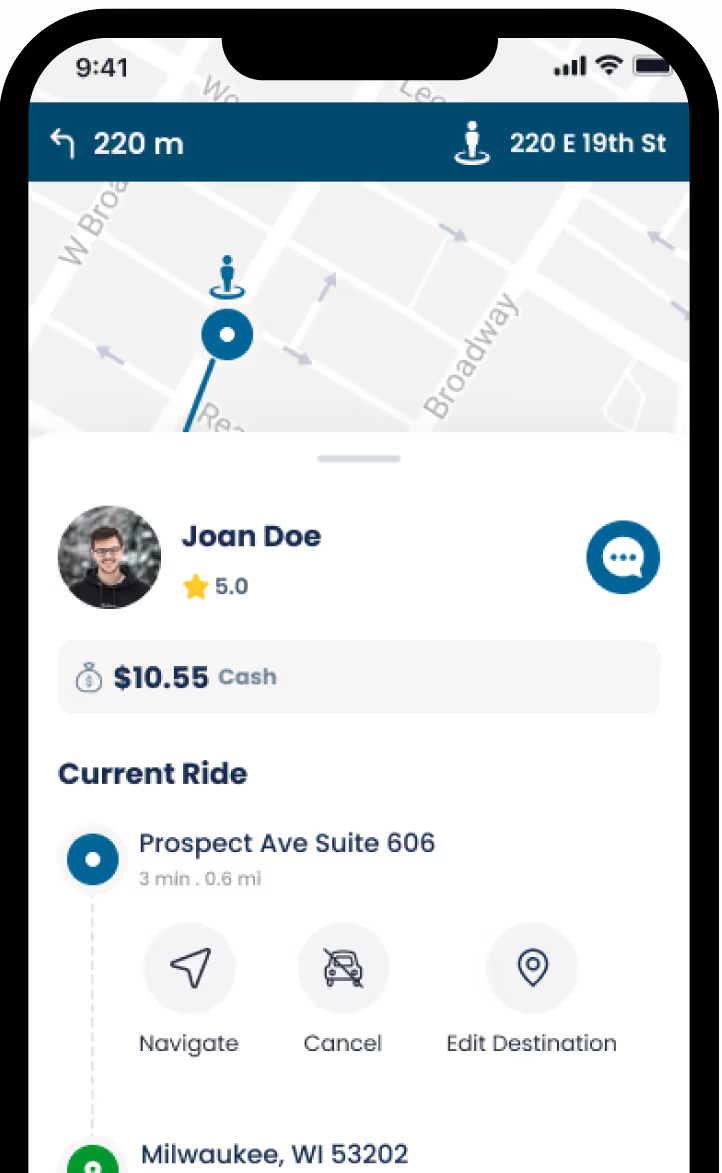
Real-time GPS tracking is one of the key features that make ride-hailing apps so valuable. For riders, it ensures that they can see when their ride will arrive and track the journey in real time. For drivers, GPS navigation helps them reach the pickup point and the destination in the fastest and most efficient manner.
This feature is critical for both the driver and the rider, and it’s powered by integration with map and navigation services like Google Maps or Mapbox. GPS technology also allows for dynamic route optimization, taking into account real-time traffic conditions to offer the most efficient route.
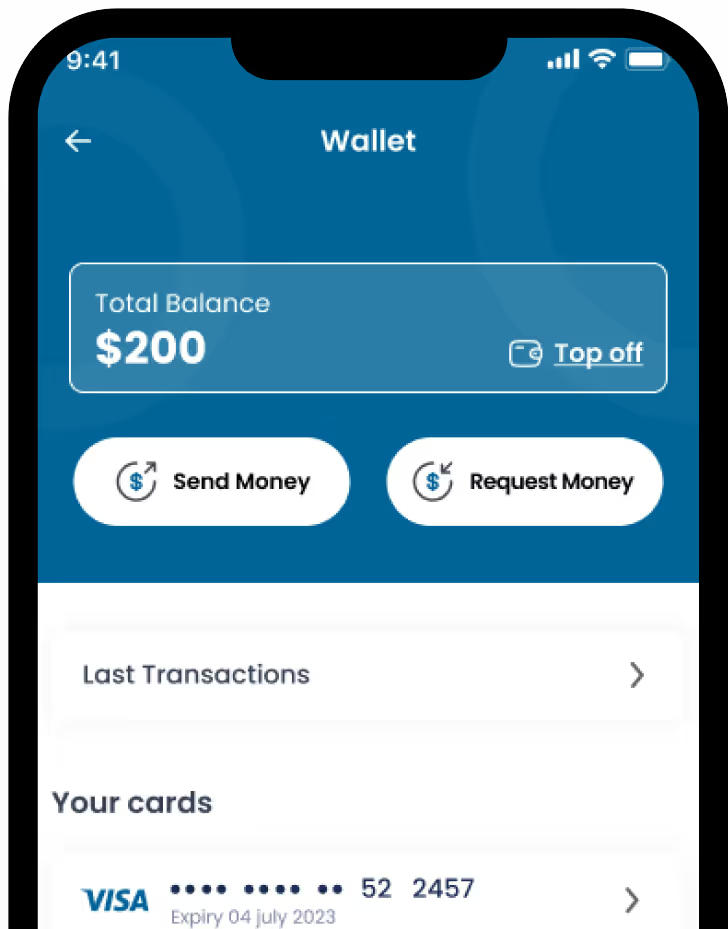
Having a secure, reliable, and diverse payment system is essential for the success of a ride-hailing app. Your app should support multiple payment options, such as credit/debit cards, digital wallets, and cash.
Security is of utmost importance when dealing with financial transactions, so implementing encryption protocols like SSL/TLS and adhering to industry standards like PCI-DSS will help protect sensitive information. Offering in-app payment options ensures that riders can quickly and easily pay for their rides without needing to carry cash.
Another important feature is ride scheduling. Some passengers may prefer to book a ride in advance rather than on-demand. By offering scheduling options, you cater to a broader audience who may need transportation for future events, meetings, or flights.
Booking management should also allow users to modify or cancel their rides, check their booking history, and receive notifications of ride status updates. This feature provides transparency and convenience, enhancing user satisfaction.
After every ride, both drivers and riders should have the option to rate their experience and leave feedback. This system helps improve the overall service by ensuring that only high-rated drivers remain on the platform. It also fosters a sense of accountability and trust between users, ultimately improving the quality of service.
Choosing the right technology stack is crucial for building a robust, scalable, and efficient ride-hailing platform. Here’s a breakdown of the technology stack you’ll need to develop your app.
The front-end of your app is everything the user interacts with, so it’s important that it’s smooth, responsive, and user-friendly. For mobile apps, Swift (for iOS) and Kotlin (for Android) are the preferred programming languages. These languages ensure your app works seamlessly on their respective platforms, offering a smooth experience for users.
Alternatively, if you want to build a cross-platform app, technologies like React Native or Flutter can be used. Both allow you to write one codebase and deploy it across iOS and Android, saving you time and effort.
The back end of your app handles all the business logic, database management, and communication between the app’s various components. Some popular back-end frameworks for building ride-hailing apps include:
Node.js: A fast, scalable back-end framework ideal for real-time applications like ride-hailing platforms.
Ruby on Rails: A popular framework known for its ease of use and speed.
Django (Python): A robust and flexible framework, well-suited for high-performance applications.
Your back-end should also support APIs for integration with third-party services, such as payment gateways and GPS services.
To enhance your app’s functionality, you will need to integrate with various third-party APIs. Key integrations include:
GPS and map APIs (Google Maps, Mapbox) for navigation and tracking.
Payment gateway APIs (Stripe, PayPal, etc.) for handling payments securely.
Push notification APIs (Twilio, Firebase) to send real-time notifications to riders and drivers.
Scalability is key for any app. As your app grows in terms of users, drivers, and regions served, you’ll need to ensure your app can handle high volumes of data and traffic. Cloud services like Amazon Web Services (AWS) or Google Cloud offer flexible infrastructure that scales with your app’s needs.
Before you start building your app, it’s crucial to conduct comprehensive market research. Understanding the competition, identifying your target audience, and analyzing market trends will help you tailor your app to meet the specific needs of your users.
Conducting market research also helps you discover unique features that can set your app apart from competitors. For instance, you could explore niche markets like pet-friendly rides or wheelchair-accessible vehicles to serve a broader audience.
Once you’ve done your research, it’s time to design the app’s architecture. This involves creating wireframes, which are the skeletal structure of your app, outlining its basic elements, layout, and flow. Wireframes provide a visual guide for developers and designers to work from.
The architecture design also includes creating an easy-to-follow user journey. From the initial sign-up to booking a ride and paying for it, the app should offer a smooth experience that requires minimal effort from the user.
With the design in place, the next step is development. This is the phase where you start writing the code for both the front-end and back-end of the app. It’s essential to follow an agile development approach to ensure that the app evolves as new features are added and bugs are fixed.
Both the front-end and back-end need to be closely integrated to ensure the app works seamlessly. Front-end developers focus on building the user interface, while back-end developers ensure the infrastructure is in place to handle all the data, payments, and other backend processes.
Once the app is developed, it’s time to test it. Quality assurance (QA) testing is crucial to identify and fix any bugs before launching. This includes functionality testing, usability testing, security testing, and performance testing. Bug fixes should be made promptly to ensure that your app is stable and reliable.
The final stage is launching the app. Start with a soft launch or beta testing, where you release the app to a limited audience to collect feedback. Once the app has been refined and any issues resolved, go for the full launch.
Post-launch, focus on marketing strategies such as referral programs, paid advertising, and influencer partnerships to boost downloads and user adoption. Continuously monitor the app’s performance and gather user feedback to make improvements and updates.

Building a ride-hailing app like Careem is a complex but rewarding venture. By focusing on user-centric design, incorporating essential features, using the right technology stack, and developing a solid marketing strategy, you can create a successful platform that caters to the needs of both riders and drivers. While competition is fierce in this industry, there’s still plenty of room for innovation and growth. Whether you’re targeting a specific niche or offering a new twist on traditional ride-hailing services, with the right approach, your app could become the next big player in the transportation industry.
Key features of a ride-hailing app like Careem include user registration, real-time ride booking, GPS tracking, fare estimation, secure payment options, driver ratings, ride history, and customer support. Advanced features such as ride scheduling, multiple vehicle types, and promo codes can further enhance the app.
The cost to build a ride-hailing app like Careem varies based on app complexity, features, and development team rates. A basic app may cost around $30,000 to $50,000, while a fully featured app with advanced functionalities could range from $100,000 to $200,000 or more.
Apps like Careem are built using technologies such as React Native or Flutter for the frontend, Node.js or Python for the backend, and Firebase or MongoDB for databases. APIs for GPS navigation, payment gateways, and push notifications are also integral.
The development time for a ride-hailing app like Careem depends on its features and complexity. A basic app might take 4-6 months, while a more advanced app with multiple integrations could take 9-12 months or longer.
Scalability is crucial for apps like Careem because it ensures smooth performance as user numbers grow. A scalable architecture handles increased traffic, new features, and expansion into multiple cities without compromising app reliability.
Ready to elevate your ride-hailing business? RideWyze has the tools and expertise to help you succeed. Contact us for a personalized demo today!

Create a free account and get full access to all features for 30 days.No credit card needed. Trusted by over 4,000 Clients.


from 200+ reviews

Start your 30-day free trial.