Passenger

Team RideWyze Posted on 6 January 2025
Ride-hailing apps have completely transformed how we think about transportation. Gone are the days of waiting by the street corner for a cab or navigating through a sea of traffic to catch a bus. With apps like Bolt, Uber, and Lyft, getting from point A to point B has become as easy as tapping a button on your smartphone. If you're thinking about building your own ride-hailing app like Bolt, you're entering a fast-growing and highly competitive industry. This blog post will walk you through everything you need to know, from market research to the tech stack, to build a successful app that could rival some of the best in the business.
In this guide, we’ll cover the essential steps you need to follow to create a ride-hailing app like Bolt, the key features your app should include, and the technologies you’ll need. By the end, you’ll have a clear idea of what it takes to turn your app idea into a reality.
Ride-hailing services have seen a meteoric rise in the past decade. Once seen as a niche service for tech-savvy urbanites, they’ve now become the go-to transportation option for millions of people worldwide. Apps like Uber and Bolt have taken the traditional taxi model and turned it on its head, offering passengers the convenience of booking a ride with just a few taps on their smartphones. With the push for contactless services and the increasing popularity of on-demand transportation, the ride-hailing industry has become a multi-billion-dollar market.
But success doesn’t come easy. The market is filled with competition, and building an app that stands out requires a deep understanding of customer needs, innovative features, and a strong business model. By the end of this guide, you’ll understand the competitive landscape and how to navigate it.
Bolt, formerly known as Taxify, is one of the leading ride-hailing platforms in Europe, Africa, and several other regions. Since its inception, Bolt has grown rapidly by focusing on offering lower rates, higher driver incentives, and faster rides than its competitors. Its success is largely due to its ability to adapt to the local market conditions, and it has been able to effectively compete with Uber in many regions.
To build a successful app like Bolt, it’s essential to understand the factors that have contributed to its success. From its intuitive interface to its dynamic pricing model, Bolt’s features are designed with both drivers and passengers in mind. And just like Bolt, your app will need to offer value to both sides of the marketplace—passengers looking for a fast, affordable ride, and drivers who want a fair income with flexible working hours.
Building a ride-hailing app from the ground up involves several key steps. Below are the most critical stages of the development process, each of which requires careful thought and planning.
Before you start building your app, it's crucial to conduct comprehensive market research. Understanding your target audience and identifying gaps in the market will give you a competitive edge. Consider the following areas during your research:
This research will form the foundation of your app’s features and functionality, as well as your pricing model and marketing strategy.
With the market research complete, it’s time to define what will set your app apart. This is known as your unique selling proposition (USP). A USP is a feature or service that makes your app stand out from the competition. It could be something as simple as:
Identifying your USP will help you attract both passengers and drivers, as they’ll be more likely to use and recommend your app if it offers something unique.
While it’s tempting to build an app that competes directly with the likes of Uber and Lyft, consider narrowing your focus. Selecting a niche can help you carve out your own space in the market and cater to a specific group of users. Here are a few ideas for niches:
Niche targeting allows you to create a tailored experience for a specific group, making your app more attractive to that audience.
Your monetization strategy will determine how your app generates revenue. The most common approach for ride-hailing apps is to charge drivers a commission on each fare. However, there are several other strategies you can explore:
Choosing the right monetization strategy will depend on your target audience and market conditions, so be sure to test different options.
When it comes to developing your app, you have two main options: building it from scratch or using a white-label solution.
Once you choose your development approach, you can begin the process of designing and building your app.
Now that you’ve covered the foundational aspects of your app, it’s time to focus on the features that will make your ride-hailing app successful. Below are the must-have features for both passengers and drivers.
The UI/UX of your app is one of the most important factors in user retention. A clean, intuitive design will make it easy for users to book rides and access features. Here’s what to focus on:
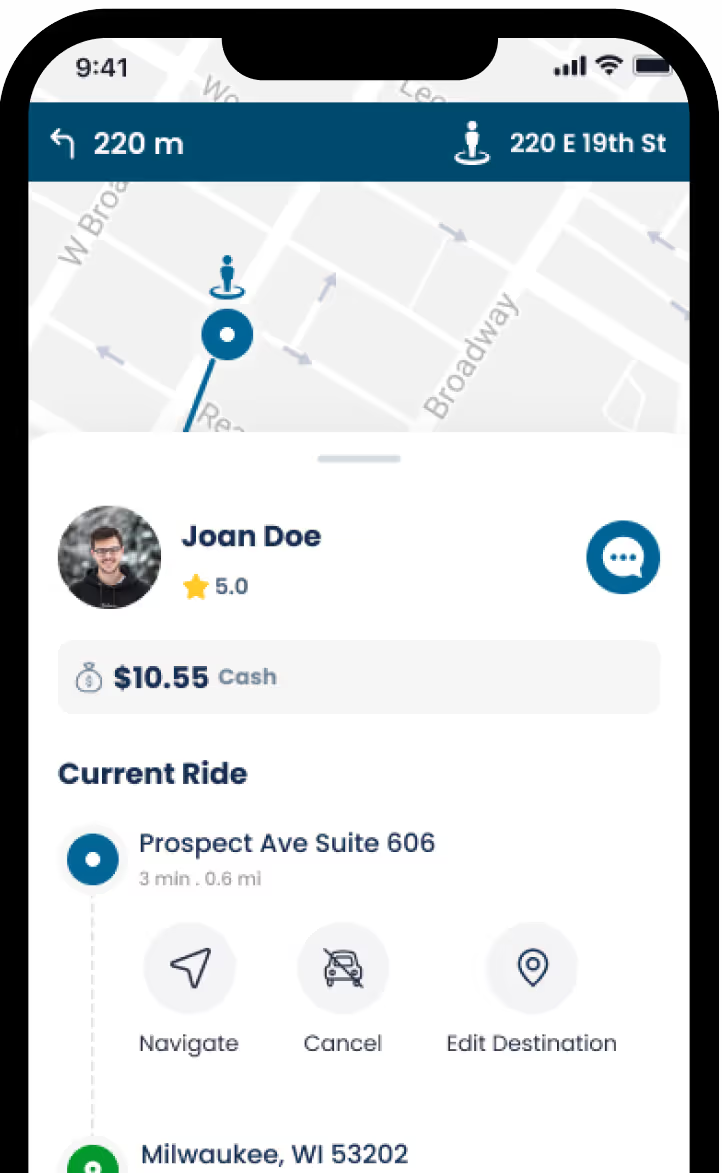
Real-time GPS tracking is one of the most essential features of any ride-hailing app. Passengers need to see their driver’s location in real-time, and drivers need accurate navigation to reach the destination. Use a reliable mapping service like Google Maps, Mapbox, or OpenStreetMap to integrate this feature into your app. Additionally, integrating route optimization will ensure faster rides and higher satisfaction.
Booking a ride should be as simple as entering a pick-up and drop-off location, selecting the ride type (economy, premium, etc.), and confirming the ride. Provide real-time updates on the status of the ride, including driver arrival time, location, and estimated fare. Users should be able to track the ride, communicate with the driver, and cancel the ride if necessary.
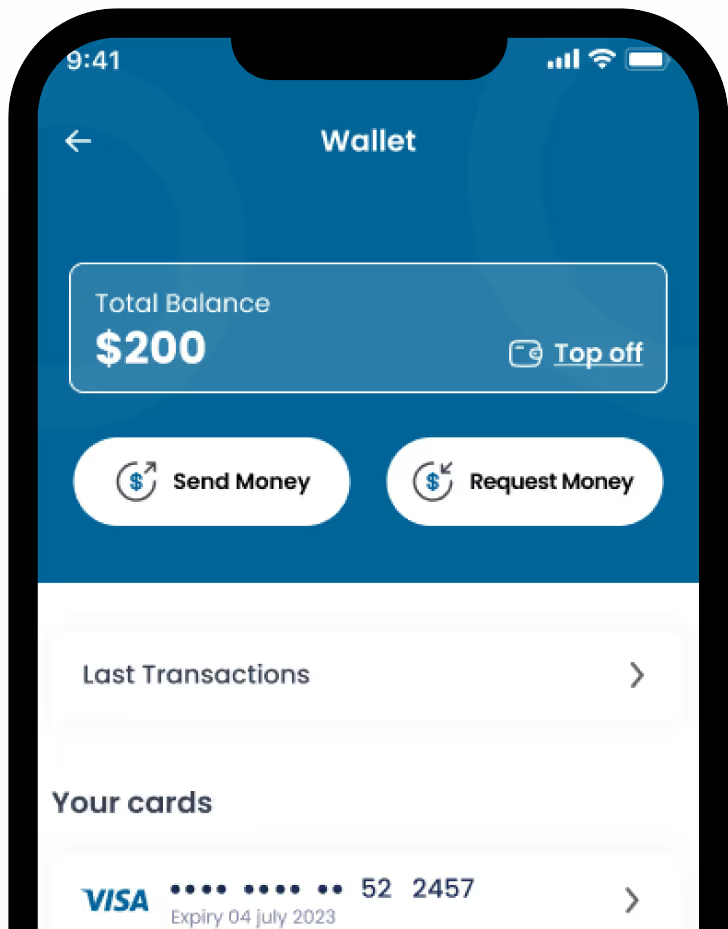
Integrating multiple payment methods, such as credit/debit cards, mobile wallets, and in-app payments, is essential for customer convenience. Make sure your payment gateway is secure and fast, so users don’t face delays during transactions. You could also implement an automatic payment feature that charges passengers once the ride is completed.
After each ride, encourage users to rate their driver and provide feedback. This helps ensure that drivers maintain a high level of service and gives passengers a voice. Implement a two-way rating system where both passengers and drivers can rate each other, fostering accountability and trust.
Choosing the right technology stack is crucial for the success of your app. Let’s break down the components:
Your app’s front-end will handle the user interface and user interactions. For iOS, Swift is the language of choice, while Kotlin is used for Android. You can also use cross-platform frameworks like React Native or Flutter if you want to develop for both platforms simultaneously.
For the back-end, you need a robust server that can handle high traffic and manage real-time data. Node.js, Ruby on Rails, or Python (Django) are popular choices for building scalable back-end systems.
To store user and ride data, you’ll need a reliable database. SQL-based databases like MySQL or PostgreSQL are commonly used, but NoSQL databases like MongoDB are also suitable for handling large amounts of unstructured data.
For real-time communication between passengers and drivers, use WebSockets or Firebase Cloud Messaging to facilitate instant updates and notifications.

Building a ride-hailing app like Bolt is an ambitious but achievable project, and with the right approach, you can carve out your own niche in the competitive ride-hailing market. By focusing on thorough market research, defining your unique selling proposition, and selecting the right features and technologies, you'll be on your way to developing a successful app that attracts both passengers and drivers. Start by defining your goals, choose the right development approach, and continuously adapt your offering to meet the needs of your users. With the right planning and execution, your ride-hailing app could become the next big thing in transportation, just like Bolt. Happy coding!
To build a ride-hailing app like Bolt, key features should include user registration, ride booking, real-time GPS tracking, ride fare calculation, payment processing, push notifications, driver and passenger ratings, and customer support. An integrated driver dashboard, live tracking, and admin panels for fleet management are also essential for effective operations.
The cost of building a ride-hailing app like Bolt can range from $50,000 to $500,000 depending on the complexity of the app, the platform (iOS, Android, or both), and the features required. Customization, user interface design, app development time, and backend server infrastructure also contribute to the overall cost.
Technologies typically used to build a ride-hailing app like Bolt include React Native or Swift for mobile app development, Node.js or Python for backend development, Firebase or AWS for real-time data handling, and payment gateway APIs like Stripe or PayPal for secure transactions. GPS tracking is integrated using services like Google Maps API.
The time to develop a ride-hailing app like Bolt typically takes anywhere from 4 to 9 months depending on the complexity of the app, the number of features, and the development team’s efficiency. A well-defined project scope and a professional development team can help streamline the process.
Some challenges when building an app like Bolt include ensuring real-time tracking and GPS accuracy, integrating secure payment gateways, handling large amounts of data and users, and building a scalable infrastructure. Moreover, meeting regulatory requirements and competition from other established ride-hailing services can also present significant hurdles.
Ready to elevate your ride-hailing business? RideWyze has the tools and expertise to help you succeed. Contact us for a personalized demo today!

Create a free account and get full access to all features for 30 days.No credit card needed. Trusted by over 4,000 Clients.


from 200+ reviews

Start your 30-day free trial.