Passenger

Team RideWyze Posted on 4 August 2026
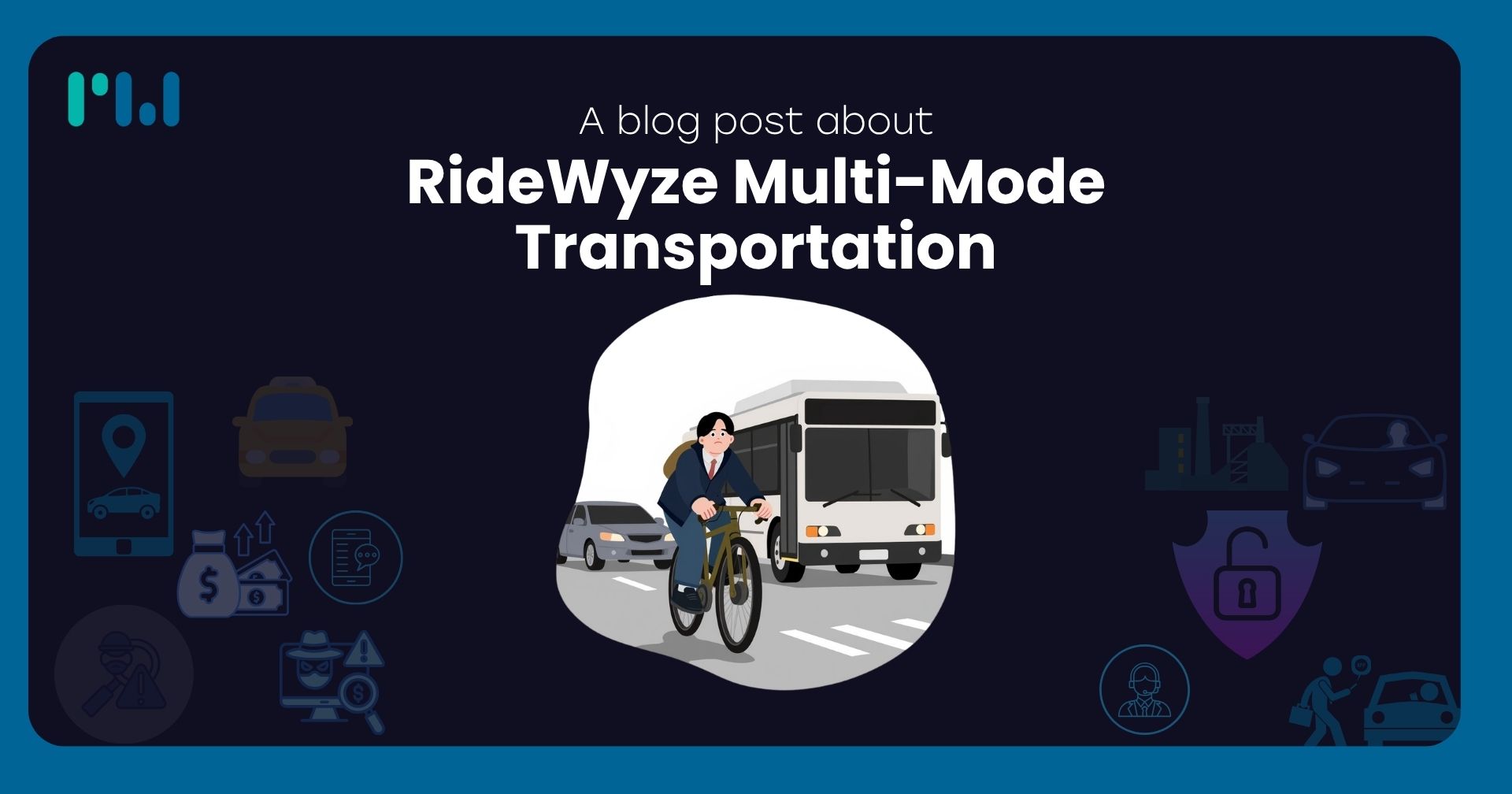
A ride-hailing platform that only supports four-door passenger cars is not a global platform. It is a Western urban platform wearing a global costume.
The reality of urban mobility across Asia, Africa, Latin America, and the Middle East is radically more diverse. In Bangkok, the iconic tuk-tuk is as fundamental to city transport as any taxi. In India, app-based bike taxis and auto-rickshaws serve tens of millions of daily commuters — Rapido alone now serves 25 million customers and 1.5 million riders on two-wheelers. In Bangladesh, there are approximately 4 million electric auto-rickshaws on city streets. In Kenya, the electrification of motorcycle taxis is driving one of the fastest EV adoption rates on the continent, with electric two-wheeler sales share doubling year over year. In Indonesia, Vietnam, and Thailand, more than 85% of households own a two-wheeler — and motorcycle taxis are often the fastest, most affordable, and most practical option for navigating congested city streets.
The global ride-hailing market is rapidly recognizing this diversity. Two-wheelers are the fastest-growing vehicle segment in ride-hailing at a CAGR of 16.54% through 2031, outpacing even passenger cars. The three-wheeler market — covering auto-rickshaws, tuk-tuks, and electric cargo vehicles — is valued at $11.28 billion in 2025 and growing at 10.48% CAGR through 2033. The motorbike taxi market exceeded $13.7 billion in 2024 and is growing at 7.4% annually.
For ride-hailing operators building businesses in these markets, the choice of platform is a direct constraint on their ability to serve demand. A platform that cannot support diverse vehicle categories forces operators to choose between the platform and the market. RideWyze removes that constraint entirely. Its multi-vehicle architecture allows operators to configure and deploy bike taxis, tuk-tuks, auto-rickshaws, standard cars, premium vehicles, minibuses, and EV variants — all under one platform, one brand, and one admin dashboard. This blog explains how RideWyze's support for diverse transportation modes works in practice, what it enables for operators in global markets, and why it is one of the most commercially important differentiators the platform offers.
In mature Western markets, it is easy to default to the assumption that ride-hailing means a four-door car, an app, and a credit card. That assumption is not just wrong globally — it is commercially dangerous for any operator with ambitions beyond a single North American or European city.
Consider the economics and demographics of the most important ride-hailing growth markets in 2025:
India — The Indian two-wheeler, three-wheeler, and cab service market was valued at $118.6 billion in 2024 and is growing at 5.8% annually to reach $184.1 billion by 2032. The integration of multiple vehicle types within single platforms has become a standard competitive expectation, allowing seamless switching between bike taxis, auto-rickshaws, and cabs based on specific journey requirements.
Southeast Asia — Indonesia, Vietnam, India, and Thailand have made Asia-Pacific the largest regional market for motorbike taxis. In Bangkok alone, over 9,000 tuk-tuks are registered as taxis. Grab and Gojek both offer motorcycle taxis as core services, not premium extras.
Africa — Kenya's e2W (electric two-wheeler) sales share grew from 3.6% in 2023 to nearly 14.9% by late 2025, largely driven by the electrification of motorcycle taxi fleets. The MEA motorbike taxi market is growing at the fastest pace globally, fueled by high smartphone adoption, underdeveloped transit systems, and demand for low-cost urban mobility.
Latin America — Mexico, Brazil, and Colombia are emerging markets for motorbike taxi services, particularly in urban centers where congestion makes four-wheeled vehicles impractical for short-distance trips.
In every one of these markets, an operator who can only deploy standard passenger cars will serve a fraction of the available demand. The operator who can deploy bike taxis, tuk-tuks, auto-rickshaws, and EVs across the same platform serves the full market — and builds a defensible multi-modal position that is significantly harder for single-vehicle competitors to displace.
Motorcycle taxis are the urban mobility solution of choice for short-distance, high-frequency trips in congested cities. They are faster than cars during peak hours because they navigate between lanes and access routes that four-wheelers cannot. They are cheaper per trip. And in markets with significant motorcycle ownership rates — Vietnam, Thailand, Indonesia, India — they feel culturally native in a way that app-based car taxis initially did not.
The bike taxi market exceeded $13.7 billion in 2024, with Gojek holding over 15% market share and the top five players — Gojek, Grab, Uber, Ola Bike, and Bolt — collectively controlling 46%. India's bike taxi opportunity is forecast to experience exponential growth by 2030, with Rapido already serving 1.5 million active riders.
RideWyze bike taxi configuration includes:
Operators deploying bike taxis on RideWyze can set independent pricing rules, surge parameters, and zone restrictions for the motorcycle category — keeping it operationally separate from car categories while using the same dispatch engine, driver management system, and analytics dashboard.
The tuk-tuk — the open three-wheeled motorized vehicle iconic in Thailand, Cambodia, Sri Lanka, Egypt, and parts of South Asia and Africa — is simultaneously a practical transport solution and a cultural landmark. Bangkok has approximately 9,000 registered tuk-tuk taxis. Thailand's ride-hailing market is explicitly segmented by vehicle type including cars, motorbikes, and tuk-tuks, reflecting the genuine demand for all three categories from different passenger segments.
For ride-hailing operators in tuk-tuk markets, integrating the vehicle type into an app-based platform opens a category that was previously dominated by street hailing and informal negotiation. Passengers who want the cultural experience of a tuk-tuk journey — particularly tourists and leisure travelers — can book reliably at transparent, upfront prices rather than haggling on the street. Driver earnings improve through access to the platform's booking volume. And the operator differentiates their service in markets where pure car platforms do not fully serve local transport preferences.
Local businesses are actively investing in electric tuk-tuks, with government incentives in Thailand, Indonesia, and Kenya specifically targeting the electrification of three-wheeled passenger vehicles. This gives operators building tuk-tuk services on RideWyze a path toward a sustainable, EV-integrated fleet as charging infrastructure develops.
RideWyze tuk-tuk configuration includes:
In India, Bangladesh, Pakistan, Sri Lanka, and parts of Africa and Southeast Asia, the auto-rickshaw — also known as the CNG, tempo, or simply "auto" — is the primary form of urban short-distance transport for hundreds of millions of daily commuters. Bangladesh alone has approximately 4 million electric auto-rickshaws, constituting perhaps the world's largest informal EV fleet. India's Maharashtra Metro Rail Corporation expanded its shared autorickshaw service to multiple metro stations in July 2025, underscoring the vehicle type's role in the formal transport ecosystem.
For ride-hailing operators in South Asian markets, the ability to integrate auto-rickshaws into an app-based platform is not a product enhancement — it is a market entry requirement. Passengers who rely on auto-rickshaws daily will only switch from street hailing to app booking if the platform supports their preferred vehicle type.
RideWyze auto-rickshaw configuration includes:
Multi-mode platforms do not just need to go downmarket — they need to cover the full range. Premium vehicle categories — sedans, SUVs, luxury cars, and chauffeur services — serve corporate travelers, airport transfers, event transportation, and high-income passengers who prioritize comfort and reliability over price.
In Gulf states, major European cities, and corporate travel markets globally, premium ride-hailing is a substantial and high-margin revenue segment. The corporate accounts segment is the fastest-growing in ride-hailing at 16.36% CAGR through 2031, and corporate clients specifically seek premium, reliable, invoiceable transport.
RideWyze allows operators to configure premium vehicle categories with:
By offering both economy (bike taxi, auto-rickshaw) and premium categories under the same platform, operators build a complete market offer that serves every passenger segment — from the daily commuter to the airport business traveler.
Group transport — campus shuttles, corporate transport, hotel transfers, and event transportation — represents a growing segment that standard ride-hailing platforms built for individual passengers are not equipped to serve. Universities, corporate campuses, resorts, and event organizers all have recurring group transport needs that are best served by scheduled, multi-passenger vehicles rather than on-demand individual bookings.
The shared autorickshaw expansion by MahaMetro, Rapido's launch of the Hopr bikepooling app for professionals, and the proliferation of corporate shuttle services all point to the same trend: the ride-hailing market is expanding beyond individual trips into multi-passenger, scheduled, and route-based services.
RideWyze minibus and shuttle configuration supports:
The electrification of diverse vehicle types is accelerating across every market. Electric two-wheelers in India and Southeast Asia. Electric tuk-tuks in Thailand and Indonesia. Electric auto-rickshaws dominating Bangladesh. Electric three-wheelers growing at extraordinary pace across Africa and South Asia. The global shift to electric mobility is not happening uniformly in passenger cars — it is happening fastest in exactly the vehicle categories that serve emerging market ride-hailing.
Kenya's e2W sales share nearly quintupled from 2023 to late 2025, primarily driven by motorcycle taxi electrification. Government subsidies for EV adoption cover nearly 40% of vehicle purchase costs in select regions, making the economics compelling for ride-hailing operators who can access these programs. Companies like Electrum in Indonesia are introducing electric three-wheelers as new market entrants specifically targeting ride-hailing operators.
RideWyze's EV fleet management tools — battery state monitoring, range-aware dispatch, and charging schedule optimization — apply across all vehicle categories, not just passenger cars. An operator running electric bike taxis and electric tuk-tuks alongside conventional autos benefits from the same intelligent battery management and range-aware dispatch that supports EV car fleets.
The operational complexity of managing multiple vehicle types simultaneously is the reason many operators default to single-category platforms even when their market demands more. RideWyze eliminates this complexity through a unified management architecture that handles every vehicle category from a single operator dashboard.
The ability to run diverse vehicle categories on a single platform requires specific architectural choices that not all ride-hailing software makes. RideWyze's design reflects exactly the multi-mode flexibility that global markets require.
Each vehicle category in RideWyze is independently configurable — with its own pricing rules, surge parameters, vehicle requirements, driver onboarding flow, and zone availability settings — but shares the same core dispatch engine, GPS tracking infrastructure, payment processing, and analytics dashboard. This means an operator running bike taxis, standard cars, and premium SUVs simultaneously does not manage three platforms. They manage three categories within one platform, with full operational visibility across all of them from a single admin view.
Different vehicle types have fundamentally different fare economics. A motorcycle taxi in India should not be priced per kilometre at the same rate as a premium sedan. An auto-rickshaw in Bangladesh has regulatory fare expectations that differ from market-rate on-demand pricing. A tuk-tuk in Bangkok for a tourist corridor has different economic logic from an economy car for a commuter route.
RideWyze allows operators to configure entirely independent pricing structures per vehicle category: base fares, per-km rates, minimum fares, surge multipliers, promotional fare rules, and flat-rate zone pricing. This granular price configuration is what makes multi-mode operations economically viable — each category can operate sustainably at market-appropriate price points rather than being forced into a one-size-fits-all fare structure.
A motorcycle taxi driver has different registration, licensing, equipment, and safety requirements than a chauffeur in a premium sedan. RideWyze's driver onboarding module supports category-specific document requirements, allowing operators to configure what each vehicle type's driver must submit: helmet ownership documentation for bike taxis, CNG vehicle registration for auto-rickshaws, professional chauffeur licensing for premium categories. Onboarding complexity scales to the regulatory and safety requirements of each vehicle type, not to the most demanding category across the board.
From the passenger side, the booking interface adapts dynamically to the available vehicle categories in the passenger's location. A user in Bangkok sees tuk-tuks, motorbike taxis, and standard cars. A user in Mumbai sees bike taxis, auto-rickshaws, and sedans. A corporate user sees premium and minibus options alongside economy. The platform presents what is actually available and relevant in each context — not a generic list that includes vehicle types not deployed in that market.
For operators, running multiple vehicle categories on RideWyze creates compounding competitive advantages that single-category platforms cannot match:
Full market coverage — serving economy and premium segments simultaneously means no passenger is redirected to a competitor because the operator lacks the right vehicle type for their need at that moment.
Revenue diversification — a platform earning from bike taxi fares, auto-rickshaw trips, standard car bookings, and corporate premium accounts has a more stable revenue base than one dependent on a single category. Seasonal demand shifts, fuel price changes, and regulatory events affect vehicle categories differently — diversification provides natural hedging.
Driver pool depth — motorcycle taxi drivers and auto-rickshaw operators who might not qualify or afford to operate a standard car can join and earn on the platform. This dramatically expands the available driver pool in markets where car ownership is low but two- and three-wheeler ownership is near-universal.
Competitive lock-in — an operator who has embedded their platform as the booking infrastructure for bike taxis, tuk-tuks, and autos in a city is significantly harder to displace than one who only has cars. The wider the vehicle category coverage, the more deeply the platform is woven into the urban mobility fabric.
Super-app expansion pathway — multi-mode operations are the foundation from which super-app services can grow. Gojek and Grab both started with motorcycle taxis and expanded into food delivery, digital payments, and multi-modal transit. The platform flexibility that powers multi-mode vehicle support is the same flexibility that enables service expansion beyond pure ride-hailing.
Supporting diverse transportation modes is not just about vehicle configuration. It is about making every aspect of the platform feel locally appropriate — because a tuk-tuk operator in Bangkok is serving a different cultural context than an auto-rickshaw operator in Delhi or a motorcycle taxi driver in Nairobi.
RideWyze's localization capabilities ensure that multi-mode platforms feel native in their markets:
Launching a multi-mode ride-hailing operation on RideWyze does not require separate platform deployments for each vehicle category. The entire multi-mode configuration happens within the single RideWyze setup process:
Step 1 — Define your vehicle categories: In the admin panel, create each vehicle type you want to offer — bike taxi, tuk-tuk, auto-rickshaw, standard car, premium SUV. Each category gets its own name (which can be localized), icon in the passenger app, and configuration profile.
Step 2 — Configure category-specific pricing: Set independent pricing rules for each vehicle type — per-km rates, base fares, minimum charges, surge parameters. These rules operate independently, allowing each category to be priced at its market-appropriate rate.
Step 3 — Set driver requirements per category: Define what drivers must provide for each vehicle type — license type, vehicle documentation, safety equipment verification. Drivers can qualify for multiple categories on the same account.
Step 4 — Define zone availability: Use geofencing to specify which vehicle categories are available in which zones. If tuk-tuks are limited to the tourist district, configure that restriction geographically. If bike taxis are not permitted in specific regulatory zones, enforce that boundary automatically.
Step 5 — Launch and monitor across all categories: From the single analytics dashboard, monitor performance across every vehicle category simultaneously — bookings by category, driver ratings by vehicle type, revenue by mode, zone performance across all categories.
The ride-hailing operator who offers passengers exactly the vehicle they need — whether that is a bike taxi threading Bangkok traffic, a tuk-tuk for a scenic old-city journey, an auto-rickshaw for a budget commute, or a premium SUV for an airport transfer — is the operator who wins long-term loyalty in markets where vehicle diversity is a genuine passenger preference, not a luxury.
RideWyze is trusted by over 4,000 clients globally and is built to support the full spectrum of transportation modes that serve the world's most dynamic ride-hailing markets. Start your 30-day free trial at ridewyze.com — no credit card required, full platform access from day one.
Yes. RideWyze fully supports motorcycle taxi operations with category-specific driver onboarding, two-wheeler pricing structures, single-passenger capacity settings, and GPS tracking adapted for motorcycle movement patterns. Operators can configure the bike taxi category independently from other vehicle types, with its own pricing rules, zone availability, and safety documentation requirements.
RideWyze's three-wheeler vehicle category configuration supports tuk-tuks with appropriate passenger capacity settings (typically 2–3 passengers), tuk-tuk-specific pricing tiers, zone-based availability for tourist or commercial districts, and EV management tools for operators transitioning to electric tuk-tuks. The category appears as a distinct booking option in the passenger app, allowing passengers to choose specifically for the cultural experience or transport convenience it provides.
Yes. Auto-rickshaws can be configured as a distinct vehicle category in RideWyze with CNG, petrol, and electric sub-categories. Operators can set meter-equivalent pricing aligned with local regulatory requirements, configure cash payment support common in South Asian markets, and enable SMS-based booking for drivers without reliable smartphone data access.
Yes — this is one of RideWyze's core capabilities. Operators can configure and run multiple vehicle categories from a single admin dashboard, with each category operating independently (its own pricing, driver requirements, zone rules) while sharing the same dispatch engine, GPS infrastructure, payment processing, and analytics platform. A passenger in a multi-mode market sees all available categories in the booking interface and selects based on their preference.
Two-wheelers are growing at a 16.54% CAGR through 2031 — the fastest of any ride-hailing vehicle category — because they address urban mobility realities that standard cars cannot: lower cost per trip, faster navigation through congested city streets, accessibility for passengers who cannot afford premium services, and high driver availability in markets with near-universal motorcycle ownership. In India, Vietnam, Thailand, and Indonesia, two-wheelers are not a niche category — they are the primary mobility mode.
RideWyze uses geofencing to enforce zone-level vehicle category restrictions automatically. If motorcycle taxis are prohibited in specific city zones (as in Delhi), operators configure that restriction as a geofence boundary — the bike taxi category is automatically unavailable for bookings within that zone. This prevents inadvertent regulatory violations and allows operators to run compliant multi-mode services without manual monitoring of category availability.
Ready to elevate your ride-hailing business? RideWyze has the tools and expertise to help you succeed. Contact us for a personalized demo today!

Create a free account and get full access to all features for 30 days.No credit card needed. Trusted by over 4,000 Clients.


from 200+ reviews

Start your 30-day free trial.