Passenger

Team RideWyze Posted on 30th September 2024
Running a taxi business or a ride-hailing service isn't just about owning vehicles and waiting for passengers to hail a ride. It involves intricate operations, real-time coordination, and seamless customer experience. In today's digital age, the integration of software solutions has become imperative for the success and sustainability of taxi businesses. In this article, we'll delve into the significance of software for taxi operations, the challenges they address, key features to look for, popular software options, and how to choose and implement the right solution.
The taxi industry has undergone a significant transformation over the years, primarily due to the advent of ride-hailing services powered by technology. Gone are the days of waving frantically for a cab; now, a few taps on a smartphone summon a ride to your doorstep. This shift has not only changed the way people commute but has also revolutionized the business models within the transportation sector.
Traditional taxi services have long been the primary mode of transportation in urban areas. These services typically involve independent drivers or small companies operating within a specific locality. While hailed taxis offer convenience, they often face challenges such as inconsistent demand, inefficient routing, and lack of real-time tracking.
The emergence of ride-hailing services like Uber, Lyft, RideWyze and Grab has disrupted the traditional taxi industry. These platforms leverage technology to connect passengers with drivers seamlessly. With features such as GPS tracking, cashless payments, and dynamic pricing, ride-hailing services have redefined the transportation landscape.
Running a taxi business comes with its own set of challenges, ranging from fierce competition to evolving customer expectations and the need for operational efficiency.
The proliferation of ride-hailing service has intensified competition within the taxi industry. Traditional taxi companies must compete not only with each other but also with tech-driven giants like Uber and Lyft, which have extensive resources and a global presence.
In today's digital era, customers expect convenience, transparency, and reliability from taxi services. They demand easy booking processes, real-time updates on ride status, and seamless payment options. Meeting these expectations is crucial for retaining customers and staying competitive.
Efficient operations are essential for the success of any taxi business. This includes optimizing routes, managing fleets effectively, minimizing idle time, and ensuring timely service delivery. Manual methods of operation are no longer sufficient to meet these demands efficiently.
Software solutions play a pivotal role in addressing the challenges faced by taxi businesses. From streamlining operations to enhancing customer experience and increasing profitability, the right software can be a game-changer for taxi operators.
Taxi software automates many aspects of operations, such as booking, dispatching, and routing. By leveraging algorithms and real-time data, these solutions optimize driver allocation, reduce idle time, and improve overall fleet efficiency.
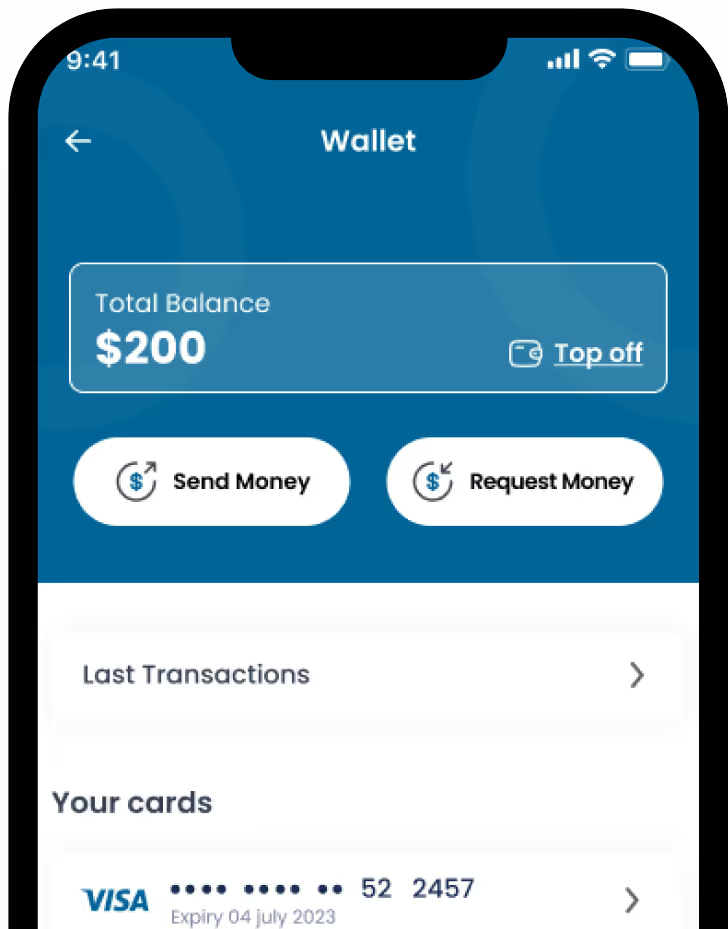
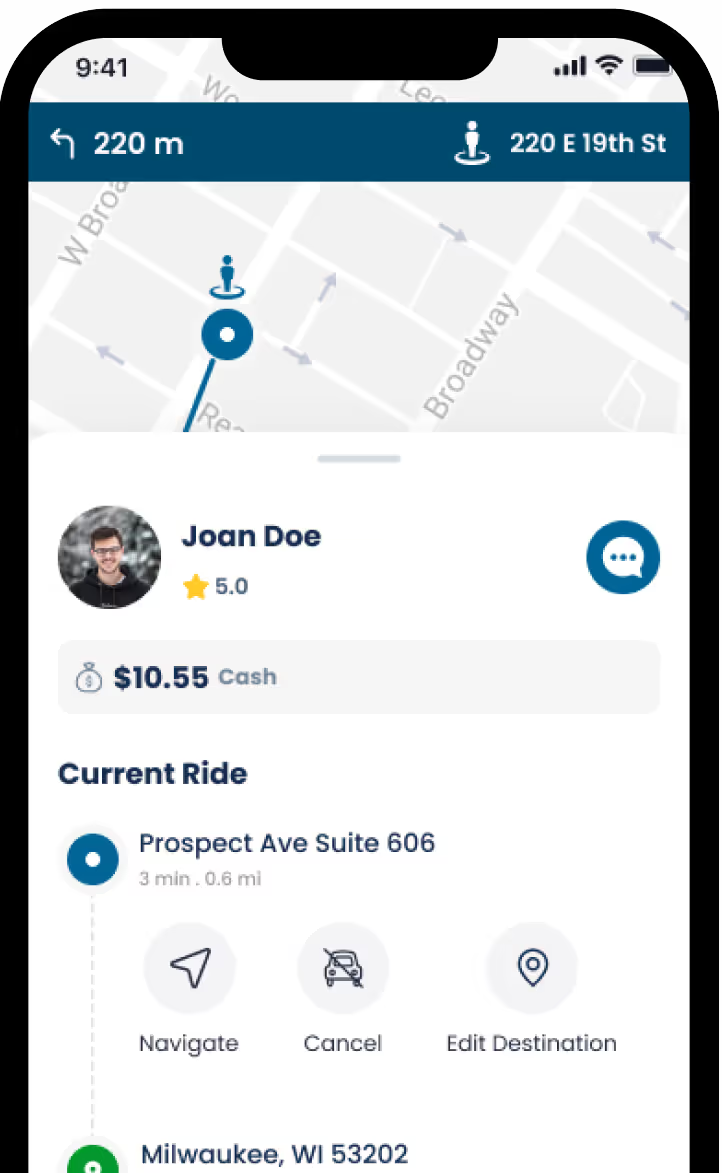
A seamless and user-friendly booking interface, coupled with features like live tracking and cashless payments, enhances the customer experience. Taxi software ensures that passengers can book rides effortlessly and track their journey in real time, thereby instilling trust and satisfaction.
By improving operational efficiency and customer satisfaction, taxi software ultimately leads to increased profitability. Reduced fuel consumption, optimized routes, and higher driver utilization contribute to cost savings, while satisfied customers are more likely to become repeat users and brand advocates.
When choosing a taxi software solution, it's essential to consider its key features and functionalities to ensure that it meets the specific needs of your business.
A robust booking and dispatch system is the backbone of any taxi software. It should allow passengers to book rides easily through various channels, such as mobile apps, websites, or phone calls, and dispatch them to the nearest available driver efficiently.
Effective driver management tools enable taxi companies to onboard, monitor, and incentivize drivers seamlessly. Features such as driver tracking, performance analytics, and incentive programs help optimize driver behavior and improve overall service quality.
The customer interface of taxi software should be intuitive, responsive, and feature-rich. It should enable passengers to book rides, track their drivers in real time, make secure payments, and provide feedback effortlessly.
Several taxi software solutions are available in the market, catering to the diverse needs of taxi businesses worldwide. Some of the most popular options include RideWyze, Uber, Lyft, and Grab.
RideWyze is a cutting-edge platform revolutionizing the ride-hailing industry with seamless solutions for both passengers and drivers. Our user-friendly interface, robust technology, and commitment to excellence ensure safe, efficient, and enjoyable transportation experiences. Join RideWyze today and discover the future of mobility.
Uber is perhaps the most well-known ride-hailing platform globally, operating in numerous countries and cities. Its user-friendly app, extensive driver network, and innovative features have made it a preferred choice for millions of passengers worldwide.
Lyft is another prominent player in the ride-hailing industry, primarily operating in the United States and Canada. Known for its focus on driver satisfaction and community engagement, Lyft offers a reliable and customer-centric transportation experience.
Grab is a leading ride-hailing platform in Southeast Asia, serving millions of users across multiple countries. In addition to ride-hailing, Grab offers various services such as food delivery, package delivery, and digital payments, making it a one-stop solution for everyday needs.
When selecting a taxi software solution for your business, several factors should be taken into account to ensure that it aligns with your operational requirements and business goals.
The software should be scalable to accommodate the growth of your business. Whether you're operating a small fleet or planning to expand regionally or nationally, the software should be able to scale seamlessly without compromising performance or reliability.
Every taxi business is unique, with its own set of requirements and preferences. Therefore, the software should offer customization options that allow you to tailor the system to meet your specific needs. From branding and pricing to fleet management and reporting, the software should be flexible enough to adapt to your business model.
While investing in quality software is essential for long-term success, it's also crucial to consider the cost and affordability of the solution. The software should offer transparent pricing with no hidden fees, allowing you to budget effectively and maximize your return on investment.
Once you've selected the right taxi software for your business, the next step is implementing it effectively to reap its benefits fully.
Proper training and onboarding are critical to ensuring a smooth transition to the new software. Ensure that all stakeholders, including drivers, dispatchers, and administrative staff, receive comprehensive training on using the software effectively.
If you're transitioning from manual or legacy systems, ensure that the new software integrates seamlessly with your existing infrastructure. This includes compatibility with hardware devices, back-office systems, payment gateways, and third-party applications.
Examining real-life case studies can provide valuable insights into the practical implementation and impact of taxi software solutions.
Many taxi businesses have achieved remarkable success by leveraging software solutions to streamline their operations and enhance customer experience. Studying these success stories can inspire and guide you in optimizing your own taxi business.
In addition to success stories, it's essential to learn from the challenges and failures encountered by others in the industry. Understanding common pitfalls and best practices can help you avoid costly mistakes and navigate the implementation process more effectively.
The taxi industry is continuously evolving, driven by technological advancements and changing consumer behavior. Keeping abreast of future trends can help taxi businesses stay ahead of the curve and remain competitive in the long run.
The rise of autonomous vehicles represents a significant opportunity for the taxi industry. By leveraging self-driving technology, taxi businesses can reduce labor costs, improve safety, and enhance the overall passenger experience.
Artificial intelligence (AI) is poised to revolutionize various aspects of taxi operations, from predictive analytics and demand forecasting to personalized customer interactions and route optimization. Integrating AI into taxi software can unlock new opportunities for efficiency and innovation.
In conclusion, software solutions play a crucial role in the success and sustainability of taxi businesses and ride-hailing services. By addressing key challenges, enhancing operational efficiency, and improving customer experience, the right software can propel taxi businesses to new heights of success in an increasingly competitive market.
Taxi businesses face challenges such as intense competition, evolving customer expectations, and the need for operational efficiency.
Taxi software automates many aspects of operations, including booking, dispatching, and routing, leading to optimized fleet management and reduced idle time.
Factors such as scalability, customization options, and cost-effectiveness should be considered when selecting taxi software for your business.
Uber, Lyft, and Grab are among the most popular taxi software options globally, offering user-friendly interfaces and innovative features.
Taxi businesses should stay informed about emerging technologies and trends, invest in research and development, and remain adaptable to seize new opportunities as they arise.
Ready to elevate your ride-hailing business? RideWyze has the tools and expertise to help you succeed. Contact us for a personalized demo today!

Create a free account and get full access to all features for 30 days.No credit card needed. Trusted by over 4,000 Clients.


from 200+ reviews

Start your 30-day free trial.