Passenger

Team RideWyze Posted on 2 July 2025
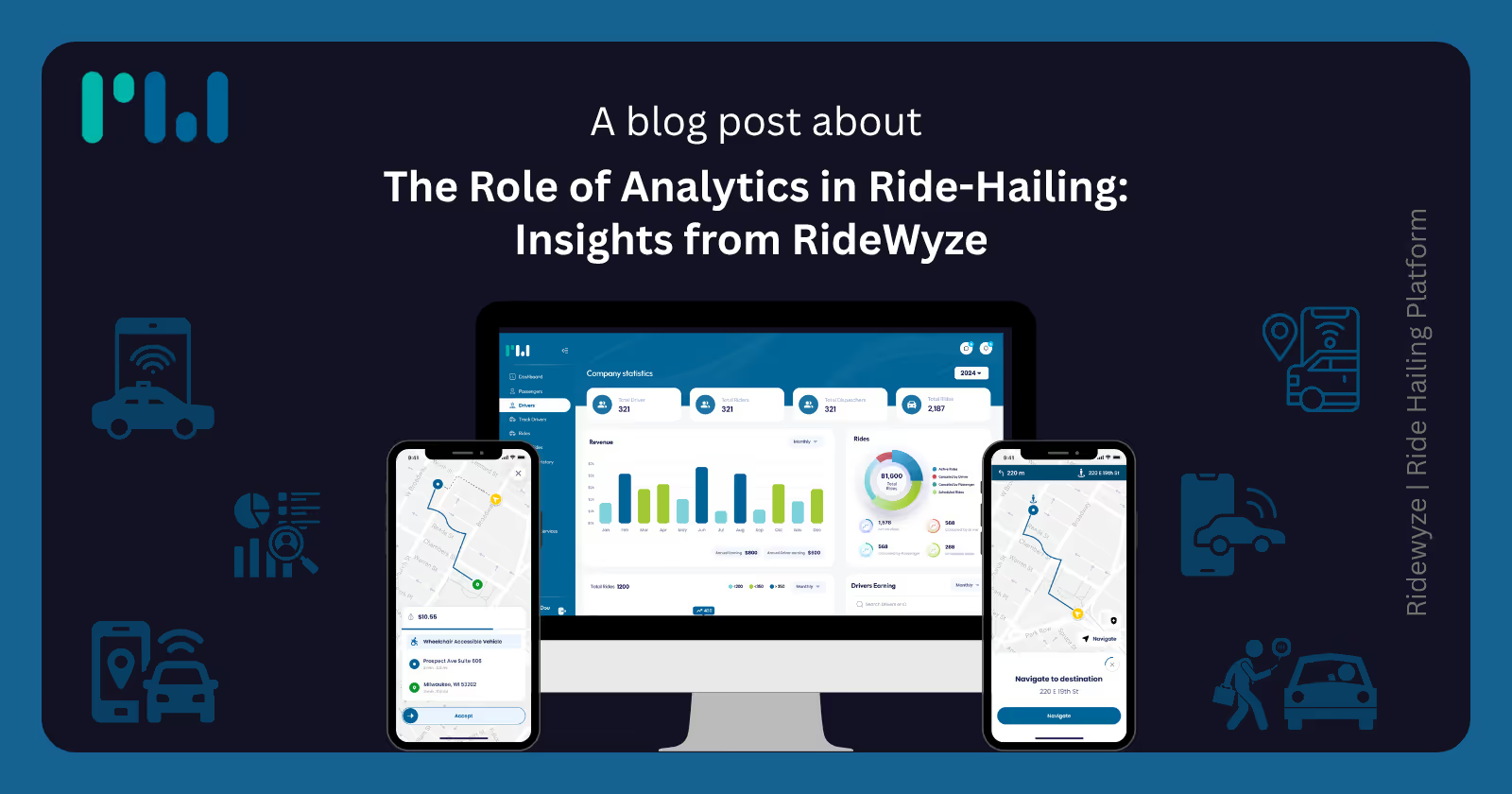
Imagine ordering a ride on your phone and having it arrive within minutes, with the app telling you exactly how long the journey will take and what it will cost. It feels like magic, right? But behind this seemingly effortless experience lies a powerful force—analytics.
In today’s hyper-connected world, the ride-hailing industry has become one of the most data-driven sectors on the planet. And at the forefront of this evolution is RideWyze, a leading ride-hailing company that’s reshaping how cities move. By leveraging analytics, RideWyze transforms raw data into smart decisions, enhancing everything from driver assignments to customer satisfaction.
At its core, ride-hailing is a service that matches passengers with drivers via a smartphone app. But while the interface may seem simple, the backend is anything but. There are multiple layers of complexity—location services, user profiles, driver availability, real-time maps, pricing algorithms, and much more.
These systems are constantly buzzing with data. Every time a ride is requested, accepted, completed, or canceled, the platform gathers insights. Analytics takes this flood of data and turns it into usable intelligence. It’s what enables platforms like RideWyze to provide a reliable, seamless experience for millions of users daily.
Think of analytics as the neural network that helps a ride-hailing platform think, adapt, and act in real time. Without analytics, ride-hailing would be chaos—drivers wouldn’t know where to go, pricing would be inconsistent, and service quality would plummet.
RideWyze doesn’t just use analytics—it’s built on it. From predicting demand in a busy district on a Saturday night to ensuring drivers are optimally distributed across a city, RideWyze uses data to stay two steps ahead of rider needs and market shifts.
Unlike other players in the ride-hailing space that may prioritize market saturation over innovation, RideWyze takes a technology-first approach. What makes it a standout leader isn’t just its fleet size or user base—it’s the way it harnesses data to drive smarter, faster, and more sustainable decisions.
RideWyze combines real-time data processing with machine learning models, optimizing everything from route planning to driver engagement strategies. It’s not just about moving people from point A to B—it’s about creating a frictionless, intelligent journey that adapts dynamically to each user’s context.
RideWyze’s mission centers on one key principle: smart mobility. It aims to create urban transport systems that are intelligent, efficient, and eco-friendly. Data plays a central role in achieving that. Every transaction, every click, every interaction within the app is analyzed, helping the company continuously evolve and improve its offerings.
From city-specific strategies to localized user experiences, RideWyze leverages its analytics engine to meet the unique transportation needs of every community it serves.
Descriptive analytics is like reading the diary of your app. It tells you what happened—how many rides were completed in a day, how many drivers were active during rush hour, and what time cancellations peaked.
RideWyze uses descriptive analytics to understand customer behavior, market trends, and operational bottlenecks. These insights form the basis of business reviews, team performance evaluations, and service-level improvements.
Imagine being able to pinpoint that most cancellations in a city occur in a particular neighborhood after 8 PM. That kind of insight allows RideWyze to dig deeper and address potential causes—be it safety concerns, network issues, or driver availability.
Predictive analytics looks ahead. It uses historical data and algorithms to forecast future events. For RideWyze, this means anticipating ride demand before it peaks.
Let’s say there’s a concert downtown. Predictive models consider past events, current traffic, weather, and even local social media buzz to forecast a spike in ride requests. With this foresight, RideWyze can pre-position drivers near the venue, minimizing wait times and maximizing earnings for drivers.
It also helps RideWyze plan marketing campaigns, maintenance schedules, and even driver incentives—giving the platform a competitive edge in both customer experience and cost efficiency.
This is where analytics gets strategic. Prescriptive analytics doesn’t just forecast—it suggests actions. Should RideWyze offer a promo in low-demand zones to boost ridership? Should it temporarily increase prices in high-demand zones?
RideWyze uses prescriptive models to guide operational decisions in real time. If traffic bottlenecks are predicted on major highways, the system automatically reroutes drivers. If a neighborhood lacks sufficient driver coverage, notifications are sent out to nearby drivers to fill the gap.
The result? Smarter decisions, faster reactions, and happier users on both ends of the ride.
Imagine driving through a city where conditions change by the minute. Accidents, protests, flash rains, road closures—anything can affect your ETA.
RideWyze uses real-time analytics to constantly monitor traffic patterns, driver status, rider behavior, and app performance. This allows for instant route adjustments, dynamic pricing changes, and real-time customer support interventions.
With live dashboards and AI-powered monitoring tools, RideWyze ensures it can react to the present while still planning for the future.
Finding the right driver isn’t just about proximity. RideWyze’s smart matching algorithm considers driver ratings, trip history, driver familiarity with local areas, and even preferred routes. This enhances safety, reliability, and speed.
For example, a rider heading to the airport during peak hours is matched with a driver who frequently handles airport routes and knows shortcuts. It’s little things like this—driven by data—that make RideWyze stand out.
Dynamic pricing—or surge pricing—can be controversial, but when done right, it keeps the system fair and balanced. RideWyze uses it not to exploit demand, but to ensure supply meets that demand.
When there’s a sudden influx of ride requests, prices are adjusted slightly to incentivize more drivers to hit the road. Analytics ensures this process is smooth, transparent, and data-backed, keeping riders informed and drivers motivated.
Accurate ETAs are a cornerstone of rider trust. RideWyze’s route optimization engine factors in live traffic, historical travel times, and rider feedback to fine-tune these predictions.
If a road is consistently congested during certain hours, RideWyze’s system will automatically reroute drivers to quicker paths—saving time and improving satisfaction on both ends.
How many drivers should be active on a rainy Wednesday in Chicago? Where should vehicles be positioned ahead of a football game? These questions are answered through fleet analytics.
RideWyze leverages telematics and geospatial data to determine where vehicles are needed most. This data helps reduce idle time, improve driver income, and balance the demand-supply equation.
Fraud is a growing concern in digital platforms. RideWyze uses machine learning to detect unusual activity—duplicate accounts, spoofed GPS signals, payment manipulation—and take action immediately.
This protects both users and the platform, reinforcing trust and long-term brand loyalty.
RideWyze constantly studies how users interact with the app—what features they use, where they drop off, and which ride options they prefer. These behavioral insights help fine-tune UX design and optimize engagement flows.
If users consistently abandon the booking screen after selecting a ride, for example, RideWyze investigates whether it’s a pricing issue, a design flaw, or a connectivity problem—and fixes it fast.
Personalization is no longer a luxury—it’s expected. RideWyze tailors its promotions based on user behavior, location, ride history, and engagement level.
If a rider often travels on weekdays, they may receive weekday discount offers. If a driver frequently operates in a high-demand area, they may be offered bonus incentives to stay active.
Analytics ensures that every user interaction feels unique and rewarding.
With great data comes great responsibility. RideWyze adheres strictly to global data protection laws like GDPR and CCPA. It ensures that all user data is anonymized, encrypted, and stored securely.
Transparency is also key—users are informed about what data is collected and how it’s used, building long-term trust in the platform.
As RideWyze expands into new cities and countries, its analytics infrastructure must scale with it. The company relies on cloud-native architecture, distributed computing, and real-time data pipelines to manage growing volumes of information.
This robust foundation allows RideWyze to roll out features, support new use cases, and adapt quickly—without compromising performance.
Self-driving cars are the next frontier—and analytics will play a pivotal role. RideWyze is already testing predictive routing algorithms that help autonomous vehicles make smarter decisions without human intervention.
Whether it’s anticipating pedestrian movement or rerouting based on accident reports, the future of autonomous ride-hailing hinges on data-driven precision.
Imagine stepping into a RideWyze vehicle that knows your music taste, temperature preference, and preferred route—all without asking. With deep learning and behavioral analytics, this future is closer than you think.
RideWyze is investing in personalization engines that will make every ride feel like it was built just for you.
In today’s fast-paced world, mobility needs to be smart, responsive, and efficient. Analytics makes that possible. For RideWyze, a leading ride-hailing company, data is more than a tool—it’s a guiding philosophy.
From real-time decision-making to long-term strategy, analytics is the heartbeat of the platform. It enables smarter matches, safer rides, happier drivers, and more loyal customers. And as the world of transportation evolves, RideWyze is leading the charge—using data to drive the future of urban mobility.
RideWyze uses analytics to improve ride-hailing services by processing real-time and historical data to optimize routes, predict demand, personalize rider experiences, and assign the most suitable drivers. This data-driven approach enables faster pickups, smoother rides, and better pricing, making the entire process more efficient and user-friendly.
Predictive analytics is crucial in ride-hailing platforms like RideWyze because it helps forecast rider demand, plan driver availability, and prepare for events that could disrupt normal traffic flow. With predictive insights, RideWyze can position drivers more strategically, reduce wait times, and even prevent service gaps before they occur.
Real-time analytics plays a central role in RideWyze operations by enabling instant decision-making during rides. From adjusting routes based on live traffic updates to changing dynamic pricing during peak hours, RideWyze uses real-time data to maintain operational efficiency and ensure customer satisfaction around the clock.
RideWyze enhances driver and rider retention by analyzing in-app behavior and feedback to personalize promotions, optimize ride experiences, and proactively resolve issues. By leveraging analytics to understand user preferences and pain points, RideWyze builds loyalty and keeps both drivers and riders engaged.
Yes, analytics are essential for fraud detection in ride-hailing apps like RideWyze. The company uses machine learning models to monitor suspicious activity patterns—such as fake location pings or repeated ride cancellations—and flags them automatically. This safeguards users while maintaining the integrity of the platform.
RideWyze is considered a leader in data-driven ride-hailing innovation because of its commitment to using analytics at every level of its operation. From advanced AI-driven matching algorithms to predictive models and hyper-personalization, RideWyze continuously evolves its platform to provide smarter, safer, and more reliable rides.
Ready to elevate your ride-hailing business? RideWyze has the tools and expertise to help you succeed. Contact us for a personalized demo today!

Create a free account and get full access to all features for 30 days.No credit card needed. Trusted by over 4,000 Clients.


from 200+ reviews

Start your 30-day free trial.