Passenger

Team RideWyze Posted on 13 February 2026

Taxi dispatch software has evolved into the foundational digital infrastructure underpinning modern vehicle dispatch solutions, fleet management platforms, and broader transportation management software (TMS) ecosystems. As urban mobility becomes increasingly data-driven, dispatch systems now act as the central nervous system connecting drivers, vehicles, passengers, and operators in real time.
In 2025, the global taxi dispatch software market is valued between $855 million and $950 million, expanding at a robust 17.5%–22.5% compound annual growth rate (CAGR). This growth trajectory closely mirrors the expansion of ride-hailing technology, which facilitates more than 65 billion rides annually and processes over 120 million ride requests every single day across global platforms.
For fleet operators, dispatch software is no longer a simple cab scheduling system. It has matured into a comprehensive operational layer that governs routing intelligence, pricing logic, customer experience, driver productivity, regulatory compliance, and long-term scalability. In practical terms, dispatch software now determines whether a taxi business merely survives—or sustainably competes—in an increasingly platform-dominated mobility landscape.
Historically, radio taxi services relied on phone calls, analog radios, paper logs, and human judgment. Dispatchers manually matched incoming booking requests to available drivers, a process that was inherently slow, error-prone, and difficult to scale. Under these conditions, a single dispatcher could manage only 15–20 trips per day, often leading to unassigned bookings, inconsistent service quality, and elevated driver idle time.
The transition to automated dispatch systems fundamentally altered this dynamic. Modern platforms leverage real-time GPS tracking, route optimization engines, and ride allocation algorithms to automate decisions that were previously manual. As a result, dispatcher capacity has expanded to 40–100 trips per day, translating into productivity gains of up to 400%.
By 2025, nearly 40% of new taxi dispatch platforms integrate machine learning dispatch algorithms, enabling systems to learn from historical data, forecast demand surges, and optimize fleet positioning proactively. Adoption of AI-powered dispatch software continues to grow at 33% year over year, particularly among fleets seeking to expand operations without increasing administrative headcount.
The rise of ride-hailing marketplaces has had a structural impact on the taxi industry. In 2023 alone, ride-hailing platforms recorded 17 billion trips, resetting customer expectations around speed, transparency, and convenience. Passengers now expect real-time taxi dispatch systems, mobile-first booking experiences, live vehicle tracking, and dynamic ETAs as baseline features rather than premium add-ons.
In response, modern taxi booking software and driver dispatch apps have adopted similar UX and functional standards—while preserving the operational autonomy that traditional operators value. Unlike marketplace platforms, independent dispatch systems ensure full data ownership, pricing control, and direct customer relationships, allowing taxi companies to compete technologically without sacrificing margins or brand identity.
Taxi dispatch software is an integrated fleet optimization tool designed to automate and orchestrate every stage of taxi operations—from booking intake and ride assignment to routing, billing, and performance analytics. At its core, it functions as an on-demand dispatch engine that synchronizes drivers, vehicles, and passengers through a centralized digital platform.
By eliminating inefficiencies such as idle miles, manual scheduling conflicts, and delayed dispatch decisions, taxi dispatch software transforms fragmented operations into cohesive, data-driven workflows. In modern deployments, dispatch systems also serve as the backbone for Mobility-as-a-Service (MaaS) platforms, supporting multimodal transport, subscription mobility, and API-based integrations.
Each stakeholder derives measurable value from dispatch automation. Fleet owners gain centralized visibility into fleet efficiency, driver utilization rates, and revenue performance. Drivers benefit from reduced idle gaps—often lowered by 15%–25%—through intelligent ride sequencing and AI-powered route optimization.
Passengers experience the most visible improvements: 40% faster pickup times, consistent ETAs, and transparent ride updates. Average wait times decline from 12 minutes to approximately 7 minutes, directly improving satisfaction and repeat usage.
Real-time GPS tracking is now a near-universal capability, implemented in over 97% of dispatch platforms. It forms the foundation of modern fleet telematics, enabling live vehicle monitoring, accurate location data, and intelligent dispatch decisions.
Beyond basic tracking, advanced platforms leverage geospatial intelligence to support geofencing, zone-based pricing, and proximity-based ride allocation—capabilities that are particularly valuable for airport transfer services, urban taxi zones, and high-density metropolitan markets.
Modern ETA algorithms incorporate live traffic data, historical congestion patterns, weather conditions, and driver behavior. These route optimization engines reduce fuel costs by 22%–30% while improving arrival-time accuracy—critical for corporate transportation, black car fleets, and time-sensitive bookings.
Automated dispatch replaces manual decision-making with algorithmic precision. Ride distribution algorithms assign trips based on driver proximity, availability, vehicle class, traffic conditions, and service-level rules. This automation reduces booking errors by 85%–100% and increases daily rides per driver from 14 to 19, a 35% productivity gain.
AI dispatch software for taxis enables predictive demand modeling, proactive fleet repositioning, and dynamic pricing models. These capabilities allow operators to capture peak-period demand more effectively, increasing revenue by 15%–25% during high-demand windows—a decisive advantage for 24/7 taxi operations.
Modern chauffeur management systems and fleet management platforms extend beyond dispatch. They include driver performance scoring, shift scheduling, compliance monitoring, and vehicle maintenance alerts. Enterprise fleets deploying AI-powered fleet management report annual savings exceeding $12.3 million, driven by improved utilization and reduced overhead.
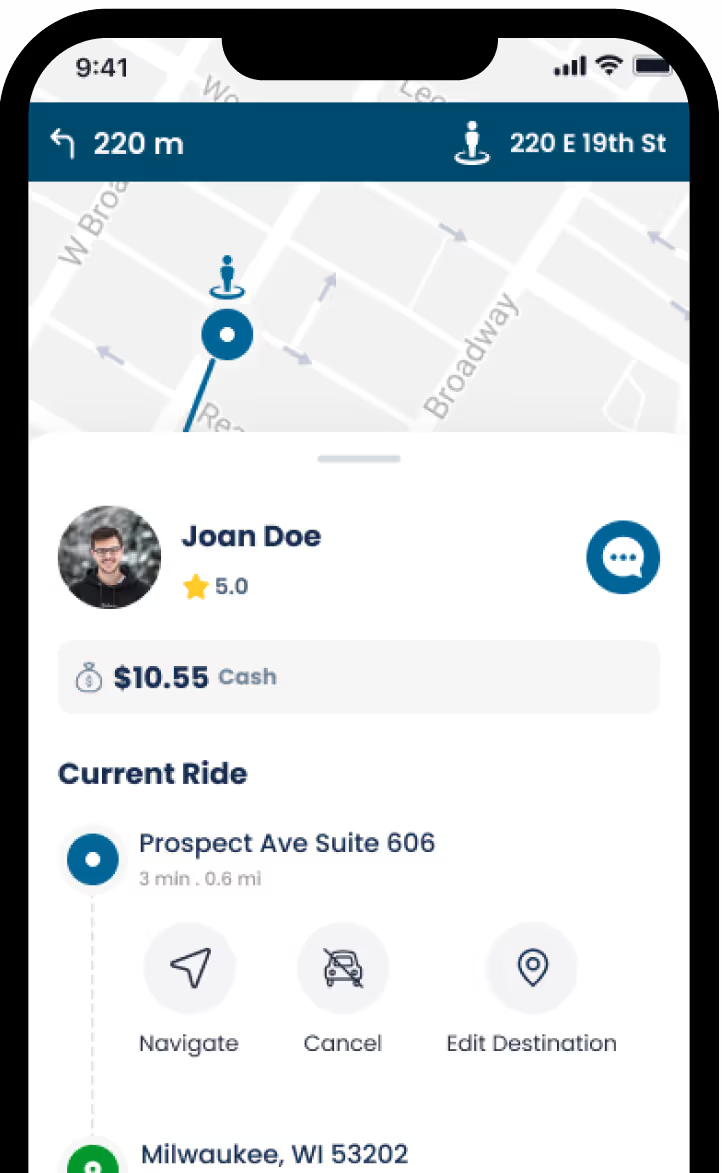
With 95%+ smartphone penetration among urban drivers and riders, mobile apps are now the primary interface for taxi services. Mobile dispatch apps for drivers streamline job acceptance, navigation, and earnings visibility, while passenger apps support bookings, tracking, and notifications.
Case studies demonstrate that migrating to app-based booking shifts 75% of rides away from call centers, reducing administrative costs and improving booking accuracy.
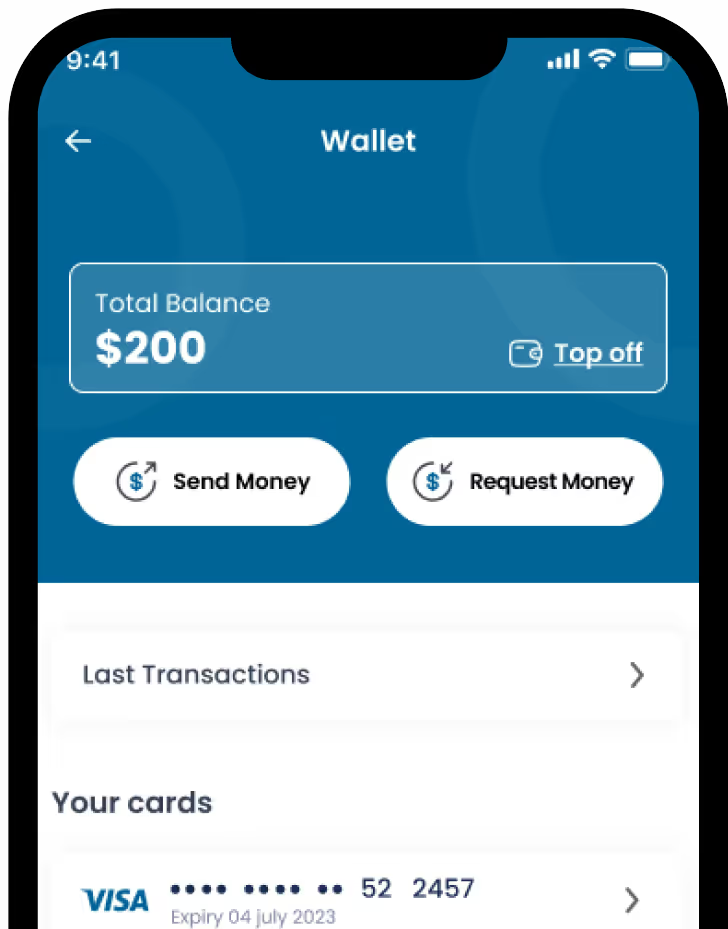
Integrated payment gateway integration supports cashless transactions, invoicing, and corporate billing. Over 85% of enterprise dispatch platforms now offer automated billing, a critical feature for white-label taxi dispatch software, multi-city fleets, and B2B transportation providers.
Advanced analytics dashboards provide insights into idle time reduction, trip distribution, revenue per vehicle, and demand forecasting. Operators using data-driven dispatch report a 35% overall operational efficiency increase compared to manual systems.
In 2025, cloud-based dispatch software represents 61% of new deployments, favored for scalability, faster rollouts, and lower infrastructure costs. Cloud-native architectures support rapid updates, API connectivity, and geographic expansion.
Regulatory compliance—particularly GDPR in Europe—has become a major adoption driver, especially for private hire vehicles (PHV) and corporate transportation providers. Unlike ride-hailing marketplaces, independent dispatch systems provide full data ownership, ensuring compliance, transparency, and long-term strategic control.
For small fleets (10–50 vehicles), pricing typically ranges from $99–$299 per vehicle per month, with implementation timelines of 3–4 weeks. These SaaS models make dispatch software accessible to startup taxi companies and independent operators.
Mid-sized fleets (50–250 vehicles) often adopt flat pricing between $500–$1,000 per month, balancing cost efficiency with advanced functionality and scalability.
Large fleets (250+ vehicles) deploy enterprise taxi dispatch software, priced at $1,500+ per month, with 8–12 week implementation timelines.
Additional options include:
White-label SaaS: $300–$1,000/month
Custom taxi app development: $40,000–$150,000 upfront
Automated dispatch reduces driver idle time from 15%–25% to 5%–10%, while predictive dispatch engines cut idle miles by 15%–25%, directly improving fleet efficiency.
Real-time tracking, accurate ETAs, and push notifications lead to 40%+ improvements in customer review scores, particularly for airport taxis, hotel concierge services, and premium fleets.
Comparing commission-free taxi dispatch software vs Uber fees highlights the financial impact:
A fleet running 10,000 rides/month at a $15 average fare loses $360,000 annually to a 20% commission.
Independent dispatch platforms typically achieve ROI payback within 6–7 months, with long-term margin preservation.
Automated systems eliminate dispatcher bottlenecks. Fleets have expanded by 40% or more without adding staff, demonstrating true scalability for Mobility-as-a-Service (MaaS) platforms.
With 70% of taxi businesses classified as small fleets, affordability, ease of use, and rapid deployment remain decisive selection criteria.
API integrations with POS systems, taxi meters, CRM tools, and accounting platforms support long-term growth and MaaS ecosystem integration.
Market leaders such as Magenta Technology, TaxiCaller, iCabbi, Autocab, and Yelowsoft collectively control 42% of the global market, reflecting consolidation around mature, scalable fleet dispatch software providers.
Emerging trends include IoT vehicle tracking, subscription-based mobility models, super-app ecosystems, and multi-modal MaaS integration. China alone is expected to see 30% of taxi fleets adopt advanced dispatch platforms by 2025, positioning it as the fastest-growing regional market.
Taxi dispatch software has become one of the highest-ROI investments in transportation technology. With a $950 million market size, 22.5% CAGR, 40% faster pickups, 30% fuel savings, and 6–7 month ROI payback, its strategic importance is undeniable.
In 2025, adopting the best taxi dispatch software is no longer optional—it is the defining factor separating scalable, data-driven taxi enterprises from operators dependent on third-party ride-hailing marketplaces.
Taxi dispatch software in 2025 refers to an automated dispatch system that manages ride bookings, driver allocation, route optimization, payments, and analytics through a centralized digital platform. Modern taxi dispatch software works by using real-time GPS tracking, AI-powered dispatch algorithms, and cloud-based fleet management tools to automatically assign the nearest available driver, optimize routes, and reduce passenger wait times. Unlike manual or radio-based systems, today’s dispatch software operates as a full transportation management software (TMS) solution that supports scalability, compliance, and data-driven decision-making.
The cost of taxi dispatch software in 2025 depends on fleet size, deployment model, and feature depth. For small fleets with 10–50 vehicles, taxi dispatch software pricing typically ranges from $99 to $299 per vehicle per month, while mid-sized fleets often pay $500–$1,000 per month. Enterprise taxi dispatch software for fleets with 250+ vehicles usually starts at $1,500+ per month, with custom pricing. These costs are significantly lower than ride-hailing marketplace commissions and are designed to deliver ROI within 6–7 months for most operators.
Yes, taxi dispatch software is significantly more profitable than relying on Uber or other ride-hailing platforms for most fleet operators. When comparing commission-free taxi dispatch software vs Uber fees, ride-hailing marketplaces typically charge 15%–25% commission per ride, which can amount to $360,000 per year for a mid-sized fleet. In contrast, independent taxi dispatch software involves predictable subscription costs and allows operators to retain nearly all revenue, achieve faster break-even, and maintain full customer and data ownership.
The best taxi dispatch software in 2025 includes features such as real-time taxi dispatch systems, AI-powered route optimization, automated ride allocation, mobile dispatch apps for drivers, integrated payments, and advanced analytics. High-performing platforms also offer geofencing capabilities, dynamic pricing models, API integrations, and fleet telematics. These features work together to reduce driver idle time, increase daily rides per driver, and improve overall fleet efficiency by up to 35%.
Absolutely. Taxi dispatch software for small fleets is one of the fastest-growing adoption segments in 2025. With nearly 70% of taxi businesses operating small fleets, modern cloud-based dispatch software offers affordable pricing, fast deployment, and minimal training requirements. Small operators benefit from automated dispatch, reduced booking errors, improved customer experience, and the ability to compete technologically with larger ride-hailing platforms—without paying high commissions or losing control of their brand.
The implementation timeline for taxi dispatch software varies based on fleet size and customization needs. Most cloud-based dispatch software solutions can be deployed in 3–4 weeks for small fleets, while mid-sized fleets typically require 6–8 weeks. Enterprise implementations with advanced integrations may take 8–12 weeks. Despite these timelines, most operators begin seeing measurable improvements—such as faster pickups and reduced idle time—within the first few weeks of go-live.
Ready to elevate your ride-hailing business? RideWyze has the tools and expertise to help you succeed. Contact us for a personalized demo today!

Create a free account and get full access to all features for 30 days.No credit card needed. Trusted by over 4,000 Clients.


from 200+ reviews

Start your 30-day free trial.