Passenger

Team RideWyze Posted on 10 Nov 2025
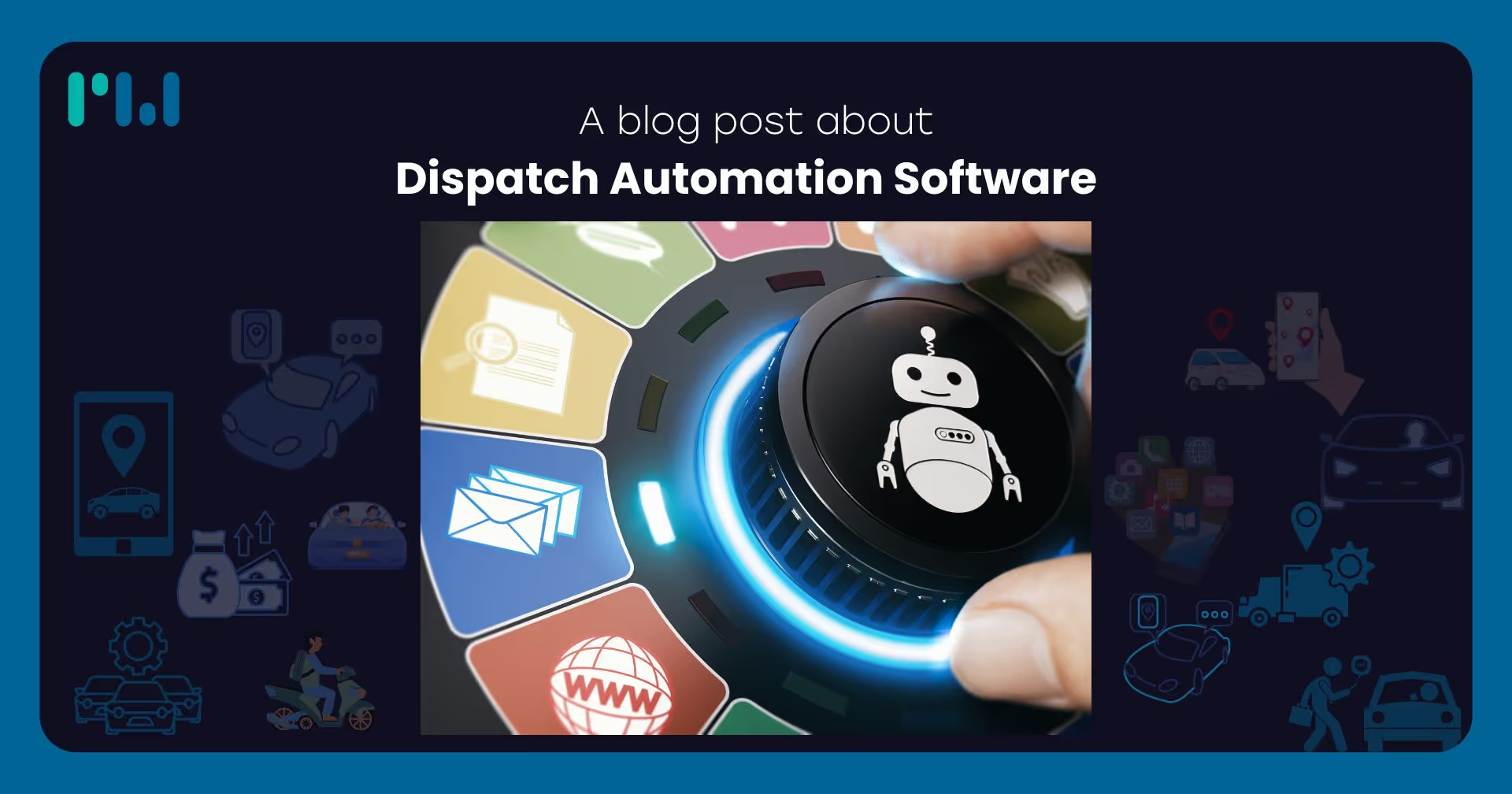
In today's fast-paced business environment, dispatch automation software has become essential for operational efficiency. Businesses across logistics, field services, ride-hailing, and emergency response rely on technology to ensure that the right person or vehicle reaches the right location at the right time. Gone are the days when dispatchers relied solely on spreadsheets, phones, or whiteboards. The complexity of modern operations demands automated dispatch software that integrates intelligence, real-time tracking, and predictive decision-making into daily workflows.
By leveraging AI-powered dispatch engines, dynamic route scheduling, and predictive resource allocation, companies can reduce manual errors, streamline operations, and achieve measurable efficiency gains. This article explores the comprehensive benefits, features, market trends, and real-world ROI of dispatch automation software, supported by current data and statistics.
Dispatch automation software is a digital system designed to automate the assignment, scheduling, and tracking of tasks or deliveries. Unlike traditional dispatching, which relies heavily on human judgment, automated systems employ machine-learning dispatch logic, predictive resource allocation, and autonomous dispatch decisions to streamline operations.
These systems can instantly process hundreds of requests, evaluate the optimal resources, and adjust routes in real time. For instance, in a logistics scenario, the software ensures that a delivery truck closest to the destination, with the right load capacity and driver skills, is automatically assigned to the task. This level of efficiency was nearly impossible in manual dispatch systems.
Manual dispatching is labor-intensive, error-prone, and slow. Employees must constantly coordinate schedules, track locations, and make judgment calls. By contrast, automated dispatching software enables:
The difference is staggering — automated systems process requests in seconds rather than minutes, while also optimizing resource allocation for maximum productivity.
Customers today expect instant, reliable service. Industries such as food delivery, logistics, and field services are under pressure to provide same-day or even same-hour service. Dispatch automation software meets these demands by enabling real-time dispatch optimization and intelligent job assignment, ensuring tasks are completed efficiently without delays.
Key efficiency metrics include:
By reducing dispatch delays and enhancing SLA compliance, businesses strengthen customer trust and retention.
Modern automated dispatch systems continually analyze live data, such as vehicle locations, traffic conditions, and employee availability. With AI-powered dispatch engines and autonomous dispatch decisions, these systems dynamically adjust assignments and routes. For example, if a traffic jam occurs, the system instantly reroutes a driver without dispatcher intervention.
This capability allows organizations to implement touchless dispatch cycles and auto-scheduling workflows, cutting administrative overhead and improving response times, especially for time-sensitive operations like emergency response or high-priority deliveries.
The software assigns jobs based on proximity, availability, skillset, and workload. Features such as AI-powered dispatch engines, predictive resource allocation, and autonomous dispatch decisions ensure that the right personnel are assigned the right task, every time.
For instance, in HVAC service management, field service dispatch software ensures technicians with the required certifications and tools are sent to the correct service location, improving first-time resolution rates and customer satisfaction.
Modern route optimization engines consider live traffic, weather, and vehicle constraints to suggest the fastest and most cost-efficient paths. Incorporating AI traffic prediction, dispatch systems can anticipate delays and reroute dynamically.
Cost savings statistics include:
These features make dispatch automation software crucial for logistics and delivery companies seeking operational efficiency.
Real-time GPS tracking and geofencing alerts enable dispatchers to monitor resources at any moment. Managers can identify delays, track progress, and adjust assignments immediately. This feature also supports digital dispatch audit trails for compliance and operational review.
Automated notifications improve communication across all parties:
This transparency reduces miscommunication, improves service reliability, and enhances customer satisfaction.
Modern platforms are cloud-native dispatch architectures and SaaS dispatch platforms, allowing seamless integration with ERP, CRM, and accounting software like QuickBooks. This facilitates dispatch digitization, paperless job dispatch, and proof-of-delivery automation, creating a fully connected operational ecosystem.
The dispatch software industry is experiencing rapid growth:
These numbers highlight the growing reliance on automated dispatch systems across multiple verticals.
Country-specific growth rates:
This data reflects the widespread adoption of fleet dispatch automation and courier dispatch platforms globally.
Automation drastically lowers the risk of mistakes:
By eliminating manual errors, organizations can meet SLA compliance automation requirements more consistently.
Automated scheduling ensures the nearest available resource is assigned instantly. Field service dispatch software and emergency dispatch automation rely on these capabilities to shorten response times and improve first-time fix rates.
Automation maximizes resource efficiency:
Automation delivers substantial financial benefits:
Clearly, dispatch automation ROI can exceed 300% in the first year, making the technology a strategic investment.
Identify pain points such as inefficient scheduling, missed deliveries, or low first-time fix rates. Consider whether the organization requires autonomous dispatch decisions, dynamic route scheduling, or machine-learning dispatch logic.
Prioritize cloud-based dispatch dashboards, SaaS dispatch platforms, and solutions that integrate with CRM, ERP, or accounting systems. Evaluate features such as drag-and-drop dispatch boards, mobile driver apps, and geofencing alerts.
Effective adoption requires change management, pilot programs, and proper training. Staff should understand paperless job dispatch processes and digital dispatch audit trails to maximize ROI.
Track KPIs like travel cost reduction, technician utilization, and first-time fix rates. Tools like a dispatch automation ROI calculator help quantify benefits. Many organizations achieve payback in under six months with automation.
The adoption of dispatch automation software is transforming operations across industries. By leveraging AI-powered dispatch engines, real-time GPS tracking, and dynamic route scheduling, organizations can reduce errors, improve technician utilization, and achieve significant ROI — often exceeding 300% in the first year.
With the global market growing rapidly, companies investing in automated dispatching systems gain a competitive edge, operational efficiency, and enhanced customer satisfaction. Whether in logistics, field services, ride-hailing, or emergency response, dispatch automation is no longer optional — it’s an essential tool for modern business success.
Dispatch automation software works by using AI-powered engines and machine-learning logic to assign, schedule, and track jobs automatically. It considers factors like technician availability, proximity, skill set, and workload to ensure the right resource is dispatched to the right task. With real-time GPS tracking and dynamic route scheduling, the software optimizes routes, reduces delays, and improves operational efficiency without manual intervention.
The ROI of automated dispatch systems is significant. Organizations often see payback periods under six months, with total returns exceeding 300% in the first year. For example, Microsoft Dynamics 365 Field Service reports a 346% ROI over three years. Automation reduces travel costs, accelerates invoicing, and improves technician utilization, making the investment highly profitable.
Automated dispatch systems are widely used across industries such as field services, logistics, transportation, ride-hailing, courier delivery, and public transit. HVAC companies, truck fleets, taxi services, emergency responders, and AGV platforms all rely on these systems to increase first-time fix rates, reduce dispatch delays, and optimize resource allocation.
Yes, most modern dispatch automation software integrates seamlessly with accounting tools like QuickBooks, ERP systems, and CRM platforms. This integration allows businesses to automate billing, track costs, and maintain accurate records while streamlining operations through cloud-based dispatch dashboards and real-time reporting.
Choosing the right cloud-based dispatch platform involves evaluating your business needs, considering scalability, and checking feature availability. Look for systems that offer real-time dispatch optimization, mobile driver apps, AI-powered dispatch engines, and predictive resource allocation. Proper training and pilot programs are also essential to ensure smooth adoption and maximize ROI.
Ready to elevate your ride-hailing business? RideWyze has the tools and expertise to help you succeed. Contact us for a personalized demo today!

Create a free account and get full access to all features for 30 days.No credit card needed. Trusted by over 4,000 Clients.


from 200+ reviews

Start your 30-day free trial.