Passenger

Team RideWyze Posted on 16 February 2026
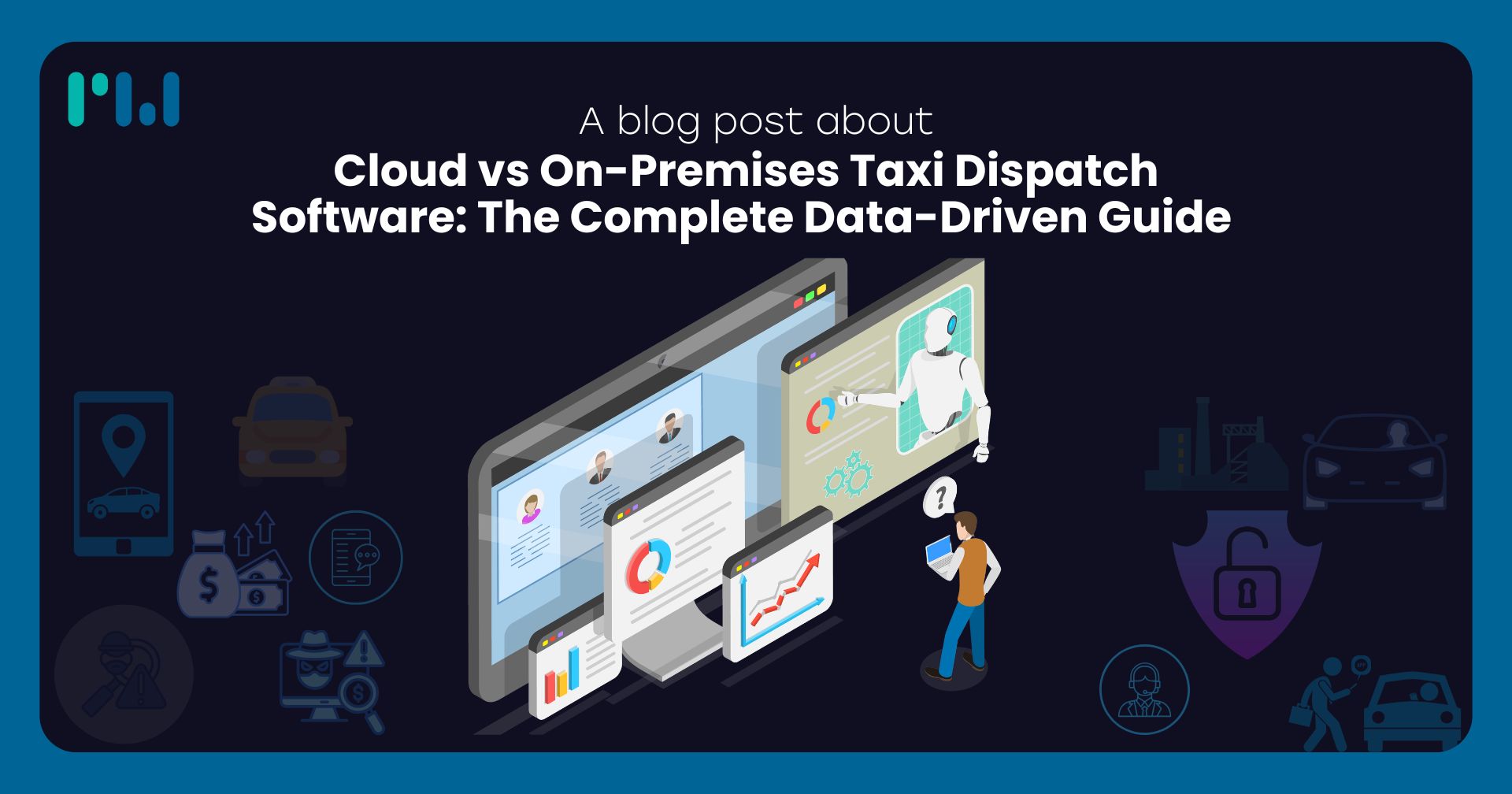
Choosing between cloud vs on-premises taxi dispatch software has evolved into a high-stakes strategic decision for modern transportation businesses. It no longer concerns only where software is hosted but directly influences total cost of ownership (TCO), operational agility, system resilience, regulatory compliance, and long-term scalability.
As fleet operators, ride-hailing startups, limousine companies, and enterprise transportation providers modernize their operations, the debate between a SaaS taxi dispatch platform and a self-hosted dispatch solution has intensified. Cloud-native transportation management systems promise flexibility, faster deployment, and lower upfront costs, while on-premises dispatch software continues to appeal to organizations prioritizing data sovereignty and deep customization.
This comprehensive guide evaluates market data, deployment models, cost structures, performance benchmarks, security considerations, and future trends, enabling decision-makers to select the dispatch architecture that best aligns with their operational goals and risk profile.
The global taxi dispatch software market is undergoing sustained and accelerated growth, driven by urbanization, digital mobility services, and the widespread adoption of cloud-based fleet management platforms.
In 2024, market valuations varied significantly—from $0.698 billion to $5.8 billion—depending on whether estimates focused narrowly on dispatch platforms or broadly included adjacent fleet management and booking technologies. By 2025, the market is projected to reach $0.875 billion to $6.22 billion, reflecting strong demand for web-based cab booking software, automated dispatch logic, and mobile-first passenger interfaces.
Long-term projections indicate that the market could reach $3.78 billion to $12.5 billion by 2033–2035, with a compound annual growth rate (CAGR) ranging between 7.2% and 22.46%. This wide CAGR band highlights the sector’s sensitivity to regional digitization rates, regulatory frameworks, and investment in smart transportation infrastructure.
A defining characteristic of this growth is the clear dominance of cloud-based dispatch systems, which now represent 61% of total market share, compared to 39% for on-premise taxi dispatch software operating on single-tenant licenses and on-site server infrastructure. This shift underscores the industry’s broader movement toward subscription-based software models and cloud-native operations.
North America currently accounts for 38% of the global taxi dispatch software market, with an estimated value of $0.294 billion in 2025. This leadership position is driven by high smartphone penetration, mature SaaS ecosystems, and early adoption of API-first dispatch platforms that integrate seamlessly with payment gateways, GPS providers, and customer relationship management (CRM) systems.
Europe follows closely with 27% market share, supported by strong regulatory frameworks and growing demand for GDPR-compliant dispatch software. China, holding 25%, benefits from rapid urbanization, large-scale ride-hailing platforms, and government-backed smart city initiatives.
The remaining 10% of the market is distributed across emerging regions, where adoption is influenced by infrastructure readiness, internet reliability, and fragmented regulatory environments.
Across the broader fleet management software market, cloud adoption has become the norm rather than the exception. In 2024, more than 65% of fleet operators globally reported using hosted fleet management systems, reinforcing the industry-wide shift toward multi-tenant dispatch architecture, pay-per-vehicle pricing models, and operational expenditure (OpEx)–driven budgeting.
Understanding taxi booking system architecture is essential when evaluating deployment models, as architecture directly affects scalability, performance, and long-term operational costs.
A cloud-native taxi dispatch platform operates within a virtual private cloud (VPC) or a shared multi-tenant environment hosted by third-party providers. The vendor assumes responsibility for infrastructure provisioning, security updates, system monitoring, and disaster recovery.
Key architectural characteristics include:
This model enables rapid feature innovation, predictable costs, and near-instant scalability during peak demand periods.
An on-premise taxi dispatch solution is deployed on on-site dispatch server infrastructure, often hosted on dedicated servers or air-gapped environments for heightened data control.
Typical characteristics include:
While on-premise cab software provides autonomy and control, it introduces higher complexity, slower innovation cycles, and increased responsibility for maintenance, security patching, and compliance.
Implementation speed is one of the most visible differences between cloud vs on-premise dispatch systems and often determines how quickly a fleet can begin generating ROI.
Cloud-based taxi dispatch software typically achieves a basic go-live within 3–6 weeks, with advanced customization and integrations completed within 8–12 weeks. This accelerated timeline is possible due to pre-configured environments, reusable modules, and automated deployment pipelines.
By contrast, on-premise implementations often require 3–6 months, extending up to 12 months for enterprise-grade deployments involving virtualization, data center redundancy, and extensive security audits.
For operators entering competitive markets or responding to regulatory deadlines, cloud deployment offers a decisive advantage.
A SaaS taxi dispatch platform typically involves:
Over a five-year period, cloud-based dispatch software delivers 20–40% lower total cost of ownership, primarily due to reduced infrastructure costs, minimal IT staffing requirements, and automatic feature updates included in the subscription.
On-premise taxi dispatch software generally requires:
Over five years, on-premise TCO averages $530,000, compared to approximately $350,000 for cloud-based solutions. Cloud deployments save an estimated $235,000 in Year 1 alone, freeing capital for growth initiatives rather than infrastructure upkeep.
Cloud-based fleet software consistently demonstrates superior operational performance compared to traditional self-hosted systems.
Measured improvements include:
These gains stem from advanced fleet optimization algorithms, predictive analytics, real-time GPS tracking, and automated dispatch logic that continuously adapts to traffic, demand patterns, and driver availability.
System reliability is mission-critical for taxi dispatch operations, where downtime directly translates to lost revenue and customer dissatisfaction.
Cloud-based dispatch platforms deliver built-in data center redundancy, automated backups, and near-zero maintenance downtime. In contrast, on-premise systems rely heavily on internal IT teams, making uptime dependent on staffing, hardware health, and manual recovery procedures.
For fleets operating 24/7, guaranteed uptime SLAs provide a significant risk mitigation advantage.
Security remains a core concern in cloud vs on-premise taxi dispatch software decisions.
In 2024:
Modern cloud providers address these risks through SOC 2 Type II certification, end-to-end encryption, role-based access control (RBAC), and GDPR-compliant data residency options. On-premise systems offer physical control but face insider threats, delayed security patching, and higher compliance implementation costs.
Several macro-level trends are accelerating cloud adoption:
Additionally, sustainability initiatives and EV fleet integration are pushing operators toward cloud-native systems capable of managing complex, data-driven workflows.
Modern dispatch platforms increasingly rely on:
More than 40% of newly deployed dispatch solutions now include machine learning capabilities, enabling smarter demand forecasting and resource allocation.
The taxi dispatch software market remains fragmented, with the top five vendors controlling 42% of global market share. Cloud-native providers lead innovation, while legacy on-premise vendors struggle to modernize their platforms.
Hybrid fleet software deployment models are gaining traction as transitional solutions for large enterprises migrating from legacy systems to cloud environments.
By 2026, cloud deployments are projected to exceed 70% of all new dispatch implementations. By 2028, AI-driven dispatch capabilities will become standard. Long-term projections estimate the global taxi dispatch software market will reach $6.49–$12.5 billion by 2035.
The evidence overwhelmingly supports cloud-based taxi dispatch software as the preferred choice for most modern fleets. With 61% market share, 20–40% lower TCO, faster implementation timelines, and superior scalability, cloud-native platforms align with evolving transportation demands. While on-premise solutions retain relevance for niche regulatory and enterprise scenarios, the industry’s trajectory clearly favors cloud-first, API-driven, AI-enhanced dispatch ecosystems.
The difference between cloud and on-premise taxi dispatch software lies mainly in how the system is hosted, managed, and scaled. Cloud taxi dispatch software runs on a hosted, SaaS-based infrastructure managed by the vendor, while on-premise taxi dispatch software is installed on local servers owned and maintained by the fleet operator. When comparing cloud vs on-premise taxi dispatch software, cloud offers faster deployment, lower upfront costs, and easier scalability, whereas on-premise provides full physical control over data and infrastructure.
Whether cloud-based taxi dispatch software is more secure than on-premise solutions depends on implementation and governance. Modern cloud dispatch platforms use enterprise-grade security measures such as end-to-end encryption, SOC 2 Type II certification, role-based access control, and automated disaster recovery. While on-premise systems offer physical data control, cloud-based taxi dispatch software often delivers stronger overall security due to continuous patching, dedicated security teams, and built-in compliance frameworks like GDPR.
When evaluating cloud vs on-premise taxi dispatch software cost, total cost of ownership is a key factor. Cloud-based dispatch systems typically operate on a subscription model with lower upfront investment and 20–40% lower TCO over five years. In contrast, on-premise taxi dispatch software requires high initial licensing, hardware purchases, and ongoing maintenance costs, making long-term expenses significantly higher despite lower recurring fees.
For most operators, cloud taxi dispatch software is better for small taxi fleets because it minimizes capital expenditure, requires limited IT resources, and allows rapid deployment. Small fleets benefit from cloud-based dispatch systems that scale easily as demand grows, whereas on-premise dispatch software is usually better suited for large enterprises with existing infrastructure and stable workloads.
The time to implement cloud-based taxi dispatch software is significantly shorter than on-premise deployment. Cloud systems typically go live within 3–6 weeks, while on-premise taxi dispatch software may take 3–6 months or longer due to server setup, security configuration, and customization. This faster implementation timeline is a major reason many fleets choose cloud over on-premise dispatch software.
Yes, most modern platforms support migrating from on-premise to cloud taxi dispatch software through structured data migration, API integrations, and hybrid deployment models. Migration allows taxi companies to retain historical data while gaining the scalability, performance, and cost benefits of cloud-based dispatch systems. A phased migration strategy is often used to minimize downtime and operational risk.
Ready to elevate your ride-hailing business? RideWyze has the tools and expertise to help you succeed. Contact us for a personalized demo today!

Create a free account and get full access to all features for 30 days.No credit card needed. Trusted by over 4,000 Clients.


from 200+ reviews

Start your 30-day free trial.