Passenger

Team RideWyze Posted on 22 July 2026
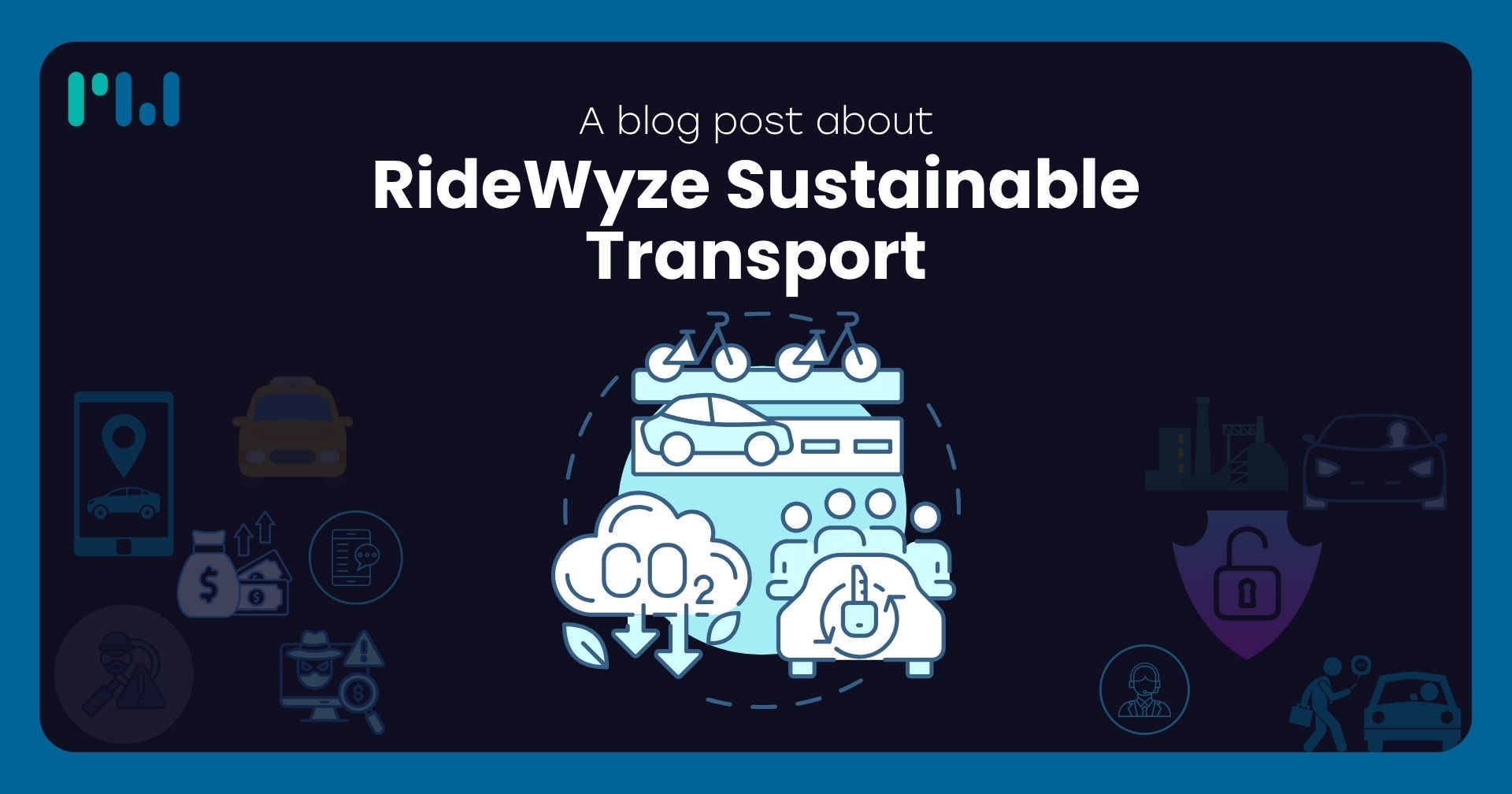
Transport is one of the largest contributors to greenhouse gas emissions globally — and within transport, urban mobility is where the greatest opportunity for change exists. Cities consume over two-thirds of the world's energy and account for more than 70% of global carbon emissions. The decisions that ride-hailing operators, fleet managers, and mobility platform providers make today — about vehicle types, routing algorithms, shared ride systems, and operational efficiency — will have a direct and compounding impact on urban carbon trajectories for decades.
The sustainability conversation in ride-hailing has evolved rapidly. It is no longer enough to argue that ride-hailing is inherently greener than private car ownership. The industry faces legitimate scrutiny: unoptimized fleets add unnecessary vehicle miles to city roads, single-occupancy rides miss pooling opportunities, and platforms that prioritize speed over route efficiency generate avoidable emissions at scale.
In 2025, around 18% of global ride-hailing fleets are electrified, with major players targeting 50–60% EV adoption by 2030 and Uber committing to 100% zero-emission rides by 2040. The direction of travel is clear. But electrification alone is not a sustainability strategy — it is one component of one. A sustainable transport ecosystem requires a more holistic approach: optimized routing that minimizes total vehicle miles traveled, shared ride architectures that reduce the number of vehicles needed to serve a given demand level, EV fleet management that maximizes battery efficiency, multimodal integration that connects ride-hailing to cleaner transit modes, and data transparency that allows cities to measure and improve mobility sustainability over time.
RideWyze is built to deliver all of these components — not as separate features but as an integrated platform where every operational decision is an opportunity to reduce environmental impact while simultaneously improving service quality and operator economics. This blog explores exactly how RideWyze contributes to building sustainable transport ecosystems, what the data says about each mechanism, and why sustainability is not just a responsibility but a competitive advantage for forward-thinking operators.
A sustainable transport ecosystem is not defined by a single green feature. It is defined by the integrated relationship between mobility demand, vehicle technology, operational efficiency, energy sourcing, and urban planning — all working together to minimize environmental impact while maximizing accessibility and service quality.
The core pillars are:
RideWyze contributes to every one of these pillars through its platform architecture. Not as a future ambition — as a present operational reality.
The environmental case for electrifying ride-hailing fleets is among the strongest in any transport sector. Studies show that electrification alone can cut CO₂ emissions by up to 84% compared to equivalent gasoline-powered ride-hailing operations. Electrifying ride-hailing vehicles produces approximately three times higher emission reduction benefits than electrifying regular private vehicles — because ride-hailing vehicles cover far more miles per day, meaning the emission savings per vehicle are dramatically multiplied.
Research in China found that the daily reduction in emissions from electrifying ride-hailing vehicles in a single city is equivalent to eliminating over 133,000 gasoline vehicle trips per day. At scale, this is transformative.
The global industry is responding. Over 350,000 electric vehicles were dedicated to ride-hailing services worldwide by end-2024, with 14 large operators committing to electrify more than 100,000 additional vehicles between 2023 and 2026. Uber's Green Future program allocated $800 million in resources to help drivers transition to battery EVs in Europe and North America.
For operators transitioning to or building electric fleets, the operational challenge is not just buying EVs — it is managing them. EV fleet management requires capabilities that conventional ride-hailing platforms were not designed to provide:
Battery state of charge (SoC) monitoring — every EV in the fleet broadcasts its current battery level to the dispatch portal. Dispatchers and the AI dispatch engine can see at a glance which vehicles have sufficient range for longer assignments and which need to be directed toward charging.
Range-aware dispatch logic — RideWyze's AI dispatch engine accounts for each vehicle's current battery range when making trip assignments. A vehicle with 35 miles of charge remaining will not be assigned a 32-mile trip with no charging access at the destination — preventing stranded vehicles and failed bookings.
Charging window optimization — by integrating demand forecasting with battery data, the platform identifies natural demand lulls — midday quiet periods, early morning low-activity windows — and coordinates charging schedules to fill those windows rather than pulling vehicles from peak-demand shifts.
EV-specific driver guidance — the driver app surfaces battery level warnings, nearby charging station locations, and estimated remaining range based on current routing — keeping EV drivers confident and informed rather than anxious about range throughout their shift.
Emissions are not just a function of vehicle type. They are a function of every kilometre driven — and whether that kilometre was necessary. A gasoline ride-hailing fleet that eliminates 20% of its unnecessary VMT through AI routing produces lower emissions than an unoptimized EV fleet that drives more miles than it needs to.
Route optimization for sustainability works at three levels:
Trip-level routing — selecting the most fuel-efficient path for each individual journey, accounting for real-time traffic, road gradients, and congestion. Not simply the fastest route, but the route that minimizes energy consumption while meeting the passenger's time expectations.
Deadhead mile reduction — academic research at ACM's Future Energy Systems conference confirms that optimizing ride assignments to minimize the deadhead distance between a trip's drop-off and the next pickup is one of the two most critical components of emission reduction in ride-hailing platforms, alongside routing. RideWyze's back-to-back trip matching minimizes these empty-driving emissions directly.
Fleet-level pre-positioning — demand forecasting that positions drivers near anticipated demand zones before requests arrive means shorter driver-to-passenger distances on average across the entire fleet. Fewer long repositioning drives = fewer emission-generating kilometres without a passenger in the vehicle.
The compound impact across a fleet is significant. Research analyzing Beijing ride-hailing data found that optimized order matching and vehicle dispatching simultaneously reduced fleet size by 25.25% and pollutant emissions by 21.65% compared to unoptimized operations — without any change to vehicle technology.
The most powerful sustainability lever in ride-hailing is also the most underutilized: shared rides. When two passengers traveling compatible routes share a single vehicle instead of taking separate rides, the emission benefit is not additive — it is multiplicative.
Research modeling ride pooling potential in New York City alone estimated potential savings of approximately three million kilometres of travel distance and more than 500 tonnes of carbon emissions per week through optimized ride pooling. Scientific research published in Nature confirms that optimization of carpooling in real-world ride-hailing platforms can achieve simultaneous reductions of 25% in fleet size and 21.65% in pollutant emissions.
Beyond the environmental benefit, shared rides create economic value for every party:
RideWyze's shared ride and carpooling features allow operators to configure pooling parameters — matching radius, maximum detour time, fare sharing rules, and passenger notification flows — making shared rides a viable and attractive option for passengers rather than a compromise they reluctantly accept.
Driver incentives for sustainable behavior — ride-hailing companies can offer bonuses for drivers who maintain eco-friendly driving habits, such as smooth acceleration and minimal hard braking events that increase fuel consumption. RideWyze's driver performance scoring, which tracks telematics data, provides the data foundation for these eco-incentive programs.
One of ride-hailing's most significant sustainability contributions is structural rather than operational — it reduces the incentive for private car ownership. The decrease in car ownership among millennials is a documented driver of ride-hailing market growth. Every private vehicle removed from the urban ecosystem eliminates not just its operational emissions but also the emissions embedded in manufacturing, parking infrastructure, and the urban land use patterns that car ownership demands.
Research consistently shows that ride-hailing integrated with public transit — serving the first and last mile that fixed transit cannot efficiently cover — enables passengers to leave private cars at home for the main leg of their journey. When ride-hailing fills this gap reliably, the modal shift away from private car use accelerates.
Deploying ride-sharing services for first and last-mile connections to public transit can reduce per-journey greenhouse gas emissions by 55–80% compared to private car use on the same trip. This is not a marginal improvement — it is a transformative reduction in per-person transport emissions achievable at scale with the right platform and operational approach.
RideWyze operators who partner with transit authorities, configure transit-coordinated pickup schedules at station hubs, and offer reliable, affordable connections between residential areas and transit corridors are actively contributing to this modal shift.
A sustainable transport ecosystem requires more than clean vehicles and efficient routing. It requires the intelligence infrastructure that allows cities, operators, and planners to understand what is happening, measure what is improving, and make evidence-based decisions about where to invest next.
Ride-hailing platforms generate continuous, granular mobility data — origin-destination patterns, trip durations, route choices, peak demand by zone and hour, modal shift indicators, and emissions estimates per trip and per zone. When this data is made available to urban planners through appropriate data-sharing frameworks, it becomes one of the most valuable planning inputs available for sustainable transport decisions.
Sustainability thrives on transparency. Blockchain carbon tracking allows ride-hailing companies to record and verify every emission saved, ensuring data authenticity and accountability. While blockchain-based carbon verification is still emerging, the principle it embodies — that sustainability claims must be measurable, verifiable, and transparent — is exactly the standard that cities and regulators are increasingly applying to ride-hailing operators.
RideWyze's analytics platform generates the trip-level, fleet-level, and zone-level data that operators can share with municipal transport authorities, corporate sustainability reporting frameworks, and third-party carbon measurement systems. Operators who can demonstrate quantified emission reductions — not just state aspirational targets — are the ones who will build the deepest and most durable relationships with city governments.
It is easy to frame sustainability as a cost — the premium for EVs, the revenue shared on pooled rides, the investment in route optimization technology. This framing misses the business reality entirely. In 2025, sustainability is one of the most powerful commercial differentiators available to ride-hailing operators.
Regulatory advantage — cities worldwide are applying increasing pressure to ride-hailing platforms on emissions, with some markets already mandating minimum EV percentages in operating fleets. Operators who are ahead of these requirements operate without disruption when new rules take effect; those who scramble to catch up face temporary service gaps and reputational damage.
Corporate client revenue — corporate travel managers are increasingly mandated to report Scope 3 emissions from employee business travel, which includes ride-hailing. Corporate clients actively prefer — and increasingly require — ride-hailing providers who can supply emission data per trip. Operators with verified sustainability reporting attract and retain corporate accounts at premium rate levels.
Government partnership opportunities — smart city programs, mobility data partnerships, and sustainable transport grants are increasingly available to ride-hailing operators who can demonstrate measurable environmental contributions. These partnerships create both revenue and operating license security.
Passenger preference alignment — younger passengers, particularly millennials and Gen Z who now represent the majority of ride-hailing users globally, actively prefer services that align with their environmental values. A visible commitment to sustainable operations — electric options, carbon reporting, pooled rides — builds brand loyalty with the most valuable long-term demographic.
Insurance and financing advantages — fleet operators with demonstrably lower accident rates (from telematics-informed eco-driving) and forward-looking EV transition plans are increasingly accessing preferential insurance pricing and green financing products that reduce the capital cost of fleet upgrades.
For operators at different stages of their sustainability journey, RideWyze provides the platform infrastructure for each phase:
Phase 1 — Operational efficiency (immediate): Deploy AI route optimization and smart dispatch to reduce VMT and deadhead mileage. Activate driver eco-behavior scoring through telematics integration. Enable shared ride options in markets where pooling is viable. Begin generating sustainability metrics through the analytics dashboard. These changes reduce emissions and operating costs simultaneously — no upfront capital investment required.
Phase 2 — EV integration (6–18 months): Begin transitioning high-mileage fleet vehicles to EVs as replacement cycles arrive. Activate RideWyze's battery monitoring and range-aware dispatch tools for EV vehicles as they join the fleet. Apply for government EV transition incentives using the fleet emission data generated by the analytics platform.
Phase 3 — Ecosystem integration (12–36 months): Partner with municipal transit authorities to offer first/last-mile connections from transit hubs. Connect the RideWyze API to city-level MaaS platforms for multimodal journey planning. Begin sharing aggregated, anonymized mobility data with city sustainability programs. Build corporate account relationships with verified per-trip emission reporting.
Phase 4 — Full sustainable ecosystem operation (ongoing): Operate a fully or predominantly electric fleet with verified carbon performance data. Participate actively in city sustainability frameworks. Use pooling data to demonstrate and market measurable emission reductions. Position the brand as a genuine sustainable mobility partner in the cities you serve.
You cannot improve what you cannot measure. RideWyze's analytics platform surfaces the sustainability metrics that operators need to track progress, report to stakeholders, and identify improvement opportunities:
The cities that will lead the world in sustainable urban mobility over the next decade are the ones building integrated ecosystems today — where ride-hailing, public transit, micro-mobility, and active transport work together rather than competing in isolation. In these cities, every transport operator will be measured not just on service quality and price, but on their contribution to the city's carbon trajectory.
Ride-hailing operators who are building on platforms like RideWyze — with EV integration, shared ride infrastructure, real-time analytics, and open APIs for multimodal connectivity — are building the operational foundations for exactly this kind of contribution. The platform's architecture is not just suitable for today's market; it is designed for the regulatory and environmental demands that tomorrow's cities are already beginning to impose.
Start your journey toward a sustainable transport operation at ridewyze.com. Your 30-day free trial includes full platform access, no credit card required — explore the complete feature set including EV tools, shared ride configuration, and the analytics dashboard that turns sustainability ambition into measurable operational reality.
When properly managed, ride-hailing reduces private car dependency, enables modal shift to public transit through first/last-mile connections, and — through shared rides and electrification — delivers significantly lower per-passenger emissions than single-occupancy private vehicle travel. First/last-mile ride-hailing connections to transit can reduce per-journey greenhouse gas emissions by 55–80% compared to private car use on the same trip.
Research shows that electrification alone can cut CO₂ emissions by up to 84% compared to equivalent gasoline-powered ride-hailing operations. The emission benefit is approximately three times higher for EVs used in ride-hailing services compared to regular private vehicle use — because ride-hailing vehicles cover dramatically more miles per day, multiplying the impact of every kilometer driven without tailpipe emissions.
Shared rides reduce the number of vehicles needed to serve a given level of passenger demand. Research modeling optimal pooling in Beijing found that optimized carpooling achieved a 25.25% reduction in fleet size and a 21.65% reduction in pollutant emissions simultaneously. In New York City, optimal ride pooling was estimated to save over 500 tonnes of carbon emissions per week.
RideWyze's AI routing engine selects the most fuel-efficient path for each trip, accounting for real-time traffic, energy consumption, and distance. It also minimizes deadhead miles through back-to-back trip matching and pre-positions drivers near demand zones to reduce repositioning journeys. These combined effects deliver 15–25% fuel and emissions reductions across the fleet compared to unoptimized operations.
Yes. RideWyze is actively developing EV-compatible fleet management tools including real-time battery state of charge monitoring, range-aware dispatch logic that prevents insufficient-range assignments, and charging schedule coordination that fills demand lulls with strategic charging rather than pulling vehicles from peak-hour service.
RideWyze's analytics platform generates trip-level and fleet-level data including total VMT, deadhead percentage, shared ride uptake rates, and EV fleet composition. This data feeds sustainability reporting frameworks for city data-sharing requirements, corporate Scope 3 emissions dashboards, and regulatory compliance documentation — giving operators the verified evidence base their stakeholders increasingly require.
Ready to elevate your ride-hailing business? RideWyze has the tools and expertise to help you succeed. Contact us for a personalized demo today!

Create a free account and get full access to all features for 30 days.No credit card needed. Trusted by over 4,000 Clients.


from 200+ reviews

Start your 30-day free trial.