Passenger

Team RideWyze Posted on 8 Octuber 2025
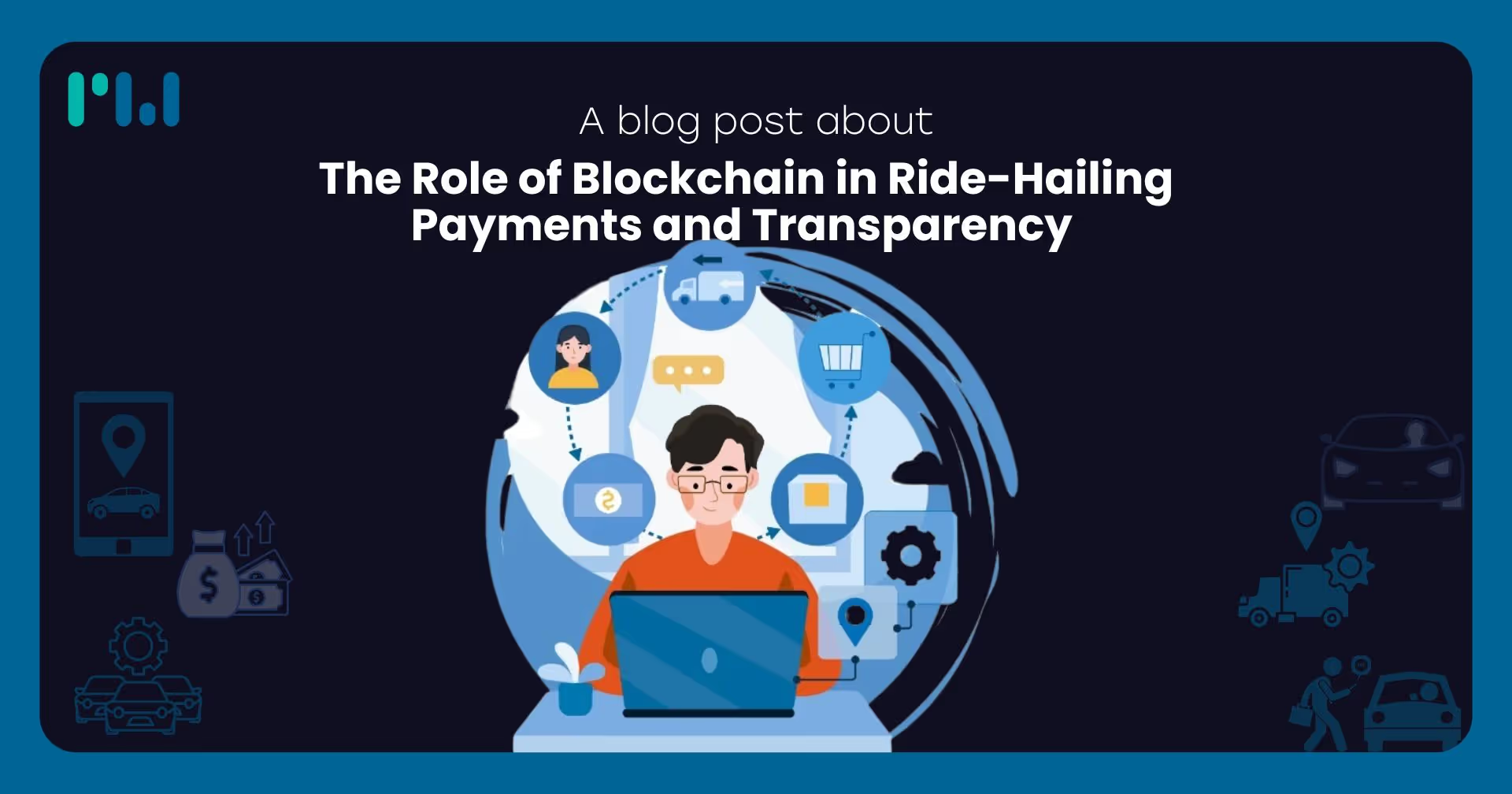
When you think of ride-hailing apps like Uber or Lyft, chances are convenience is the first thing that comes to mind. But behind every smooth booking lies a system full of inefficiencies—high commissions, delayed driver payments, and a lack of transparency in pricing. That’s where blockchain technology is stepping in, promising a new era of decentralized ride-hailing payment systems. From crypto payments for rides to smart-contract taxi fares, blockchain could reshape the future of how we book, pay, and trust ride-hailing services.
Let’s dive deep into the role of blockchain in solving these long-standing issues, exploring facts, market data, and real-world projects already making waves.
Before we explore blockchain’s role, it’s important to understand the pain points in the current ecosystem.
Drivers are the backbone of ride-hailing apps, but they often take home far less than expected. Traditional platforms like Uber and Lyft charge 25–30% commission per ride. For a driver earning $100 in fares, $25–30 goes straight to the platform.
This not only reduces earnings but also fuels frustration, pushing many drivers to seek alternatives. Imagine keeping 30% more of your income—that’s the promise of zero-commission blockchain taxi apps.
Have you ever noticed that surge pricing seems arbitrary? Riders feel tricked, and drivers are often unsure whether the extra fees benefit them or the platform. Since centralized ride-hailing platforms control data, there’s always the risk of manipulation.
Blockchain offers a transparent fare ledger for Uber-like services where every fare calculation, route, and even rating is permanently recorded and tamper-proof.
Drivers frequently complain about delayed payments, sometimes waiting days or weeks to get their money. Why? Because traditional systems involve multiple intermediaries like banks, payment processors, and platforms themselves.
With blockchain, instant driver payouts with smart contracts become possible. A ride ends, the fare is automatically calculated, and funds are transferred directly—no waiting, no middlemen.
Blockchain isn’t just about cryptocurrencies. It’s about building a system that is secure, transparent, and fair. Let’s look at how it directly addresses the above challenges.
By cutting out intermediaries, blockchain-based platforms can reduce commissions to zero. Drivers keep 100% of their earnings, while platforms sustain themselves through token economies or small transaction fees.
This shift can literally reduce 30% Uber commission with blockchain, making ride-hailing financially fairer for drivers worldwide.
Blockchain records every single transaction on a public ledger. This ensures that:
This stops surge-price manipulation through immutable logs, giving both riders and drivers confidence in the system.
Think of smart contracts as self-executing agreements coded on the blockchain. For ride-hailing, this means:
This eliminates payment delays entirely and ends driver payment delays via smart contracts.
Blockchain also introduces tokenized ride-hailing transactions. These tokens can serve multiple purposes:
Imagine earning tokens while driving, then using them for fuel or groceries—this is already happening with some blockchain-powered mobility platforms.
Traditional apps struggle with currency conversions and international payments. Blockchain enables cross-border micropayments for global ride-sharing without additional fees.
This makes it easier for global ride-hailing networks to thrive and helps travelers avoid unexpected charges.
The move toward blockchain isn’t just hype—it’s backed by numbers.
That’s explosive growth, and blockchain’s role will likely grow with it.
Big players are already testing blockchain mobility payments:
Clearly, blockchain is not just a side experiment—it’s part of the future mobility revolution.
Researchers are also taking blockchain ride-hailing seriously.
A 2023 study compared token-based vs non-token-based ride-hailing systems. Key findings:
This highlights how peer-to-peer rideshare crypto models can outperform traditional setups in both efficiency and fairness.
Several startups are already pioneering this field.
Imagine an Uber-like platform that doesn’t own your data. With blockchain:
This on-chain taxi metering could end disputes forever.
DRIFE is one of the most talked-about blockchain ride-hailing platforms. Its goals:
With 0% commission tokenized rides in Bangalore, DRIFE is showing that blockchain can compete with legacy giants.
These models focus on identity verification, crypto payments, and tokenized incentives. Instead of central apps, drivers and riders connect directly on-chain, reducing costs and improving safety.
This is the essence of the DeFi mobility payments ecosystem—trustless, peer-to-peer, and efficient.
Let’s visualize how a blockchain-based ride works:
This step-by-step smart-contract ride payment flow is both simple and foolproof, unlike legacy systems bogged down with intermediaries.
Here’s a simple comparison:
The difference is night and day. For a driver making $2,000/month, blockchain could mean an extra $600 saved each month—that’s huge.
Experts predict blockchain adoption in ride-hailing will accelerate by 2025. Early adopters like DRIFE could pave the way, with blockchain ride-hailing adoption rates climbing steadily.
It’s highly possible. Instead of relying on analog meters or app-based calculations, smart contracts could act as tamper-proof digital meters, ensuring fairness for all parties.
While Bitcoin and Ethereum are obvious choices, specialized tokens like DRF (DRIFE’s native token) or IOTA may take the lead in crypto payments for rides.
Blockchain isn’t just an upgrade—it’s a complete reinvention of how we think about ride-hailing.
The ride-hailing industry has reached a point where trust, fairness, and efficiency are more important than ever. Blockchain ride-hailing payments provide answers to long-standing issues—zero commission, transparent pricing, and instant crypto payouts.
As more projects embrace blockchain, we may soon look back at Uber and Lyft as the “dial-up internet” of mobility—a stepping stone toward something faster, fairer, and decentralized.
Yes, blockchain ride-hailing payments can make services much cheaper for drivers by removing intermediaries and reducing commission fees. Traditional apps like Uber take 25–30% of every fare, while blockchain platforms often run on zero-commission models. This means drivers keep nearly 100% of their earnings.
Smart contracts are already showing potential to replace traditional taxi meters. Unlike app-based or manual meters, a smart-contract taxi fare is tamper-proof, automatically calculated, and instantly settled. This ensures both riders and drivers trust the final amount without disputes.
Several cryptocurrencies can be used for blockchain ride-hailing payments, including Bitcoin, Ethereum, and stablecoins. However, many decentralized ride-hailing platforms are creating their own tokens, such as DRF from DRIFE, which are optimized for instant driver payouts, rewards, and lower transaction fees.
Blockchain ride-hailing apps are still in their early stages, but adoption is expected to grow significantly by 2025. As more drivers demand zero commissions and instant crypto payouts, decentralized ride-hailing payment systems will become mainstream alternatives to Uber and Lyft.
Blockchain ride-hailing payments improve safety by making fares, routes, and driver ratings transparent and immutable. Since data is stored on a distributed ledger, it cannot be manipulated or hidden, preventing fraud and surge-price abuse. This creates a more trustworthy system for both riders and drivers.
Yes, one of the biggest advantages of blockchain ride-hailing payments is enabling seamless cross-border micropayments. Riders and drivers no longer need to worry about currency conversions or high international transaction fees, making global ride-sharing more practical and cost-effective.
Ready to elevate your ride-hailing business? RideWyze has the tools and expertise to help you succeed. Contact us for a personalized demo today!

Create a free account and get full access to all features for 30 days.No credit card needed. Trusted by over 4,000 Clients.


from 200+ reviews

Start your 30-day free trial.