Passenger

Team RideWyze Posted on 22 June 2026
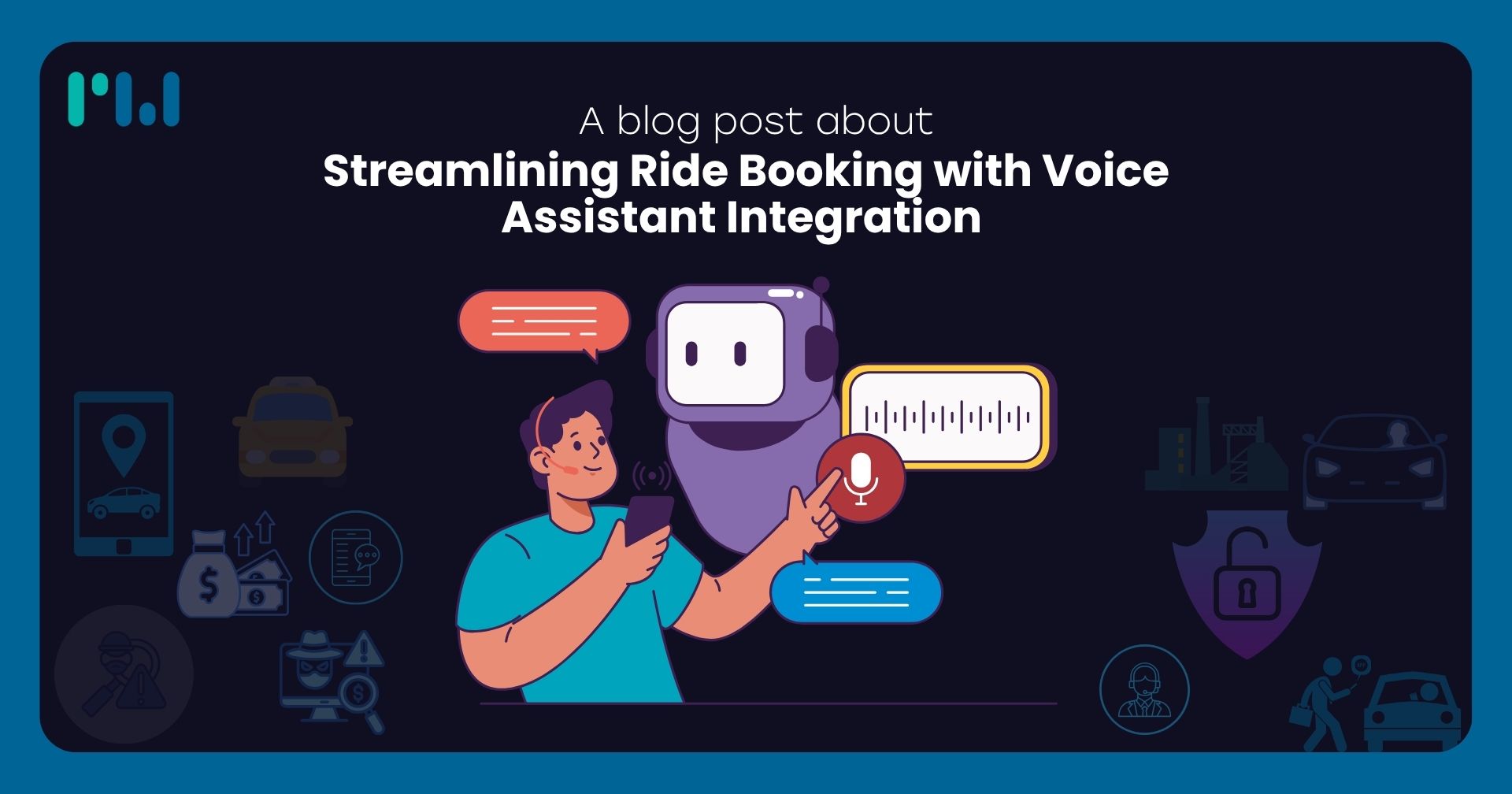
There is a moment every passenger dreads — fumbling with a ride-hailing app while carrying grocery bags, rushing through an airport terminal, or sitting in a moving vehicle trying to type a destination into a small screen. That moment of friction is exactly what voice assistant integration in ride-hailing apps is designed to eliminate.
Voice-activated ride booking is no longer a novelty feature reserved for tech demos. It is rapidly becoming an expected standard in modern ride-hailing software. By 2025, nearly 45% of riders book rides through voice commands on their smartphones or connected devices. The global ride-hailing market is projected to reach $392 billion by 2031, and a meaningful share of that growth is being fueled by hands-free, voice-first user experiences that reduce friction and expand accessibility to entirely new passenger demographics.
For ride-hailing operators building on platforms like RideWyze, voice assistant integration represents one of the highest-impact features available today — one that simultaneously improves booking conversion, boosts accessibility, and positions your brand clearly ahead of competitors still relying solely on tap-based interfaces.
This guide explains exactly how voice integration works, why it matters for your business, the platforms it connects with, and how RideWyze enables operators to implement it without complex custom development.
Voice assistant integration allows passengers to interact with a ride-hailing app using spoken, natural language commands — without touching a screen. Powered by Natural Language Processing (NLP) and AI, these systems understand conversational requests, extract booking intent, and execute actions automatically.
A passenger might say:
The app processes the spoken input, maps it to the correct action, and confirms — all in seconds. No typing. No screen navigation. No friction.
This capability works across multiple touchpoints:
Passengers who routinely use Siri, Google Assistant, or Alexa for everyday tasks increasingly expect the same capability from their ride-hailing apps. When a platform does not offer it, the experience feels dated — and riders notice. Typing on a small screen during rush hour or while multitasking is a growing pain point that voice commands solve completely.
Voice-enabled interfaces are not just a convenience feature — they are an accessibility necessity. They allow riders who are visually impaired, elderly, or have limited manual dexterity to book rides independently and confidently. Grab's AI voice assistant, for example, was specifically designed to empower visually impaired and elderly users to book rides without assistance. RideWyze operators who offer voice booking tap into a dramatically wider passenger base while meeting accessibility standards.
A passenger who just stepped out of a building, has arms full, or is navigating a busy street should not need to look down at a phone to book a ride. Voice commands keep eyes up and hands free — making the booking experience safer for passengers and reducing the likelihood of dropped bookings due to the inconvenience of screen interaction.
Every additional tap, scroll, or text field in a booking flow is a potential drop-off point. Voice commands compress the entire booking process to a single spoken sentence, dramatically reducing the steps between a passenger's intent and a confirmed ride. Fewer steps means fewer abandoned bookings.
Understanding the technology behind voice booking helps operators make informed decisions about implementation. The core components are:
The first layer converts spoken audio into text. Modern ASR systems handle regional accents, background noise, and varied speaking speeds with high accuracy. Platforms like Google Speech-to-Text, Amazon Transcribe, and Apple SpeechKit are commonly used at this layer.
NLP is the intelligence layer that interprets the transcribed text and extracts intent. When a passenger says "Get me a cab to downtown at 7 PM," NLP identifies:
Advanced NLP handles ambiguous language, follow-up questions, and multi-turn conversations naturally.
Once intent is extracted, the voice system calls the ride-hailing app's backend APIs to execute the booking, check ETAs, retrieve pricing, or process cancellations — the same actions a tap-based interface would perform, just triggered by voice.
The system confirms the action back to the user via synthesized speech or on-screen text — "Your ride is confirmed. Your driver arrives in 4 minutes" — closing the loop without requiring the passenger to look at the screen.
The data makes a compelling case for operators considering this feature:
For operators on a white-label ride-hailing platform like RideWyze, voice integration is a differentiator that can be promoted as a brand feature — setting your service apart from generic competitors in your market.
Traditional booking requires: open app → enter pickup → enter destination → select vehicle type → confirm → wait for match. Voice reduces this to: "Book a standard ride from my location to the Marriott Hotel." One command. Done.
Passengers can also schedule future rides, ask for fare estimates, and set preferences — all without touching a screen.
Once booked, passengers can ask real-time questions without opening the app:
This reduces in-app engagement during the wait period while keeping the passenger informed — improving perceived service quality.
Post-ride, voice assistants can prompt passengers to rate the experience, report issues, or book a return trip. Conversational prompts convert significantly better than traditional in-app nudges because they feel personal and immediate.
One of the most powerful but underappreciated benefits of voice integration is multilingual support. Modern NLP engines process commands in dozens of languages — often automatically detecting the passenger's language without requiring a manual switch. For operators running multi-language ride-hailing platforms serving diverse urban populations, this is transformative.
A passenger can say "Llévenme al aeropuerto" in Spanish, or "مجھے اسٹیشن لے جاؤ" in Urdu, and the system routes the booking correctly. This breaks down the language barrier that often excludes non-English speakers from fully using digital ride-hailing services — opening significant market share in multilingual cities.
RideWyze's platform is built with multilingual support at its core, making it an ideal foundation for voice integration across diverse passenger markets.
Voice assistant integration in your app also has a secondary benefit that most operators overlook: voice search optimization. As passengers increasingly use voice commands to search for transportation services ("Hey Google, find a taxi near me"), platforms that have optimized their online presence for voice search capture this traffic directly.
Optimizing for voice search means:
This blog itself is structured to rank for voice-search queries — natural language questions like "How does voice booking work in ride-hailing apps?" and "Can I book a ride with Alexa?" are answered directly, making this content more likely to surface in both traditional and voice search results.
Not all voice integration implementations are equal. When evaluating how to add this capability to your platform, prioritize:
RideWyze is designed from the ground up as a customizable, integration-friendly on-demand ride-hailing platform. Its open API architecture means that voice assistant integrations — whether through Google's Dialogflow, Amazon Lex, Apple's SpeechKit, or a custom NLP engine — can be connected to the booking engine without rebuilding the core platform.
Key RideWyze capabilities that support voice integration:
For RideWyze operators, voice integration is not a complex infrastructure project — it is a feature layer that sits on top of an already robust, API-connected platform.
Voice integration in ride-hailing is still in its early growth phase. The next wave of developments includes:
Proactive voice notifications — the app speaks to you unprompted: "Your scheduled ride is 10 minutes away. Do you want to confirm pickup at your saved home address?"
Mood and preference detection — AI inferring passenger preferences from conversation patterns and surfacing personalized vehicle options without the passenger needing to specify.
In-vehicle voice concierge — drivers using in-car voice systems to manage navigation, confirm trips, and communicate with dispatch entirely hands-free.
Wearable-first booking — as smartwatch adoption grows, booking a ride with a wrist-tap followed by a voice confirmation becomes the default flow for tech-forward commuters.
Offline voice fallback — NLP processing that works in low-connectivity environments using on-device language models, eliminating the dead-zone problem in emerging markets.
For operators running a ride-hailing business today, the question is not whether to integrate voice — it is how soon.
Ready to give your passengers a faster, hands-free way to book rides? RideWyze's white-label ride-hailing platform is built for exactly the kind of innovation that voice integration requires — flexible, API-friendly, and fully customizable. Start your 30-day free trial at ridewyze.com and see how quickly you can transform the booking experience for your passengers.
Voice assistant integration allows passengers to book, track, cancel, or schedule rides using spoken natural language commands — without touching the app screen. It works through in-app microphones, smart speakers like Amazon Alexa and Google Home, or in-car voice systems like Apple CarPlay.
As of 2025, approximately 45% of riders prefer using voice features on their smartphones or connected devices to book rides. This number is growing rapidly as NLP accuracy and smart speaker adoption increase globally.
Yes. Modern NLP engines used in ride-hailing voice integration support dozens of languages and dialects. Platforms like RideWyze already include multilingual support at the platform level, making it straightforward to extend voice commands across multiple languages for diverse passenger markets.
Absolutely. Voice booking is one of the most impactful accessibility features a ride-hailing app can offer. It enables visually impaired passengers, elderly users, and riders with limited manual dexterity to book rides independently. Grab's voice assistant specifically targets elderly and visually impaired users in Southeast Asian markets.
Voice booking eliminates multiple steps from the traditional booking flow — no typing, no screen navigation, no form fields. Reducing friction in the booking process directly lowers abandonment rates and improves the percentage of booking intents that convert into confirmed rides.
RideWyze's open API architecture and third-party integration support make it compatible with major voice platforms including Google Dialogflow, Amazon Lex, and Apple SpeechKit. The platform's customizable passenger app allows operators to add voice UI elements and brand them to their service.
Ready to elevate your ride-hailing business? RideWyze has the tools and expertise to help you succeed. Contact us for a personalized demo today!

Create a free account and get full access to all features for 30 days.No credit card needed. Trusted by over 4,000 Clients.


from 200+ reviews

Start your 30-day free trial.